Mother’s Day merchandising: how c-stores capture last-minute sales

Canadian convenience store operators and the Retail Council of Canada (RCC) know that Mother’s Day consistently ranks among the top five gifting occasions of the year, with billions in consumer spending and a significant share of that is driven by last-minute, impulse-oriented purchases.
According to a 2025 national consumer survey conducted by Caddle in partnership with the RCC, nearly 75% of Canadians who celebrate Mother’s Day planned to spend the same or more than they had the previous year. Even as a cost-of-living pressures reshaped household budgets across the country, spending on this occasion held firm: A signal that consumers treat Mother’s Day as a non-negotiable rather than a discretionary luxury. Lower-spending brackets are shrinking, while those spending $150 or more are up from 9% in 2023 to 13% in 2025 — signaling a modest rebound in discretionary spending.
The same Caddle/RCC survey found that the largest distinct group of shoppers, 17% makes their Mother’s Day purchases between one and two weeks before the holiday, with more than half of all celebrants completing their shopping at least a week in advance. That window is exactly where convenience stores live. Convenience store operators are not competing with florists or department stores. They are serving the majority who move on a shorter timeline – and the sizable minority who walk through your door on the day itself.
The last figure – 35% of shoppers influenced by in-store browsing – is the one convenience operators should take to heart. Nearly one in four Mother’s Day buyers are influenced by what they encounter in a store, not by what they pre-planned. That is your opportunity, and it starts with how you stock and display.
Best-selling Mother’s Day categories for c-stores
Not all Mother’s Day merchandise is created equal for the convenience format. The sweet spot is items that are giftable, emotionally resonant, and within easy reach. Think of items under $20, nicely packaged, and requiring zero assembly. Anything that reads as “I thought of you, even briefly” can sell. Here is a breakdown by category.
Mother’s Day confectionery and chocolate
Premium chocolate is the undisputed king of convenience-channel Mother’s Day gifting. Brands like Lindt, Ferrero Rocher and Godiva and boxed assortments are well-recognized, easy to understand and priced attractively.
Move these to an endcap or near the front counter no later than the first week of May. Gift-box formats outsell bars two to one in this window. Bring in “for Mom"-branded packaging if your distributor carries it – branded holiday packaging can add a 15%premium to shelf price without resistance from shoppers.
Fresh flowers and single stems
Fresh flowers have become one of the fastest-growing product categories for Canadian c-stores over the past five years, driven by supply-chain improvements and the growth of distributor networks. A simple bucket of mixed bouquets near the entrance, priced between $12 and $22 will move fast. Keep them watered and rotate daily. If fresh is logistically difficult, consider high-quality artificial or dried arrangements; increasingly popular with zero spoilage risk.
Greeting cards
A greeting card is one of the highest margin impulse items in any convenience store’s assortment. For Mother’s Day expand your card selection to at least 12 to 15 SKUs by late April. Include a range: sentimental, humorous, from children, from a spouse, bilingual, and Indigenous-designed cards, which resonate strongly in many markets across Canada. Cards priced at $4.99 to $7.99 sell well. This is not a price-sensitive purchase and the RCC recommends avoiding $1.99 cards.
Personal care and bath gift sets
The mini gift set – typically a combination of hand cream, body wash or lotion in coordinated packaging has established itself as a legitimate convenience-channel category, and Mother’s Day is where it earns its place. Pre-wrapped sets from brands like Aveeno, The Healing Garden or Rocky Mountain Soap Co. carry strong perceived value and appeal to shoppers who want something that looks deliberately chosen.
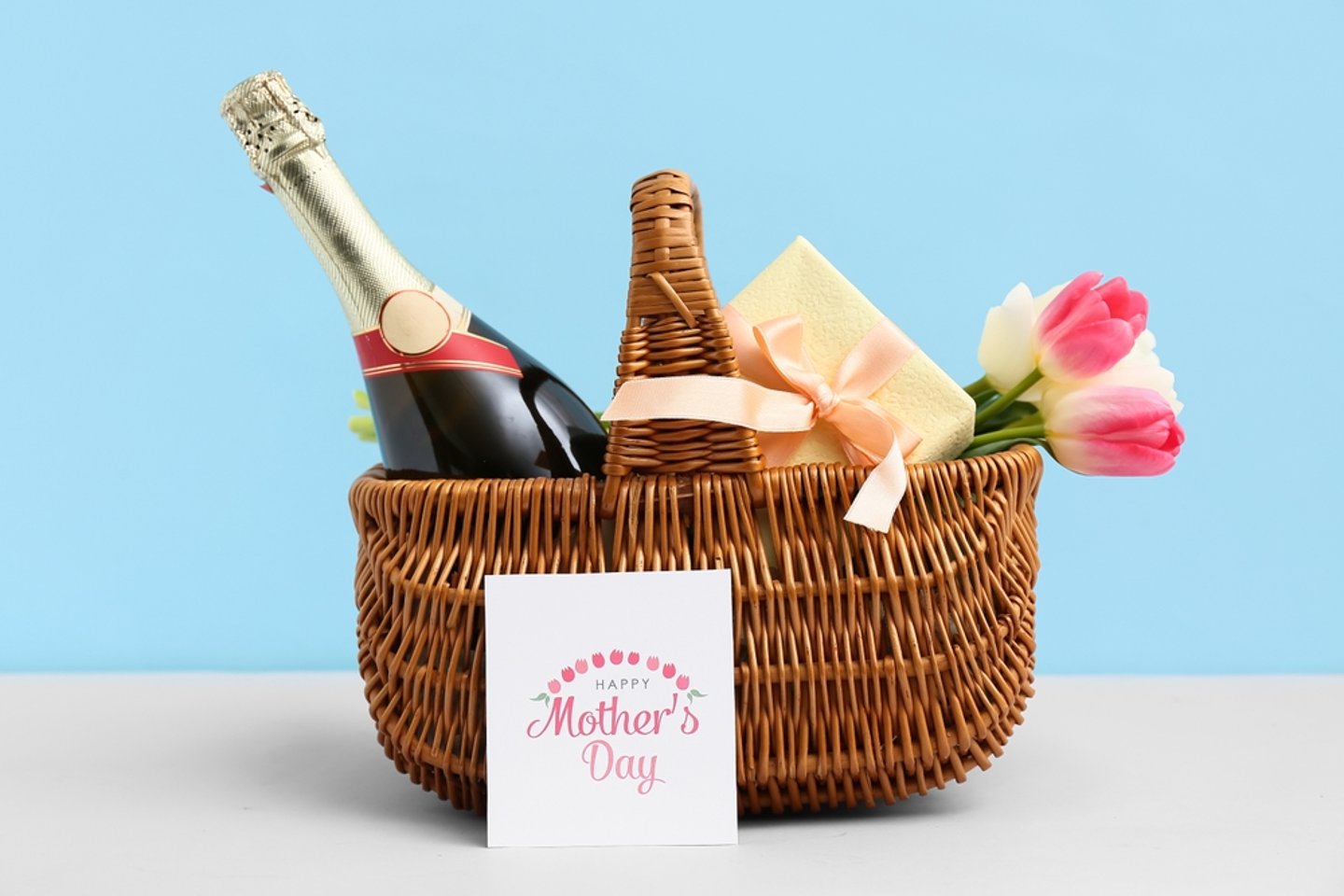
For stores in higher-income trade areas, a small selection of premium sets in the $25 to $35 price range can move well when given prominent placement. If pre-wrapped sets are unavailable through your distributor, consider building simple bundles using a kraft basket or cellophane wrap. The assembly is minimal and the uplift in perceived value is real.
Coffee and tea gift bags
Gifting coffee or tea is a personal gesture that resonates across every demographic in Canada, and it performs particularly well as an add-on category. A well-chosen bag of premium ground coffee or a curated tea selection says, “I know what you enjoy,” which is exactly the message a last-minute gift still needs to communicate.
Stock a focused selection of premium coffee gift bags. Choose assortments like Kicking Horse Coffee, a B.C.-based brand with strong national recognition and Timothy’s or Van Houtte for Quebec-leaning markets. For tea lovers, select an assortment from brands like Stash Tea or David’s Tea. Position these adjacent to your greeting card section to capture the shopper who is already in gift mode. The cross-sell is natural and requires no prompting.
Execution: build a "gift zone"
The Caddle/RCC survey data underscores something experienced operators already knows intuitively: in-store environment shapes purchasing decisions. When 23.7 % of Mother’s Day shoppers cite in-store browsing as a purchase influence, the layout of your store is doing active selling, or is actively failing to sell. The difference is almost entirely in how you organize and present your gift-oriented inventory.
The single most effective move is consolidation. Creating a dedicated Mother’s Day zone, using a single endcap or a two-foot section of shelving near the entrance, and group all six categories together. Cards next to chocolates next to candles. Add a simple printed or handwritten header. Careful curation signals shoppers that you anticipated their needs.
It also dramatically increases multi-item basket purchases: the shopper who comes in for a card and sees the adjacent chocolates goes home with both.
Avoid these merchandising mistakes
A few missteps are worth naming. Don’t overstock perishable florals without a daily rotation plan: Shrink risk is real and a wilting bouquet at the entrance repels potential customers.
Don’t over-extend your display footprint. A tight, well-stocked four-foot display consistently outperforms a sprawling eight-foot section that looks like a clearance table. Curation communicates confidence, where clutter communicates desperation.
Last, get your orders in early. Distribution channels for seasonal products tighten in the final ten days before a holiday as larger-format retailers draw down available inventory. Operators who wait until May 5 to order often find their first choice SKUs on backorder. The window to act is now.
The bottom line: making last-minute sales
The convenience store channel is well positioned in a value-conscious environment because the format does not require a big commitment. A $20 card-and-chocolate purchase from your store is accessible at almost any budget level, and it solves the problem entirely.
Convenience store operators are not expecting procrastinators to make a grand gesture. They are giving them the tools to make a good one. Stock the right six categories, build a clear display, and put it up by May 1. That is the whole plan, and according to Caddle and the RCC, it works.