Wired for growth

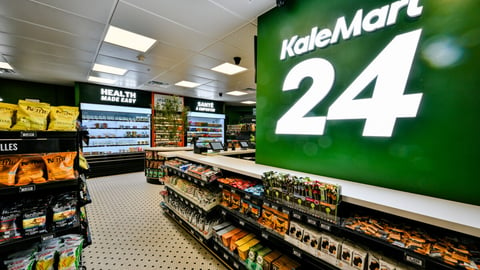
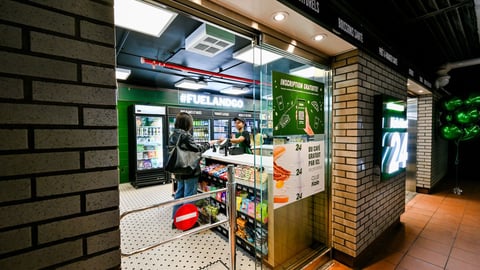
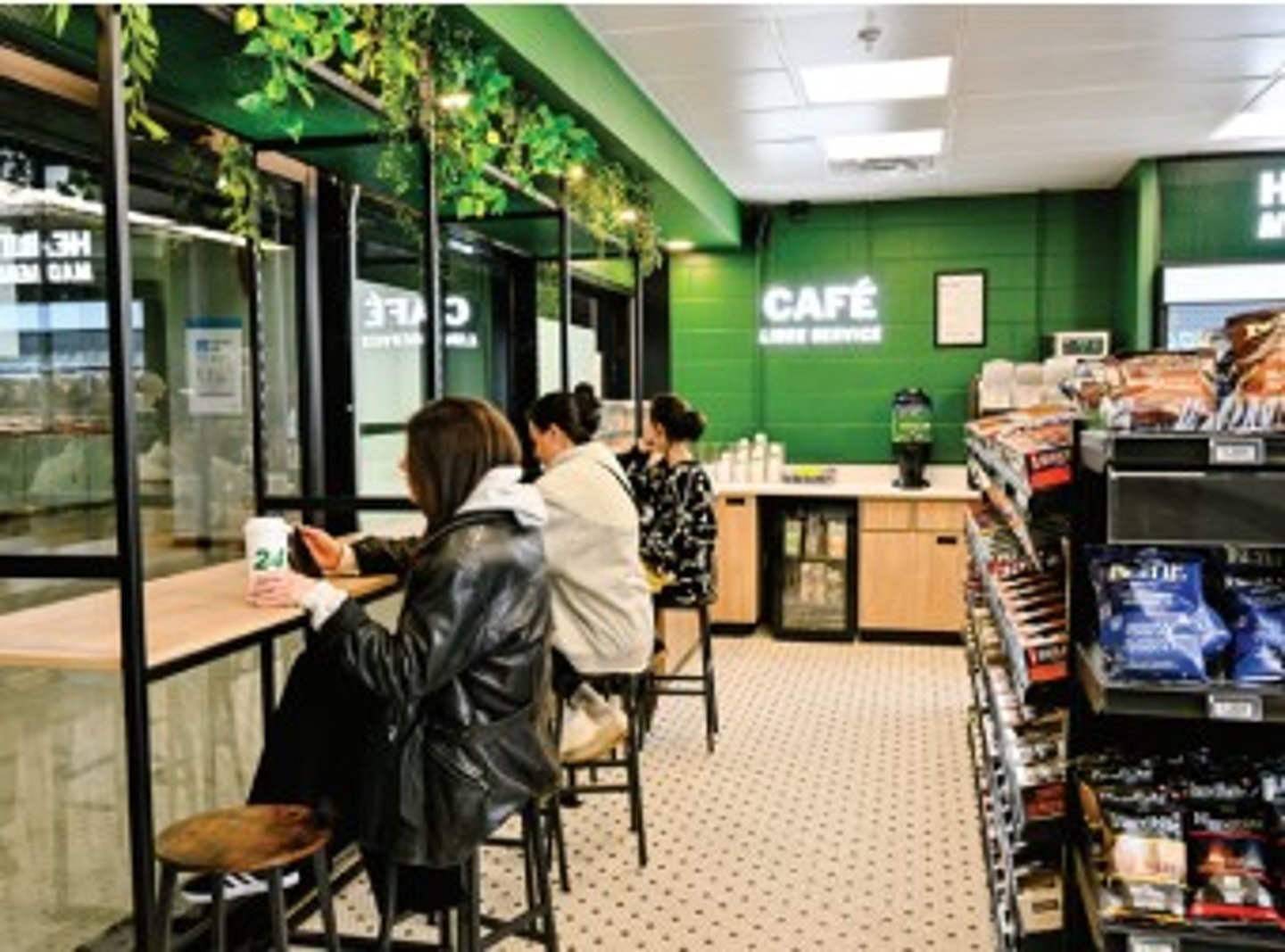
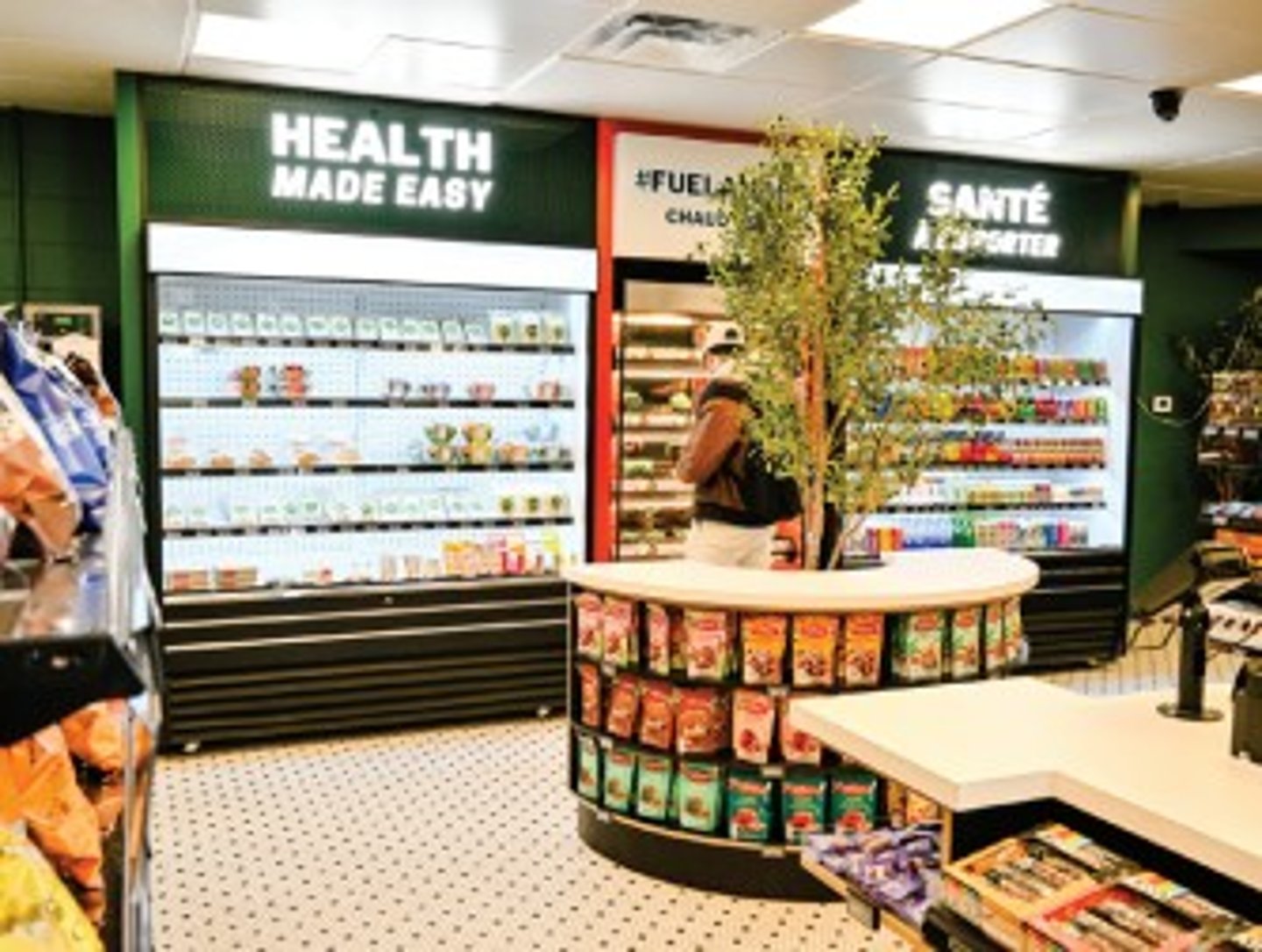
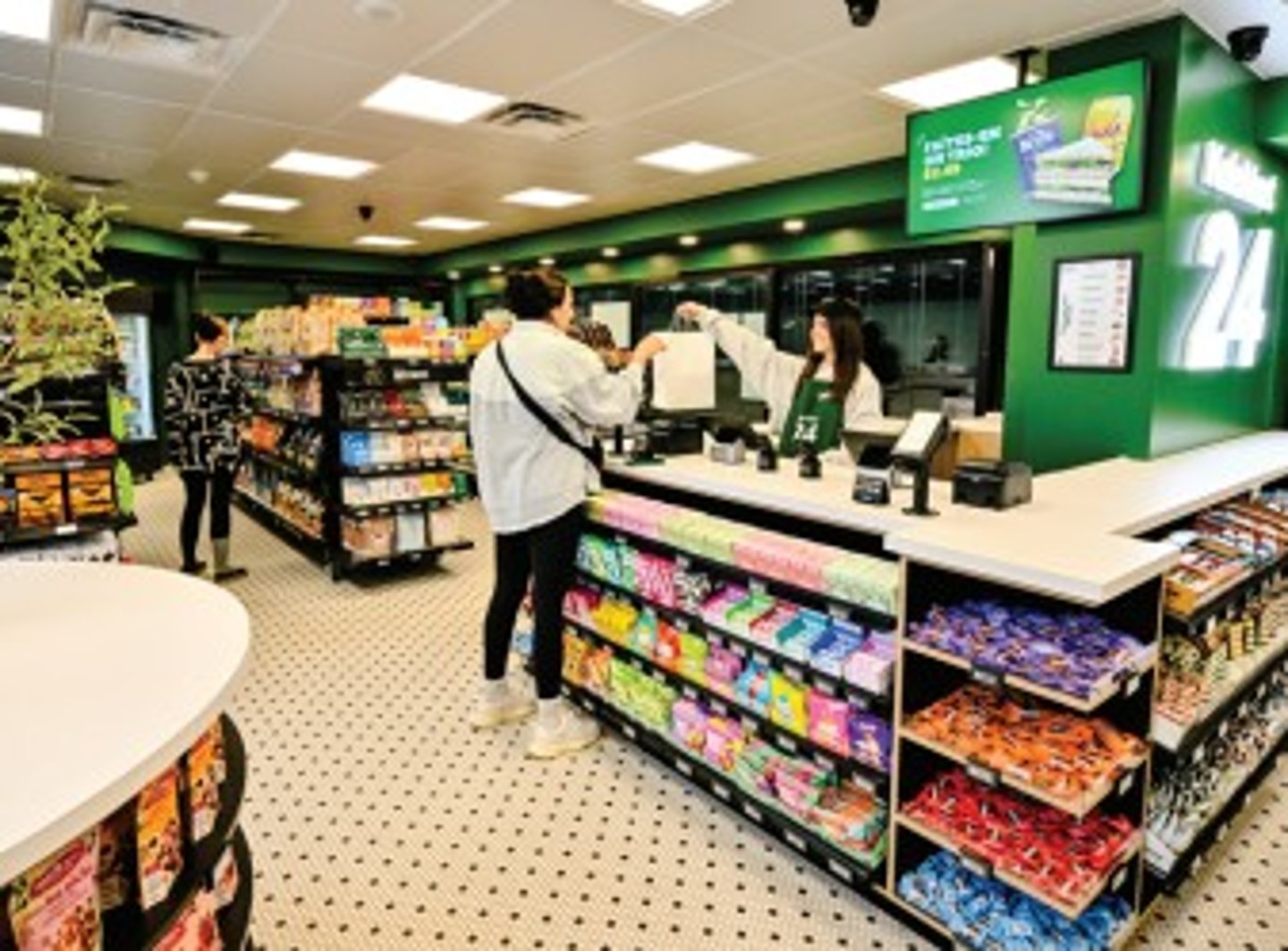
KaleMart24 is a young convenience store brand on the fast track. Since opening its first location at Montreal’s Berri-UQAM Metro station in March 2024, the retailer has embraced both rapid expansion and a design-forward rethink of the c-store experience. From four stores in early 2025 and two more that opened this summer, KaleMart24 is on track to open an additional three in September and plans to triple its footprint to 28 within a year. Its visual identity is as bold as its growth. Diagonal green tile guides foot traffic, while green-and-white checkerboard wall treatments, hanging planters and containerized trees add natural warmth. Sculptural LED fixtures modernize the space, and dry-goods shelving breaks up the usual wall-to-wall refrigeration for a more curated take on convenience retail.
But KaleMart24’s growth story isn’t just about good looks. Behind the sleek design is a robust tech backbone, powering everything from inventory control and pricing optimization to employee training and customer loyalty programs. That infrastructure is enabling the brand’s ambitious franchise rollout—including its first Ontario stores, with a location now open in Ottawa (as of July) and another launching in Kitchener this September, for its ninth and 10th locations.
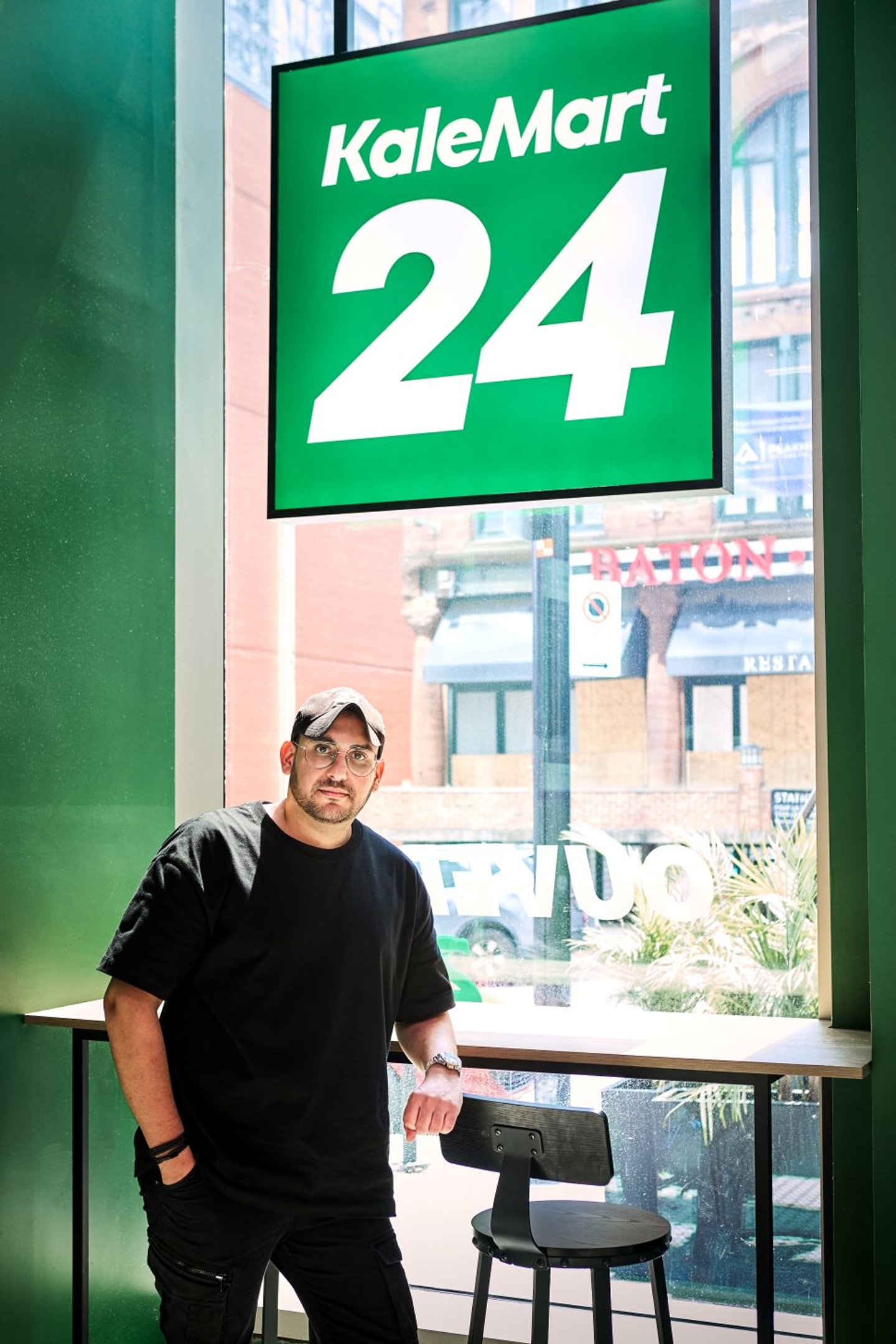
“We’re using a lot of technology for a lot of different reasons,” says Oussama (Sam) Saoudi, founder and CEO of KaleMart24. A visionary entrepreneur who launched Toro Beverages in 2019 and brings experience as both a software and civil engineer, Saoudi credits KaleMart24’s backend systems for not only hitting—but exceeding—the company’s aggressive growth targets. “Our recipe is working, and I’d like to grow even faster,” he tells CSNC. “By 2028, we want to be at 250 stores.”
That expansion won’t be limited to Quebec and Ontario, but likely include British Columbia and Alberta, as Saoudi says he is currently evaluating options in Vancouver and Calgary.
It’s an ambitious growth path, but technology is what’s enabling franchisees like Ibtissam Jbara to launch smoothly and efficiently right from day one.
“Becoming a KaleMart24 franchisee was a natural choice for me—the brand’s mission to modernize convenience with health and quality at the core really resonated,” says Jbara. “What exceeded my expectations was how seamless and efficient the onboarding process was. Their tech-driven systems—like the employee training platform, smart inventory management and planogram builder—enabled us to get up and running faster than I imagined. Everything felt intuitive, well-supported and built for real-world retail. It allowed us to hit the ground running.”
‘Constantly analyzing the data’
KaleMart24 runs all its locations on Shopify’s POS system, giving the team real-time visibility across its footprint. This real-time data allowed the upstart brand to quickly course-correct during the initial store launches. “When we first created our categories, we relied on Nielsen data to decide which products to carry. But we quickly learned some items that performed well in some grocery stores didn’t resonate as strongly in our stores,” Saoudi explains. “And so, we had to remove some products and add others.”
This ongoing data-driven approach continues to shape how KaleMart24 customizes inventory to fit the unique needs of each store location. “We’re constantly analyzing the data,” Saoudi says. “Every couple of weeks, we review which products are outperforming others within each category.”
This analysis goes beyond high-level trends: the team drills down to store-level data to tailor product mixes by location. “Stores near condo buildings, for example, move a lot of pet food,” he explains, “but at metro station locations, those products don’t sell as well.” These insights help inform merchandising layouts for new stores with similar foot traffic and neighbourhood dynamics.
While Shopify provides the core infrastructure, KaleMart24 also layers additional apps and AI integrations to boost operational efficiency. The team is currently evaluating LEAFIO, an Estonia-based platform expanding in Canada that already works with retailers like Healthy Planet in Toronto and Marché Leo’s in Quebec. This cloud-based system offers demand forecasting, automated replenishment, shelf assortment optimization and promotional intelligence. “They’ve offered us some really interesting pricing options compared to what they charge the big retailers,” Saoudi says.
Automating accuracy
A key element of KaleMart24’s tech edge is its partnership with VusionGroup, a global leader in smart digital labels and retail IoT solutions, with 25 offices worldwide. The retailer uses VusionGroup’s electronic shelf labels to streamline price updates and ensure accuracy across its growing lineup of more than 3,000 SKUs.
“We don’t use any printed price tags—not even for promotions. It’s all electronic,” explains Saoudi. “When a supplier offers a 15% or 20% promotion, we simply press a button, and prices update across all our stores instantly. It takes a major workload off franchisees, who don’t have to spend time applying stickers.”
The benefits go beyond pricing. A common retail challenge is unannounced UPC changes, often tied to packaging updates. In many stores, this results in failed scans, manual overrides, or lost sales when staff don’t know how to proceed. VusionGroup’s system catches these issues in real time: if a product doesn’t scan, it triggers an alert so staff can fix the problem before it affects the customer. “I’ve seen it myself,” Saoudi adds. “In other stores, products just get set aside because they can’t be sold. Our system solves that.”
‘Google for our stores’
Fast growth demands fast onboarding—and KaleMart24 has built the infrastructure to match. Its mobile-first training platform puts real-time tools and how-to resources directly in employees’ hands, replacing static manuals with a searchable, always-updated system built for day-one readiness.
“It’s kind of like Google for our stores,” says Saoudi. “They can search how to do this or that—everything’s on their phone. It makes training simple, both for us as the franchisor and for franchisees onboarding their staff.”
That system is evolving constantly, thanks in part to the brand’s corporate-owned store at Montreal’s Bell Centre, which serves as a live test lab. New operational tweaks are trialled there first, then rolled out chainwide and uploaded to the app for easy adoption.
One concept currently being tested for its street-level locations: a counter-service model where sandwiches are flash-heated by an associate in 10 seconds. It’s a small shift, but one that could reduce waste and improve freshness by eliminating long hours in heated displays.
This digital-first approach doesn’t just streamline daily operations, it’s also a major draw for prospective franchisees, says Saoudi. “They see that we’re giving them the best support that we can. Because when they succeed, we succeed.”
Scaling social and launching e-commerce
As KaleMart24 expands its physical footprint, it’s also preparing to build a digital one, with an e-commerce platform set to launch soon. “The site is already done,” says Saoudi. “But we haven’t launched it yet because we need to dedicate the right resources—inventory storage, shipping and delivery, customer management. We want it to be a success from the start.”
When the site does launch, the retailer plans to invest in performance marketing, focusing on digital ads for conversion and customer acquisition. This paid push will complement KaleMart24’s evolving social media strategy.
Until now, the brand has kept social media lean and in-house, managing all channels centrally with a modest budget to ensure consistency—franchisees don’t operate their own accounts. “But as we open more stores, we’re planning to invest a lot more in social and digital,” says Saoudi.
Two main directions are on the table: influencer marketing and character-driven content. The team is considering partnering with an agency to develop a recurring character—possibly played by an actor—who reflects the brand’s ideal customer and is both approachable and entertaining. This character would appear regularly in short-form videos on TikTok and Instagram.
“We’ve seen it work really well for brands like Les Restaurants Lafleur in Quebec,” Saoudi explains. Lafleur’s TikTok strategy centers on Lucie, a fictional 63-year-old cashier created with digital ad agency Dreww. In just the first three weeks, the campaign generated over 3.5 million video views and tens of thousands of comments on its Resto Lafleur TikTok account, according to the Dreww website. “Lafleur wasn’t really on anyone’s radar before, and now they are—even younger audiences love their videos because they’re funny and relatable,” Saoudi adds.
Even without a full-scale campaign, KaleMart24 has begun experimenting with playful, topical content to build organic engagement. After a Coldplay concert “kiss cam” went viral for outing a tech CEO cozying up to his HR exec, the brand joined the online chatter with a clever edit showing the couple holding KaleMart24 açaí bowls. “We would risk it all for KaleMart24’s açaí bowl too,” reads the cheeky caption.
Leveraging loyalty
KaleMart24 leverages technology not just to streamline operations but to deepen customer relationships through two membership programs tailored to reward loyalty.
KaleMart Perks is a free-to-join program that immediately rewards customers with points on every purchase—even before they complete their full profile. Points can be redeemed for store credit or used to unlock higher-tier membership levels that offer ongoing discounts. Members also enjoy perks like birthday bonuses, referral coupons and automated thank-you messages that award extra points when spending milestones are reached. Signing up is simple: customers can register online or enroll automatically at checkout by entering their phone number or email.
Behind the scenes, KaleMart24’s CRM system tracks purchase history and sales patterns to personalize offers and ensure timely, relevant communications that keep customers engaged.
Club Kale, the retailer’s premium $29.99/month subscription, offers unlimited specialty filter coffee—one 12-oz cup every 30 minutes—plus 15% off ready-to-eat items like salads, sandwiches, onigiris and açaí bowls. To encourage trial, KaleMart24 provides a free first month with no commitment. “We just want people to try it,” says Saoudi. “Once they see how it fits into their daily routine, many decide to keep it going.” Club Kale membership has grown to 300 active subscribers, particularly popular at the store near Université de Montréal, where high-volume coffee and caffeinated drink consumption is common.
Looking ahead, KaleMart24 is using sales data and visit frequency insights from its CRM platform to develop new loyalty incentives, such as earning a free coffee after a set number of visits. “It’s always a good time to motivate customers to visit more,” says Saoudi.

Three technologies reshaping the channel
C-stores have more technology choices than ever to streamline operations and boost profits. Think advanced POS systems to electronic shelf labels (ESLs) and fully integrated pay-at-the-pump solutions.
And these innovations aren’t just for major chains.
“Pricing options vary to fit the budgets of independents, too,” says Oussama (Sam) Saoudi, founder and CEO of KaleMart24, the growing c-store player profiled on p. 24. “Adopting the right tech can be a gamechanger.”
In convenience retail, technology is now woven into nearly every part of the business. Here’s how new tools are reshaping three critical areas of operations.
POS: ‘the beating heart’ of operations
Far more than just a transaction tool, POS systems have become “the beating heart of the store,” says Bradford Loewy, director of product solutions at Mississauga, Ont.-based Bulloch Technologies. “Its role continues to expand as technology becomes more intertwined with every aspect of c-store operations.”
Bulloch’s platform integrates POS, electronic payment systems, forecourt controllers and pay-at-the-pump functionality into one software solution. It also offers dual-terminal redundancy and configuration backups to minimize downtime—a growing concern for retailers.
“Built-in redundancy is critical to avoid the rising costs of downtime,” Loewy explains. “At the same time, POS data has become a strategic asset. Retailers who take command of their POS data are turning it into actionable insights that improve competitiveness and profits.”
Following Bulloch’s acquisition by Dover Fueling Solutions in January 2024, the system has launched in the U.S., while continuing to serve major Canadian gas and c-store operators, including 7-Eleven Canada and Esso.
ESLs: Pricing made smarter
According to a Forrester Consulting study, an electronic shelf label system effectively pays for itself within 18 months and produces a five-year ROI of 277%.
KaleMart24 partners with VusionGroup for its electronic shelf labels (ESLs), and other providers say adoption is climbing fast because of the various cost savings and business benefits.
“ESLs are gaining traction in c-stores due to their ability to solve industry-specific challenges,” says Shawn Cunningham, senior solution engineer at Ravyx, the retail tech solutions provider formed by the June merger of STCR and SIR.
With small teams juggling multiple roles, manual price changes can easily slip, leading to errors and lost margins.
“ESLs automate updates, ensure price accuracy and allow remote changes through modern POS systems,” notes Cunningham. “They’re also durable for cold storage and offer dynamic features like time-based templates, promotional displays and detailed product info. With visual appeal for brand marketing and compliance flexibility, ESLs offer strong ROI and are becoming a smart, efficient upgrade for c-stores.”
Fighting theft with tech
Shoplifting cost Canadian businesses an estimated $9.1 billion in 2024, according to the Retail Council of Canada. The impact can be severe at the individual store level— for example, a Circle K location in Thunder Bay reported losses of $82,000 in 2024, plus $21,000 in the first quarter of 2025, a figure expected to quadruple by year-end, according to Circle K’s Central Canada loss prevention team.
“Convenience stores face unique challenges that make them frequent targets, including high customer traffic, extended hours, frequent cash transactions and limited staffing,” says Pedro Ramos, chief revenue officer, Appriss Retail, which provides technology solutions to help retailers reduce losses from retail fraud and theft in over 45 countries, including Canada. “Sharing information across locations is also difficult, making theft prevention more complex.”
That’s why many operators are moving beyond cameras alone. While high-definition video remains essential both for capturing evidence and acting as a deterrent, Ramos notes that new technologies are raising the bar.
“Generative AI is speeding up case development, making it easier for law enforcement to investigate and respond,” he explains. “Additionally, inventory management tools and exception-based reporting software help detect anomalies in stock levels and employee activity. Together, these systems give operators clearer visibility into store operations and help surface issues that might otherwise go unnoticed.”
Appriss Retail’s solutions include using predictive analytics to flag suspicious transactions and detect both internal and external theft. An Incident tool, meanwhile, centralizes case management by tracking evidence, incidents and emerging theft trends—helping retailers stay ahead of organized retail crime.
This feature first appeared in the September | October 2025 issue of Convenience Store News Canada.