
2026 C-store IQ National Shopper Study Foodservice Report

For years, Canadian convenience store operators have watched their U.S. counterparts transform c-stores into destination dining hubs. While foodservice in Canada hasn’t taken hold with the same immediate momentum as south of the border, a major inflection point has arrived. With fuel sales softening, legacy categories facing headwinds and traditional store foot traffic shifting, Canadian c-stores stand on the edge of a massive growth runway—and foodservice is the single most compelling engine to unlock store visits, larger basket sizes and lasting customer loyalty.
In conversation with leaders across Canada in recent weeks, there’s some skepticism that convenience stores here can truly be a foodservice destination—and that’s fair. However, fresh findings from the 2026 C-Store IQ National Shopper Study reveal that while Canadian adoption has historically lagged, consumer sentiment is rapidly shifting, especially among the younger cohort. Working with the research team at EnsembleIQ, Convenience Store News Canada surveyed more than 2,000 convenience shoppers across the country to examine their wants and needs at retail, specifically convenience and gas.
For leaders ready to seize the moment, the study provides a clear, data-backed strategic roadmap.
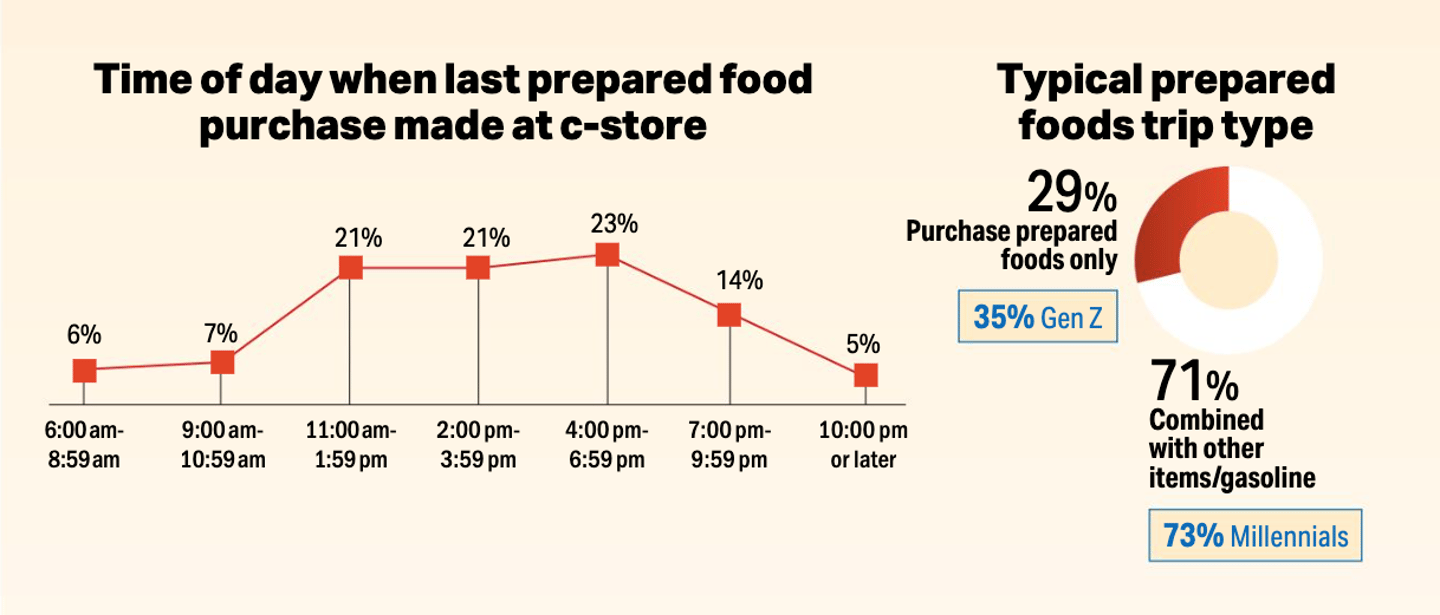
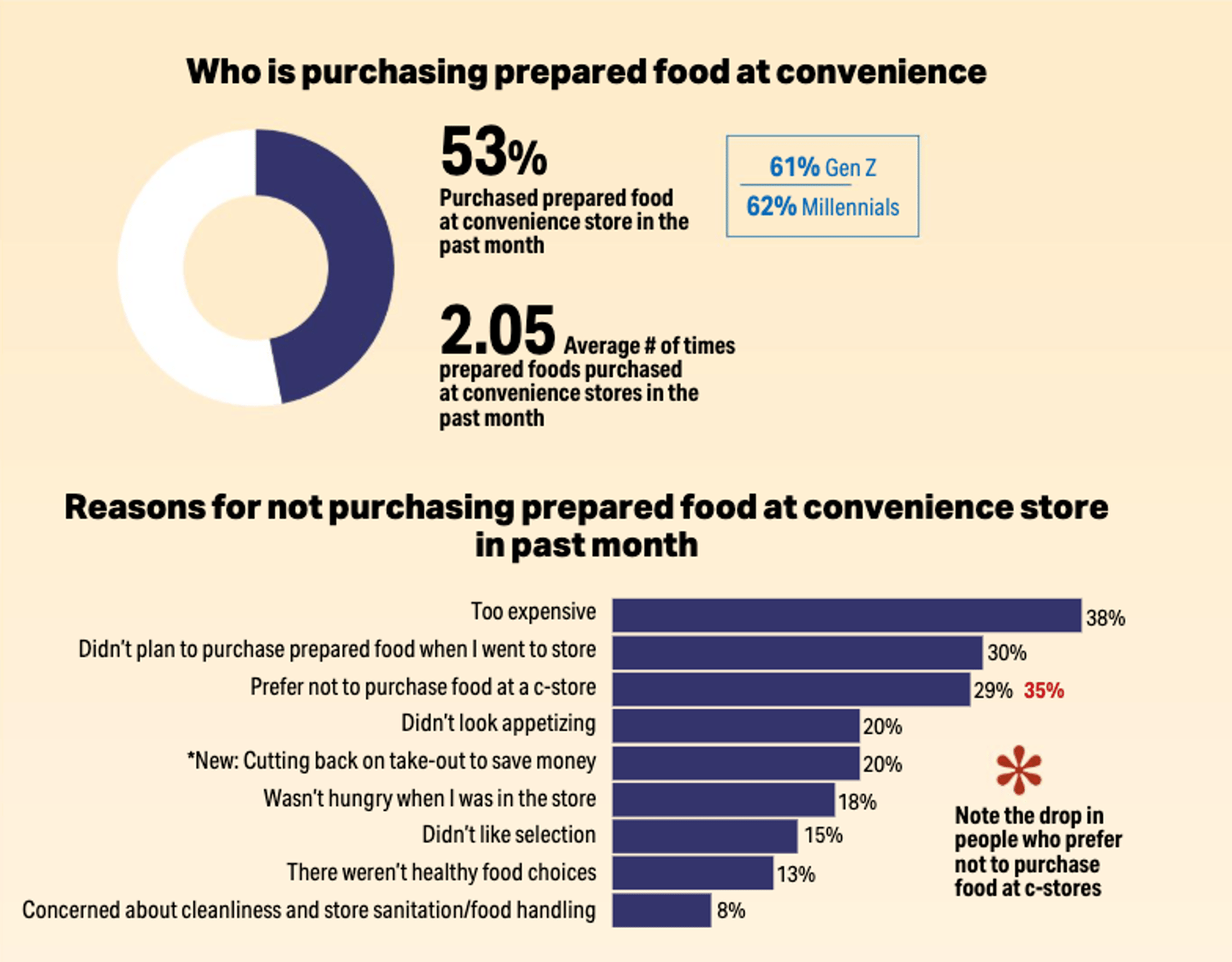
The gap between Canadian and American c-store foodservice adoption is rapidly closing among younger demographics. While overall prepared food purchasing holds steady with 53% of shoppers saying they purchased prepared food from a convenience store in the past month, the enthusiasm of generation Z (61%) and millennials (62%) proves that the next generation of shoppers treats c-stores in a fundamentally new way:
Routine meal hubs: Gen Z and millennials regularly rely on c-stores as primary destinations for lunch, afternoon snack breaks, dinner, late-night cravings and daily commute meals.
Dedicated food destinations: While 71% of prepared food buyers cross-purchase other retail items, Gen Z leads the trend of visiting a c-store specifically and exclusively for prepared food.
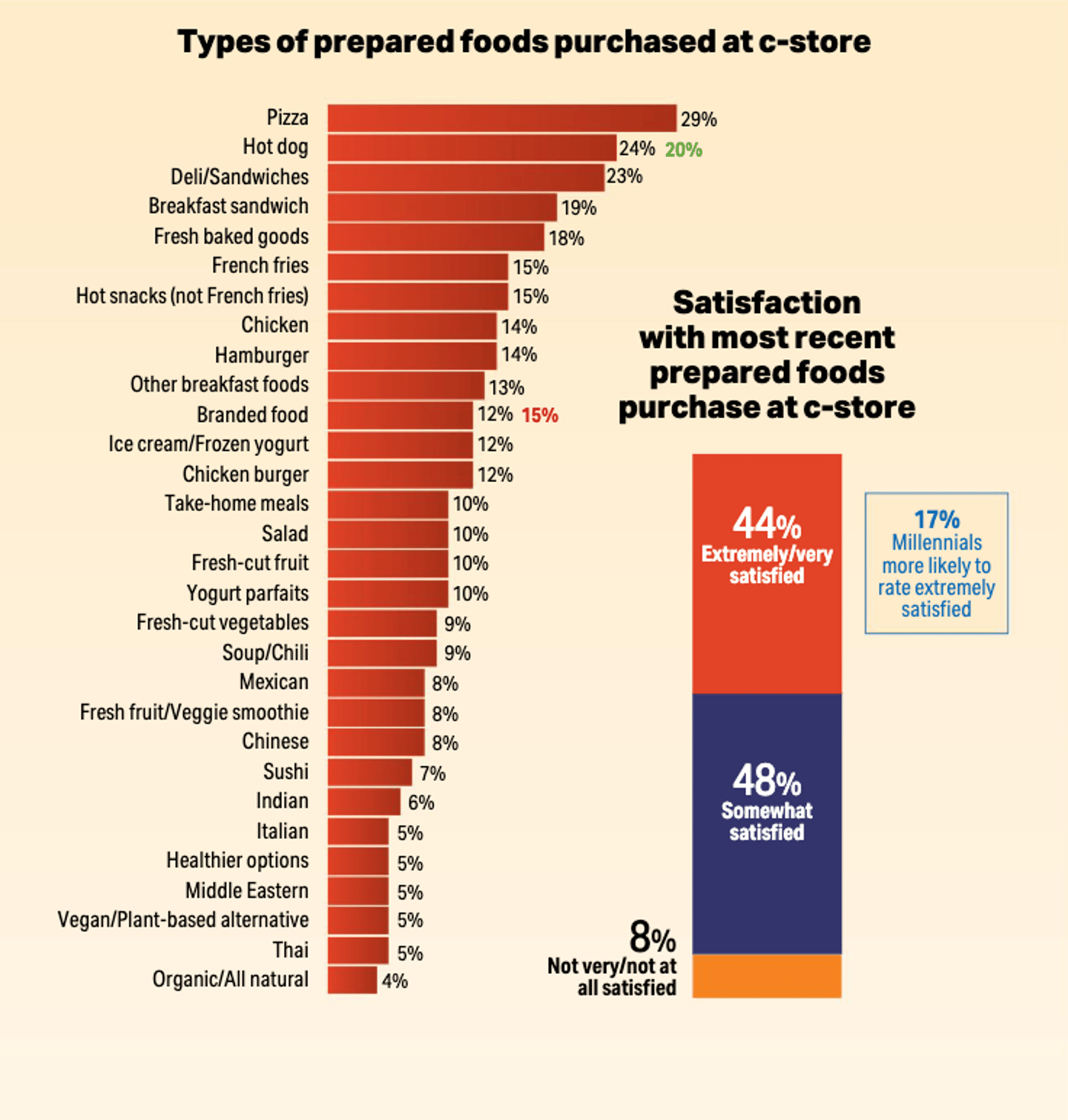
Advocacy and satisfaction: Millennials report the highest satisfaction rates, with 17% saying they are “extremely satisfied” with their most recent c-store foodservice purchase—outpacing older cohorts and proving that quality perception is soaring.
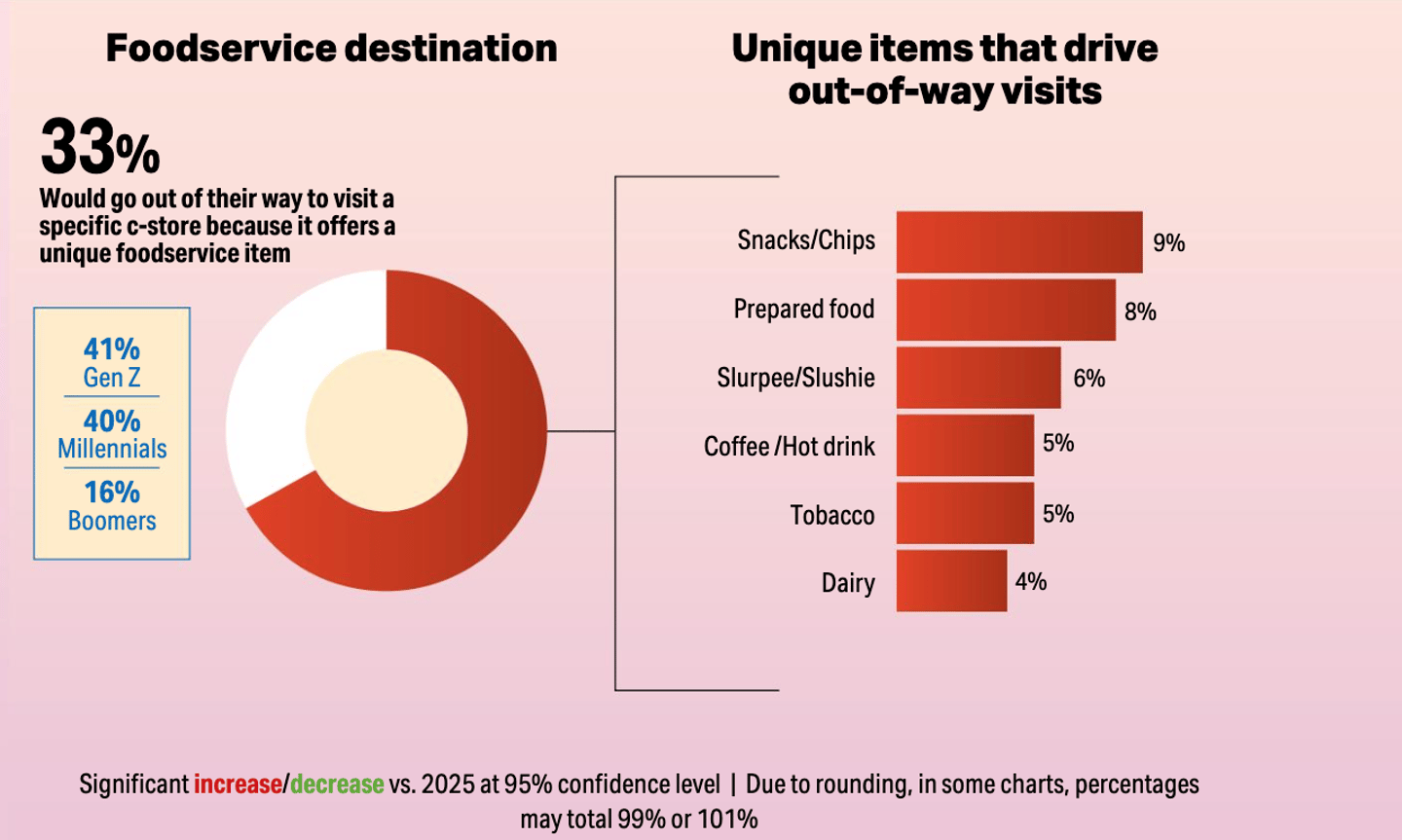
High-intent destination visits: One-third of all shoppers (33%)—and over 40% of Gen Z (41%) and millennials (40%)—will actively go out of their way to visit a specific store for a signature foodservice offering (compared to only 16% of boomers).
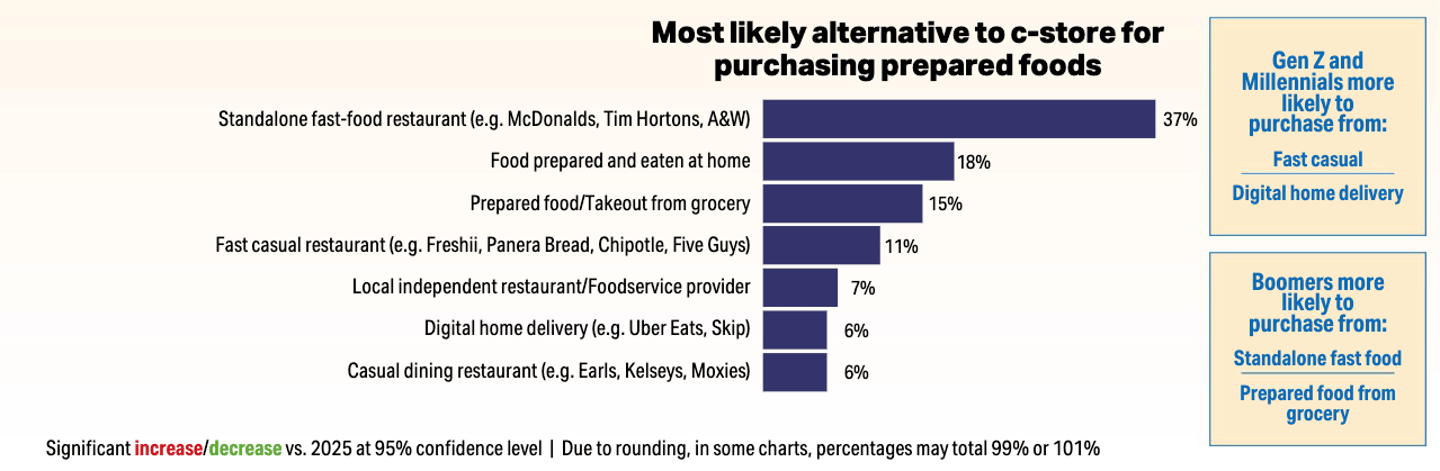
Younger consumers in Canada no longer see c-stores merely as pit stops or emergency stops; they view them as viable quick-service restaurant (QSR) alternatives. Capturing this opportunity requires aggressive digital marketing, mobile app deals, social engagement and unique proprietary menus.
Overcoming perception
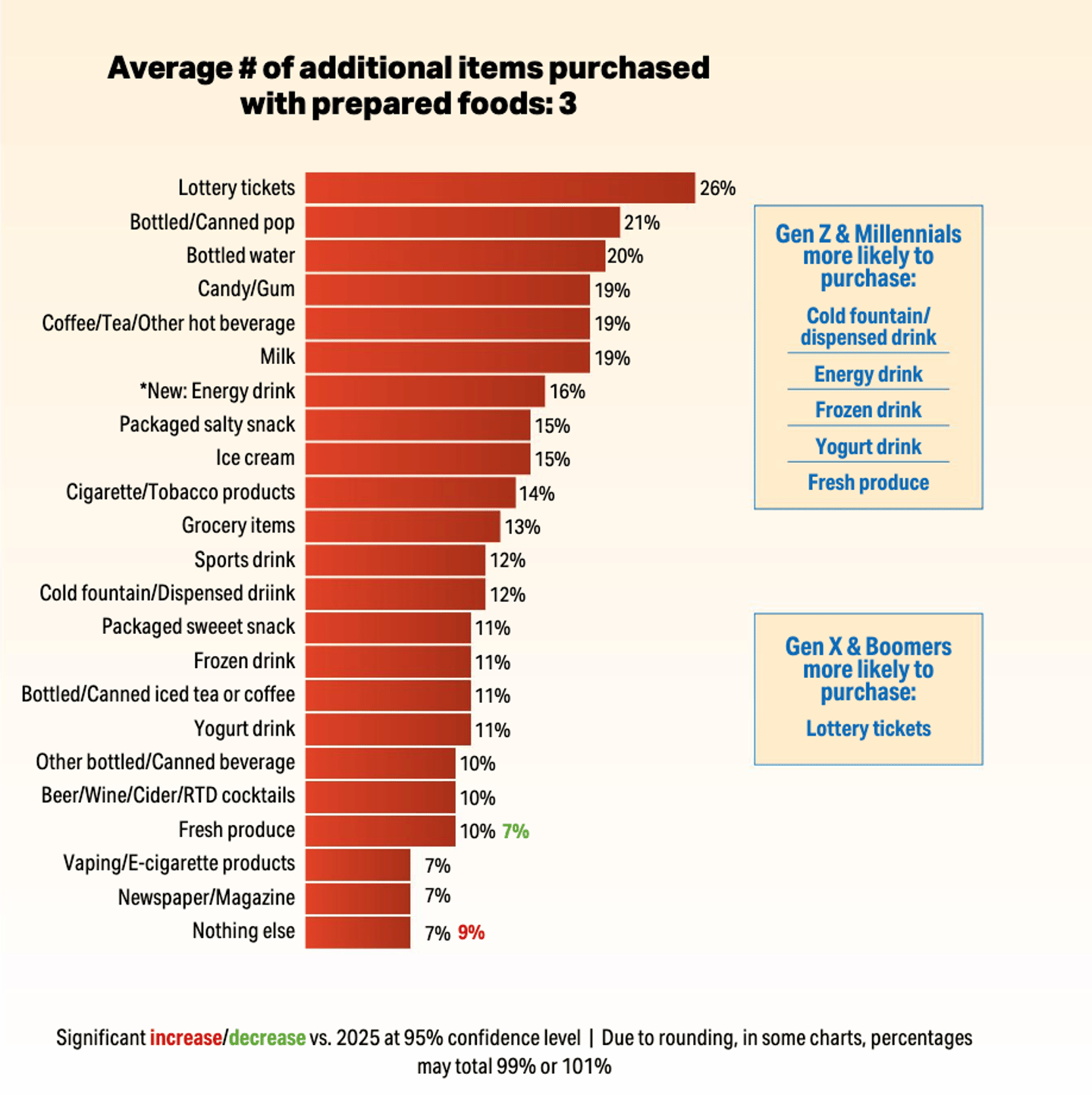
Historical hesitancy in Canada is dissolving as consumer priorities evolve beyond basic price considerations. As fast-food prices rise, Canadian c-stores are well-positioned to compete on value, but long-term success hinges on prioritizing freshness and quality, as well as ease of purchase.
Breaking down historical barriers: Among non-purchasers, price remains a factor, but legacy skepticism around c-store food quality dropped sharply year-over-year. Canadian consumers are increasingly open to c-store dining.
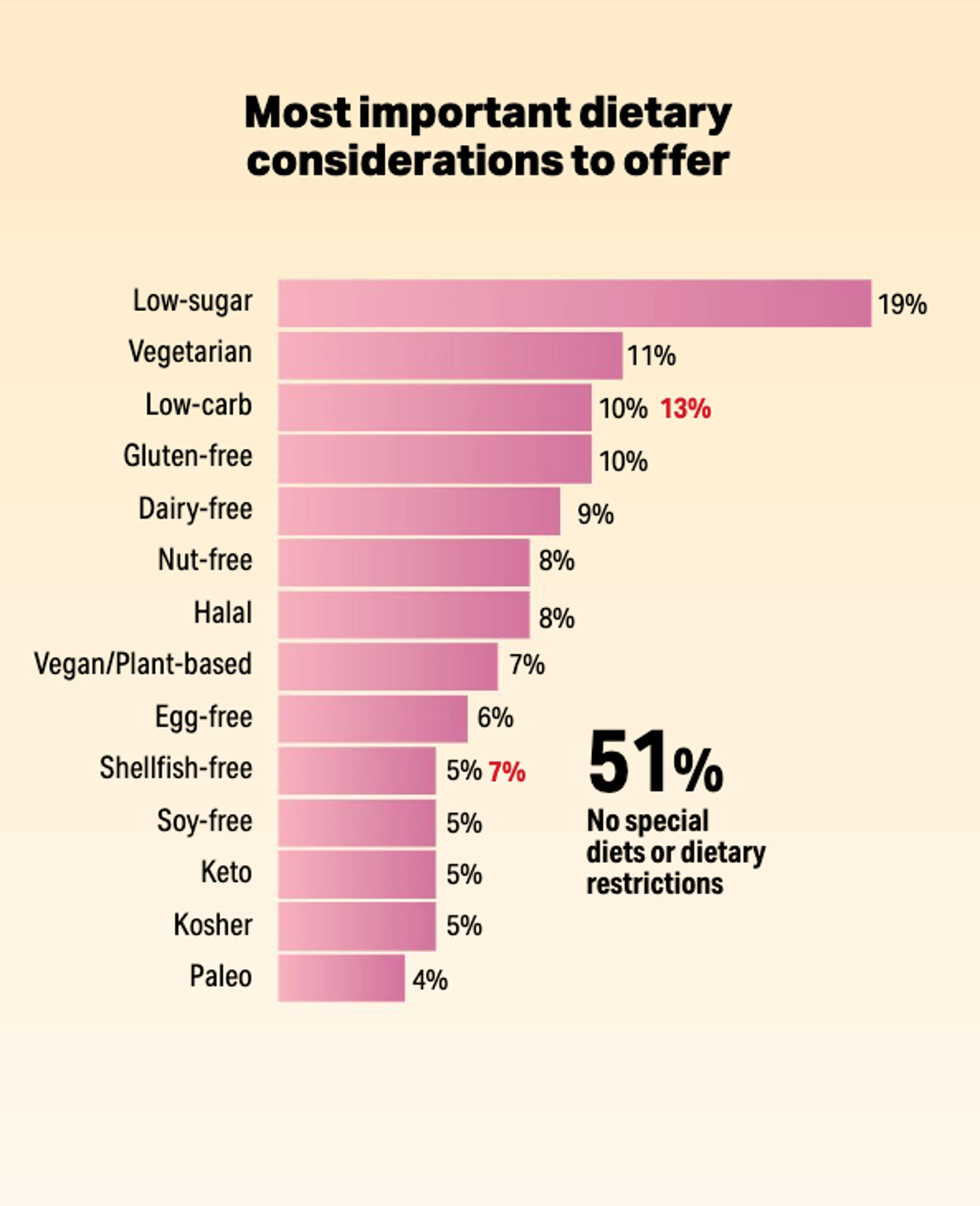
Evolving dietary needs: While 51% of buyers have no dietary restrictions, demand among health-conscious shoppers is shifting. Low-sugar options lead demand, while vegetarian choices surged.
With travel and social media, consumers are being exposed to the potential of c-store foodservice offerings around the globe and no doubt it’s shifting their perceptions of “gas-station food” here at home.
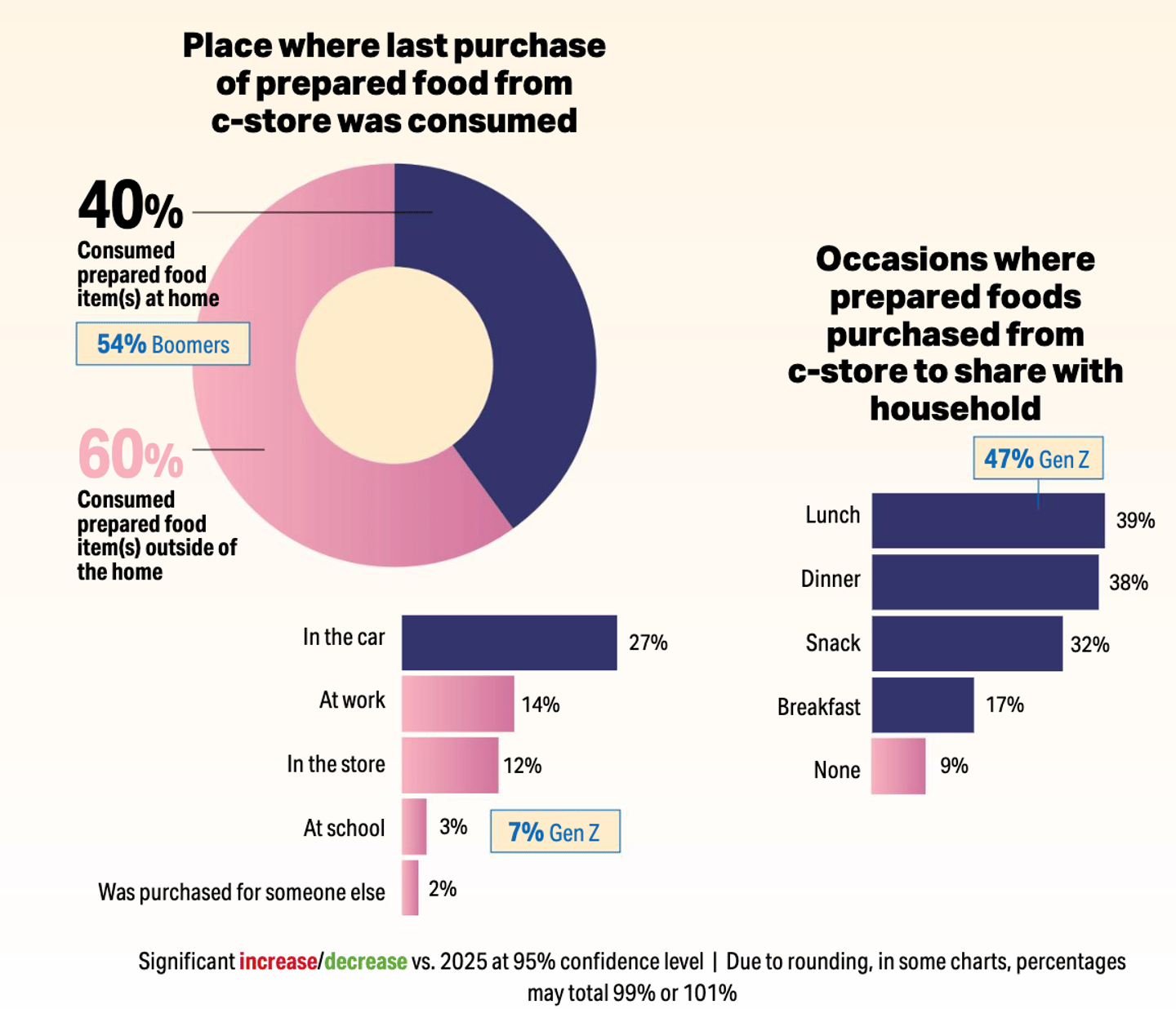
Winning the menu
Understanding current product performance helps operators curate high-margin menus that drive trial and repeat visits.
At first glance, the top prepared foods appear somewhat basic, but we are seeing a shift in demand.
• Pizza remains the anchor and dominant revenue driver in prepared food.
• Hot dogs overtook pre-packaged sandwiches to capture the No. 2 ranking, demonstrating strong year-over-year momentum.
• Sandwiches and wraps continue to serve as a reliable staple for quick meal solutions.
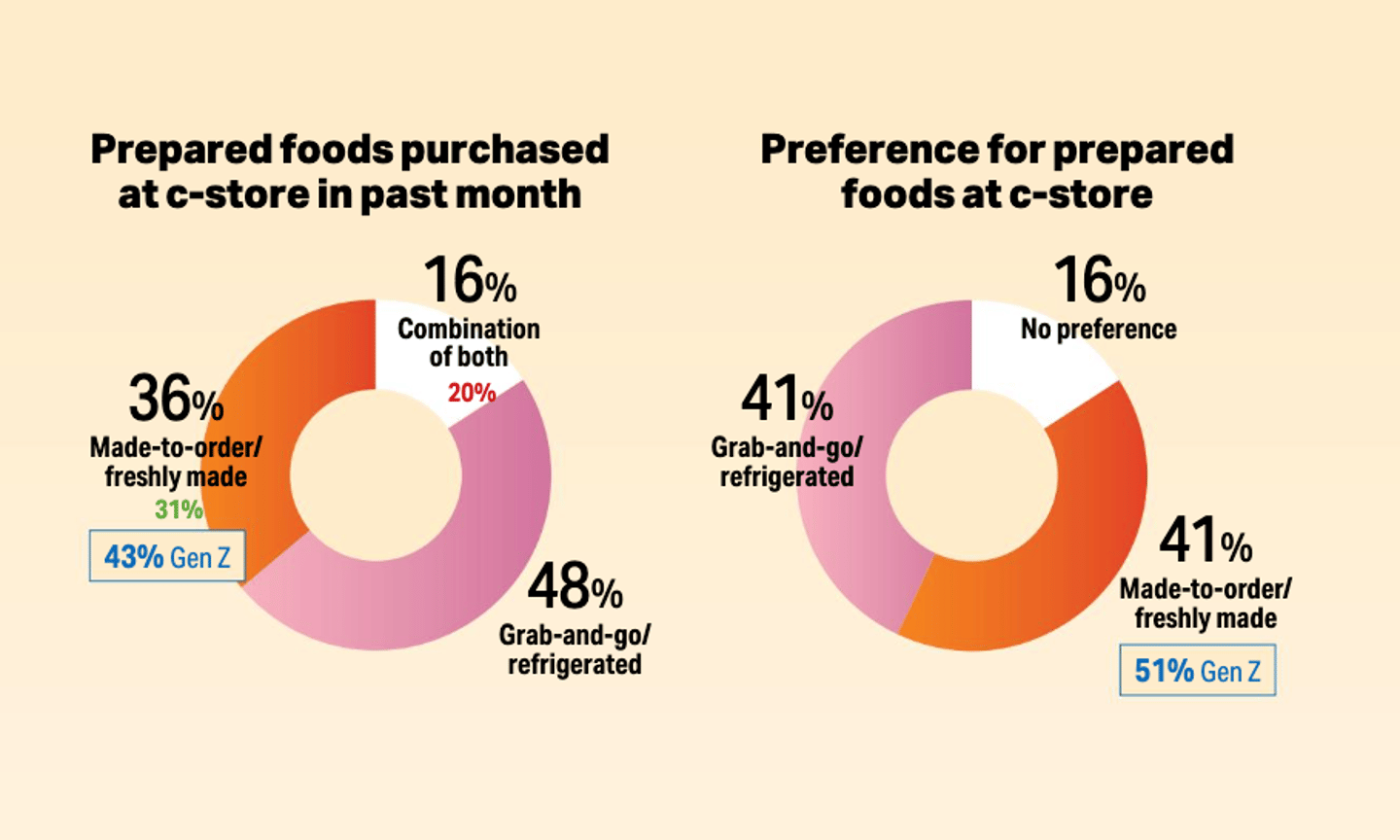
Of note, made-to-order options experienced notable growth compared to 2025, heavily propelled by Gen Z consumers seeking freshness, customizability and fast-casual dining standards.
Product discovery
Beverages serve as a major doorway to new product discovery (33% of mentions), driven by traditional and functional energy drinks (12%), soft drinks (8%), coffee/tea (5%), RTD/alcoholic beverages (4%) and functional wellness drinks (4%). However, prepared foods are gaining ground as people seek everyday meal solutions rather than just emergency or impulse grabs. The data shows prepared and fresh foods represent 16% of total open-ended mentions when consumers share the types of new products they like to discover at c-stores.
Here’s a closer look at what shoppers want to discover when it comes to prepared and fresh foods:
1. Ready-to-eat meals (7% of total mentions): Includes sandwiches, wraps and meal bowls.
2. Hot foods (4% of total mentions): Focuses on hot grab-and-go options like pizza, fried chicken and burgers.
3. Bakery (3% of total mentions): Covers fresh morning baked goods and breakfast options.
4. Produce (2% of total mentions): Fresh fruit and single serve produce items.
The multiplier effect
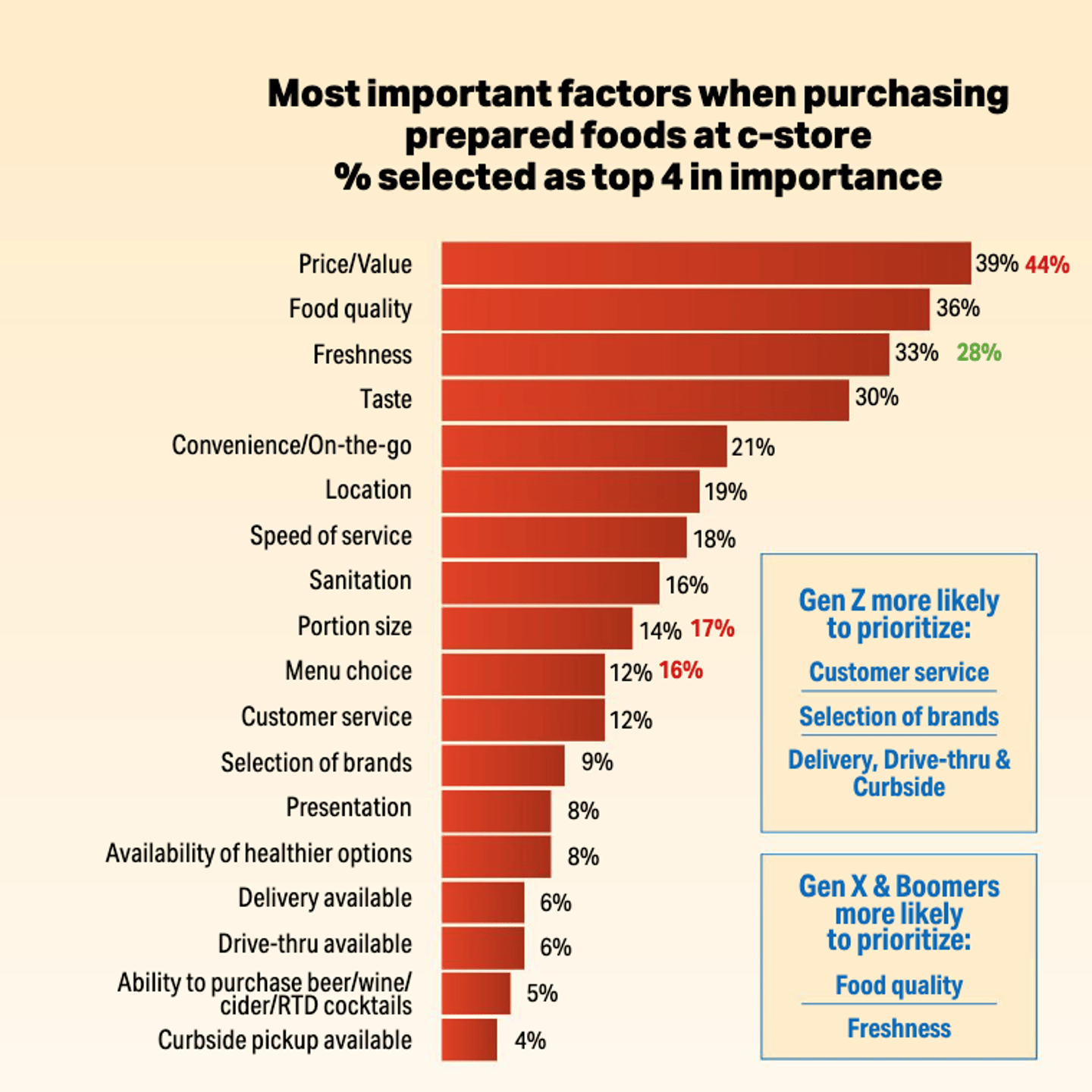
Investing in foodservice yields returns far beyond the counter—it accelerates growth across your entire store. An impressive 93% of prepared food buyers report adding extra items to their basket, averaging three additional purchases per visit. Master your food offer, and you drive powerful cross-merchandising momentum.
Mature shoppers (Gen X/baby boomers) consistently attach lottery tickets to their prepared food purchases.
Younger shoppers (Gen Z/millennials) frequently attach fountain drinks, energy drinks, frozen beverages, yogurt drinks or fresh produce to complete their meal.
The opportunity
Ultimately, positioning foodservice as a central pillar of growth represents a transformative strategic shift for the convenience channel. While building a mature foodservice operation requires sustained operational focus, investment and time, the potential for long-term payoff is undeniable. As legacy categories decline, evolving consumer perceptions and behaviours—particularly among next-generation shoppers—make foodservice a promising growth engine for convenience.