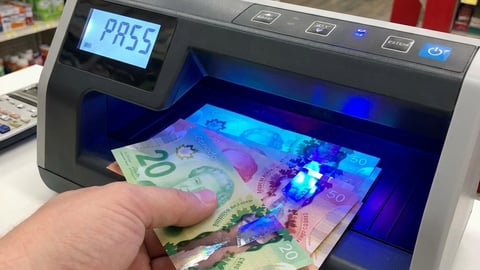
Counterfeit currency indicates a national trend
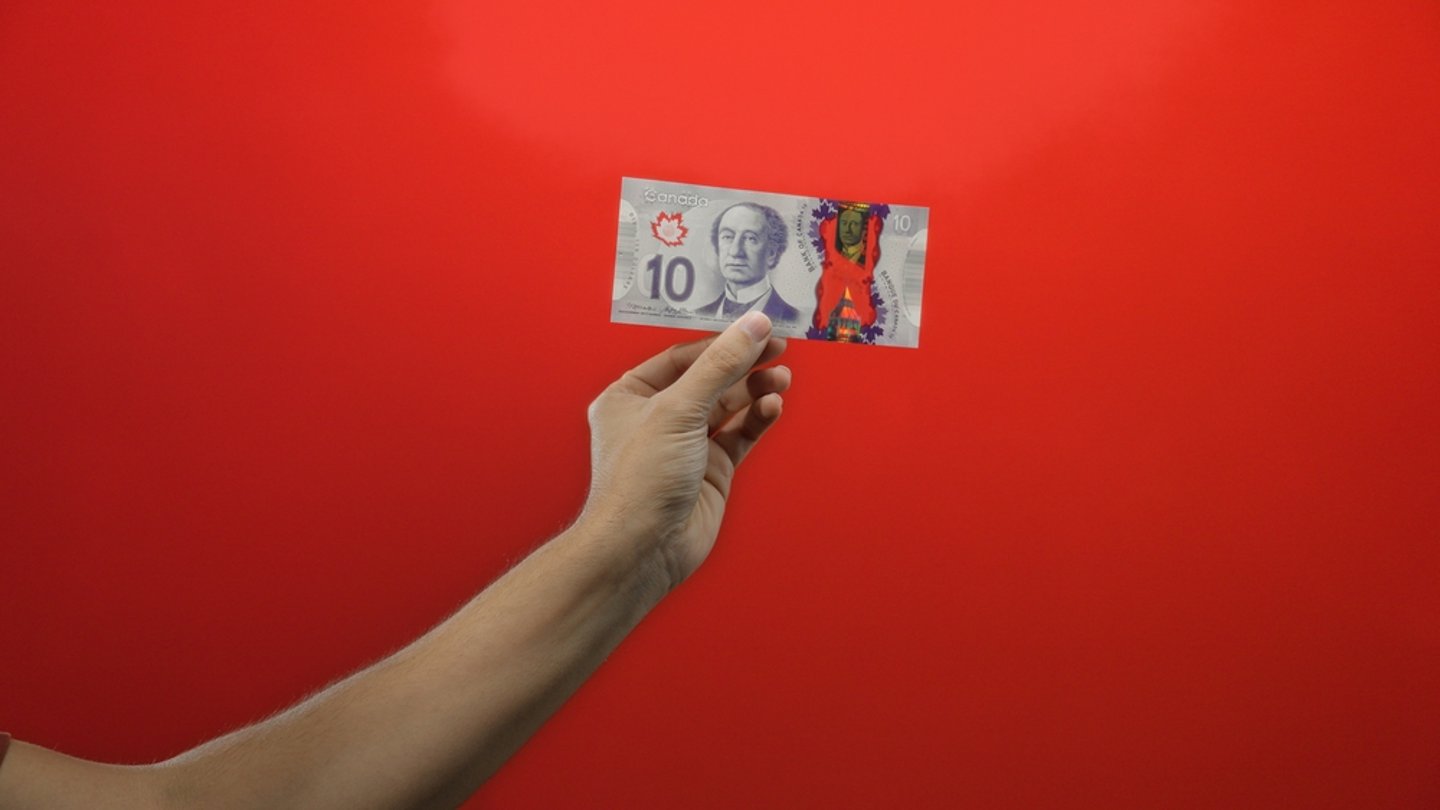
The uptick in counterfeit currency circulating in St. Thomas in 2026 reflects a dramatic increase in fake money being passed across Canada.
St. Thomas Police Service (STPS) officers recovered what’s believed to be a counterfeit bill on March 14 when a St. Thomas retail employee turned over a bank note that a woman had tried to use to pay for merchandise.
So far in 2026, the STPS has recorded 17 incidents involving counterfeit currency. There were 22 incidents reported in all of 2025.
“The service continues to focus on public awareness and prevention, with our community mobilization officer working with local businesses to help identify counterfeit bills and respond appropriately when they are encountered,” said STPS corporate communications coordinator Samantha Wakefield.
“As these matters remain under active investigation, we are unable to provide further details regarding the source of the currency or any investigative avenues,” added Wakefield. “We encourage anyone who encounters suspected counterfeit currency to report it to police.”
According to the Royal Canadian Mounted Police, police across the country seized 143,004 bills in 2025, compared to 46,988 in 2024. Ten years prior, only 13,960 bills were seized.
The lion’s share of forged currency in Canada is comprised of 20- and 100-dollar bills. In 2025, 78,969 bank notes seized across Canada were $20 bills, and 50,305 were $100 bills. That compares to 12,283 $20 bills in 2024 and 22,405 $100 bills.
“As for 2026, the statistics are not yet available, however, based on the submissions we’ve observed thus far the trend appears to be continuing with an increase in counterfeit bank notes in circulation in Canada,” RCMP communications specialist Robin Percival said in a statement.
In December, STPS issued an advisory to residents and businesses, raising concerns about the increase in counterfeit currency being passed in St. Thomas.
“The St. Thomas Police Service is reminding community members and businesses to remain vigilant when accepting cash,” STPS said in a statement. “Counterfeit bills may appear genuine at first glance but often lack standard security features such as raised ink, clear printing, and embedded security elements.
“If you believe you have received counterfeit currency, do not return it to circulation,” according to the December STPS statement. “Please contact the St. Thomas Police Service to report the incident so the bill can be examined and the circumstances documented.
According to the Bank of Canada – the only authority that can legally supply Canadian financial institutions with bank notes to meet the demand for cash – there were about three billion banknotes, worth about $120 billion, in circulation in Canada in 2024. The $20 note had the highest circulation volume of more than one billion notes.
The Bank of Canada also said the rate of counterfeiting in 2024 was nine parts per million (ppm), below the Bank’s target of 30 ppm. That year about 95 percent of Canadians said in a survey that they were confident in bank note authenticity.
“In recent years, the number of counterfeits in circulation has remained low and stable,” according to the Bank of Canada. “Canadians are confident in their bank notes. Still, the financial loss from a counterfeit note can be significant for individuals and businesses alike.”
The new $20 bank note which the Bank expects to issue in early 2027 will incorporate new security features. It will be printed on polymer, primarily in green, with a vertical orientation, featuring King Charles III on the front and the Canadian National Vimy Memorial on the back.
The RCMP’s National Anti-Counterfeiting Bureau (NACB) is Canada’s central repository for all suspect bank notes found in circulation, said Percival. Police agencies can submit all their suspect bank notes to NACB for forensic analysis. NACB records them in a national counterfeit database. When the counterfeit notes are no longer required by the courts, NACB destroys them.
NACB works with the Bank of Canada, the Royal Canadian Mint and the Canada Border Services Agency, raising awareness on counterfeiting and supporting enforcement.
A 2025 Canada Border Services Agency media release describes the seizure of holographic stickers used in the production of currency, and about $100,000 in counterfeit money, at an international cargo processing facility in Mississauga and a home in Glace Bay. The goods were shipped to Canada from China.
“The RCMP does not comment on the specific origin of counterfeit currency, as this information relates to ongoing investigative and intelligence activities,” said Percival. “However, we can confirm that counterfeiting trends observed in Canada are consistent with patterns seen internationally, where several countries have reported increases in counterfeit activity linked to improved printing technologies and evolving methods used by counterfeiters.