
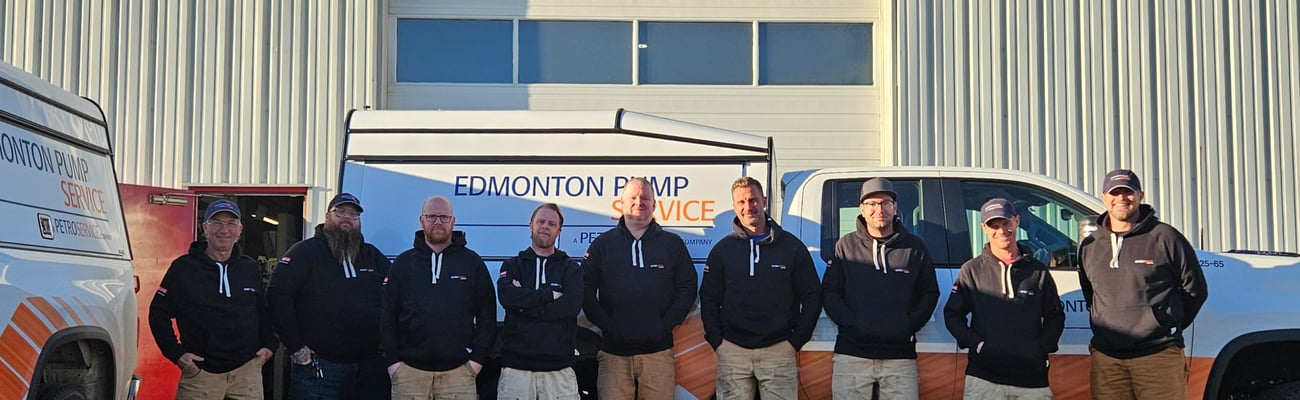
Petro Service accelerates western Canada growth
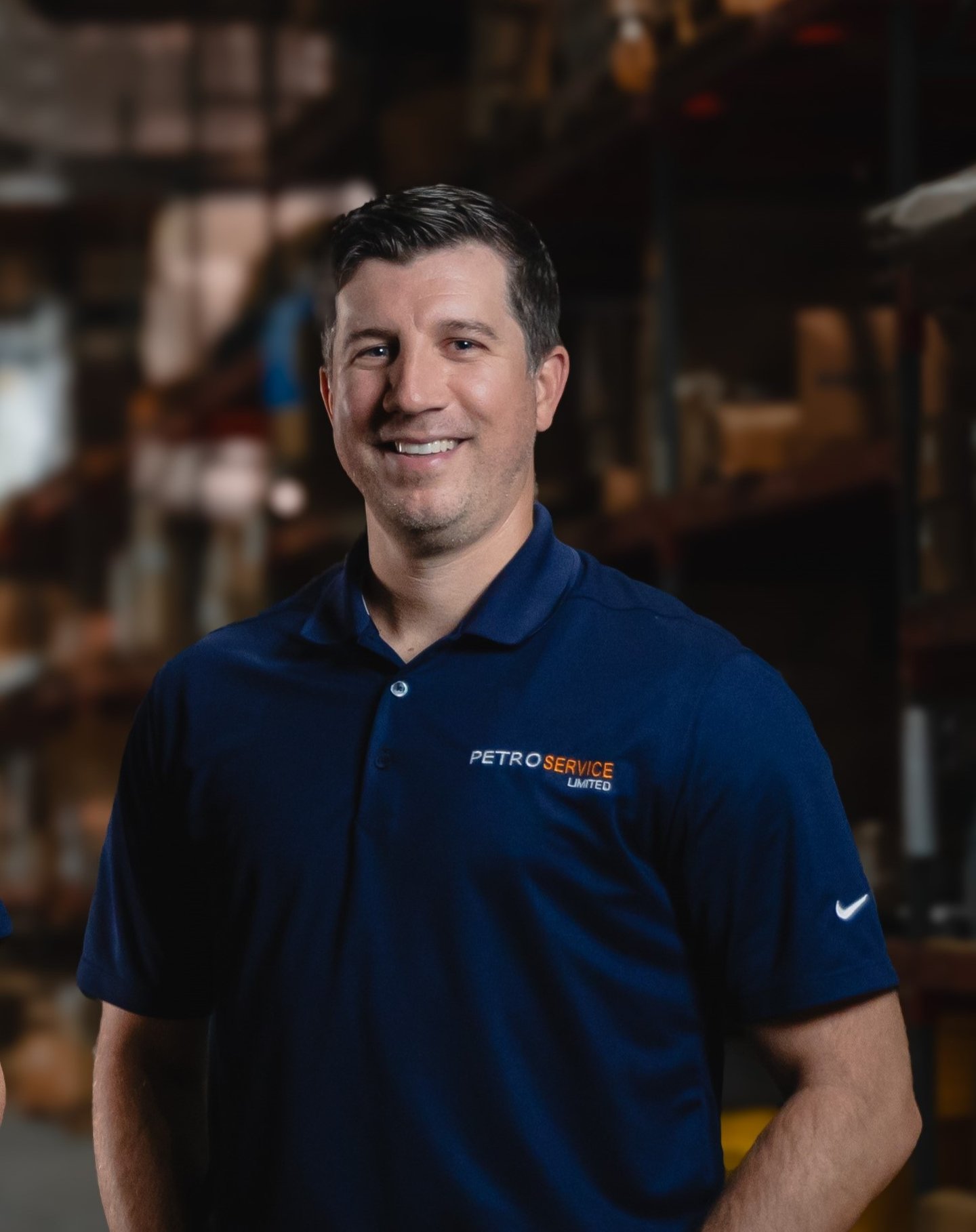
Petro Service Limited is expanding its footprint across Canada at a time when the very definition of a fuelling site is being rewritten.
With its February 2026 acquisition of Calgary-based MI Petro, the Saint John, N.B.-based company is strengthening its Western presence and accelerating its push toward a fully national service platform—one designed to support a new generation of retail “hubs” that combine fuel, EV charging, foodservice, car wash and convenience under one roof.
For Josh Ferguson, general manager of Western operations and director of sales and marketing, the move reflects both where the company has been and where the industry is heading.
“This acquisition is a natural next step as Petro Service continues building a coast-to-coast platform,” he says. “MI Petro further strengthens our ability to serve customers consistently across Canada.”
It’s a long way from the company’s modest beginnings.
Legacy of expansion
Petro Service traces its roots back to 1985, when it operated as a small business unit within what was then known as Commercial Equipment. At the time, it was a team of just four employees, focused on building technical expertise in the field.
By 1992, the company had opened its first dedicated facility in Saint John, serving as a base for rebuilding gas pumps, distributing equipment and supporting field technicians. That foundation set the stage for its next phase: In 1998, the business formally became Petro Service Limited.
From there, growth came steadily and strategically.
In the early 2000s, the company expanded its capabilities to include project management and construction, allowing it to take on more complex site builds. It also secured accreditation from Measurement Canada to perform inspections under the Weights and Measures Act, further strengthening its role with fuel retailers.
Over the past decade, that expansion has increasingly focused westward.
A series of acquisitions—including J.A. Robinson Pump Service in Winnipeg in 2017, Edmonton Pump Service in 2019 and K.W. Petroleum Services in Saskatchewan later that same year—extended Petro Service’s reach into Manitoba, Northern Ontario, Alberta and Saskatchewan.
The addition of MI Petro now fills a key gap, expanding operations in Alberta and British Columbia along with a highly experienced technical team and long-standing customer relationships.
“MI Petro brought deep-rooted relationships in Western Canada, along with a highly experienced technical team,” Ferguson says. “This acquisition strengthens our national capabilities and reach.”
With new branches in Calgary and Vancouver and expanded distribution rights for Gilbarco Veeder-Root products across Western Canada and the Territories, Petro Service is now positioned to support national customers with greater consistency from coast to coast.
That national reach is supported by a growing network of technicians positioned across the country to respond quickly when issues arise.
In addition to its services in major centres, Petro Service has placed remote technicians in markets ranging from Brandon, Man., to Thunder Bay, Ont., and Miramichi, N.B., helping ensure support is never far from the site. Equipped with onboard inventory, these technicians can diagnose issues and complete repairs on the first visit, reducing downtime and minimizing costs for operators.
For retailers, that kind of responsiveness is critical—particularly as sites become more complex and downtime affects multiple revenue streams, from fuel and EV charging to car wash and in-store sales.
Integrated formats
This level of national service comes as fuel and convenience retailers rethink what their sites need to deliver.
“We’re supporting sites that bring together fuel, EV charging, car wash and convenience retail in one place,” Ferguson says. “The focus is on supplying, installing and maintaining sites that are easy for customers to navigate and efficient for operators to manage.”
That shift is reshaping Petro Service’s role from a traditional equipment and service provider to a broader infrastructure partner.
This expanded role extends across the full lifecycle of a site. Petro Service offers turnkey petroleum solutions that include project management, equipment distribution, installation, service and construction—capabilities it has been building for more than 15 years.
The company works with operators on everything from single-site installations to multi-site upgrades and full site planning, bringing together expertise in forecourt and canopy design with on-the-ground execution.
As sites become more complex, that end-to-end approach is increasingly valuable, allowing operators to move from concept to construction to ongoing service with a single partner.
The rise of EV charging is a key part of that evolution, but not a replacement for what came before.
“The shift toward EVs is expanding our service mix rather than replacing traditional fuelling,” Ferguson says. “Retailers are looking for partners who understand both conventional petroleum infrastructure and emerging EV solutions.”
That shift is also changing what retailers expect from their service partners. Beyond installation, there is growing demand for guidance on how to plan and integrate EV infrastructure into existing sites—everything from layout and traffic flow to power capacity and long-term scalability.
“There’s no one-size-fits-all answer,” Ferguson says. “The right investment depends on the local market, customer patterns and where operators see their business heading.”
To meet that demand, Petro Service has been building out its capabilities in EV infrastructure, investing in both technology and talent. The company has expanded training for its existing technicians and brought on licensed electricians to support customers exploring EV solutions, while also ensuring it has equipment ready to deploy as projects move forward.
It has also partnered with established providers such as ChargePoint and FLO, giving customers access to proven equipment and ensuring Petro Service teams are trained to install and maintain those systems with confidence.
The result is a more integrated approach—one that mirrors the company’s long-standing role in petroleum and car wash infrastructure while extending it into emerging energy solutions.
While EV-related work is growing, traditional fuelling infrastructure continues to make up a significant share of PetroService’s business, and it’s expected to remain a core component for years to come.
Car wash operations
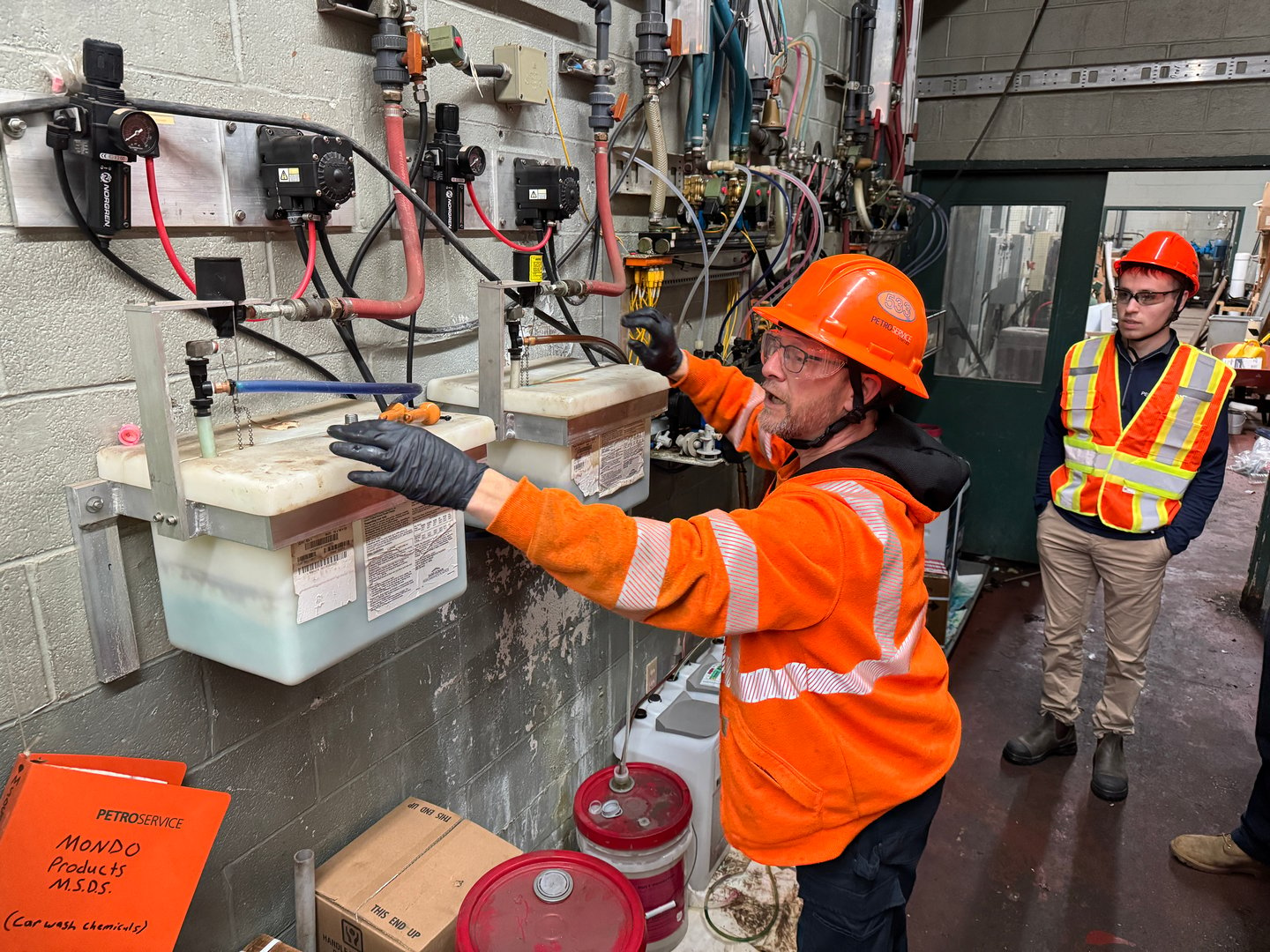
At the same time, other parts of the site are becoming more important to overall profitability—particularly car wash operations, which are increasingly central to the modern fuel and convenience offer.
“Car washes have become an important part of the business for many fuel and convenience retailers,” Ferguson says. “They help drive steady revenue and repeat visits, making them a strong complement to fuel sales.” He adds that in North America, “Car wash is the fastest growing revenue stream for site operators.”
That growth is being supported by changes in customer behaviour, with more consistent, year-round usage and rising interest in premium wash options that prioritize speed, quality and convenience.
Technology is also reshaping the category. Advances in automation, water efficiency and payment systems are helping operators run more efficiently while improving the overall customer experience. Tools such as remote monitoring and detailed reporting on water and chemical usage are giving operators greater visibility into performance, while larger tunnel systems are enabling higher throughput at busy locations.
Environmental considerations are also influencing investment decisions, as operators look for systems that reduce water and energy use while still meeting customer expectations.
All of this reinforces the growing role of car washes within the broader hub model.
“As sites become more than just places to fuel up, car washes help bring in traffic and keep customers on site longer,” Ferguson says. “They’ve become an important part of the overall business mix.”
The long view
Longer term, he says the company will continue to evaluate opportunities for further growth—both geographically and across service lines.
After four decades of steady expansion, Petro Service is entering its next phase with a stronger national footprint and an expanded role in supporting modern fuel and convenience sites.
As fuelling locations evolve into multi-service destinations, the company is positioning itself not just to keep pace, but to help shape what comes next.
Related Content

This article was originally published in the May/June 2026 issue of Convenience Store News Canada | Octane