
Suncor’s record quarter spotlights downstream strength and supply chain stability for retail operators

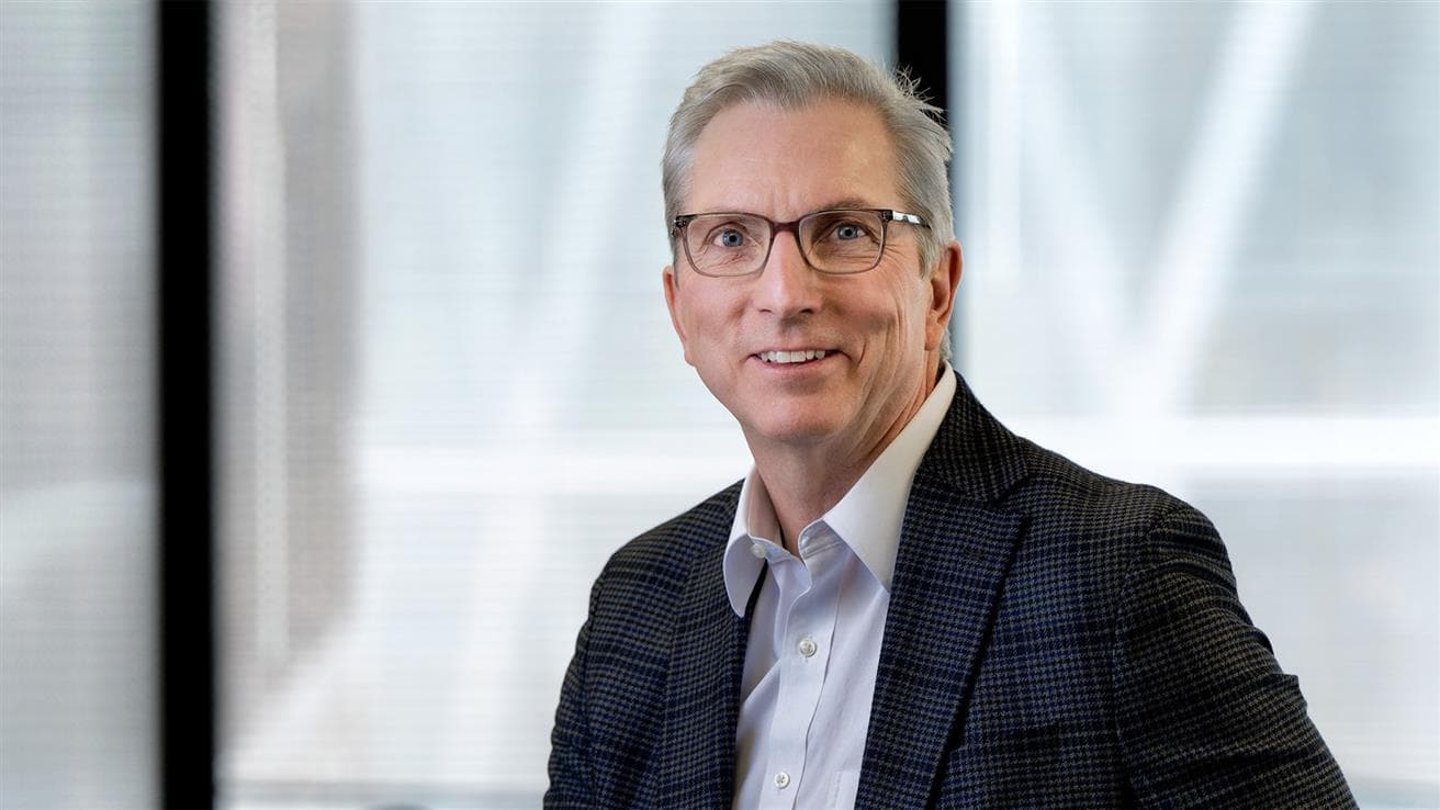
In an earnings call filled with billion-dollar financial metrics and refinery throughput milestones, Suncor Energy chief executive officer Rich Kruger opened his formal remarks by focusing on one specific company leader: Emma Todd, projects manager and EHS Leader.
Todd was recently recognized by industry peers as the recipient of the Alberta Mine Safety Association’s 2026 Trailblazer Safety Leader Award. For Canadian downstream fuel operators, commercial distributors and forecourt dealers, the focus on Todd illustrates how culture at the primary processing stage anchors wholesale product flow down to the retail rack.
‘Boots on the ground’ execution
Rather than leaning on high-level statistical summaries, Kruger highlighted how individual leadership drives operational turnarounds:
"Starting with safety, the third quarter was our safest quarter of the year for both personnel and process safety. But rather than recite data, I want to recognize an employee, Emma Todd, projects manager and EHS Leader. Emma was recently awarded the Alberta Mine Safety Association's 2026 Trailblazer Safety Leader Award, recognizing her passion and commitment in leading people to work safely."
Recalling Todd's performance during an operation that had faced operational headwinds, Kruger detailed a practical, frontline approach:
"Emma first came to my attention a few years ago on a project that was struggling. She rolled up her sleeves, put her boots on the ground and got things back on track. But most impressive was that Emma knew by name every contractor on site. She epitomizes safety leadership at today's Suncor and we are extremely proud of her."
Operational lessons for retail forecourts and bulk plants
While Todd’s work centres on large-scale production sites, the principles Kruger emphasized apply directly to retail fuel sites, cardlocks and bulk plant operations:
Direct engagement over compliance checklists
Kruger highlighted that Todd took the time to know "every contractor on site, by name." For retail dealers and station managers who routinely coordinate with third-party transport drivers, fuel drop contractors and pump technicians, personal engagement on the ground is what ensures safety protocols are actively respected.
Process safety prevents commercial disruptions
Safe execution directly enables plant reliability. Suncor's safest quarter coincided with major maintenance milestones, including record duration and cost performance during turnaround events at Edmonton, Montreal and Syncrude.
Culture drives asset performance
As Kruger later noted regarding frontline execution across the company's operating footprint, "when you have technical and operational teams that are provided the right focus and leadership, they continue to find opportunities."
READ: Suncor Energy releases third quarter 2026 financial results
The downstream takeaway for a stable supply chain
For Canadian gas station operators and wholesale fuel purchasers, personal accountability and safe execution upstream are prerequisites for a stable supply chain. By prioritizing site-level leadership and relationship-driven safety management, Suncor connects day-to-day workforce culture directly to reliable, continuous delivery at the terminal racks.
Based on the earnings call transcript, Suncor’s downstream improvements at the Edmonton and Sarnia refineries were centered on intermediate unit optimization, process severity reduction and novel blending workflows.
Rather than relying purely on top-line crude volume, these technical adjustments directly expanded product margins, elevated yields of higher-value fuels, and preserved cash flow during major maintenance.
1. Edmonton refinery: Intermediate unit yields and turnaround blending
The Edmonton facility delivered three distinct margin-enhancing improvements:
Turnaround gas oil blending (over $50 Million in free funds):
The Operational Bottleneck: Historically, taking the Edmonton fluid catalytic cracking (FCC) unit offline for turnaround required cutting overall crude throughput by 30% (45,000 to 50,000 bpd) because the facility could not process the heavier gas oil coming off the atmospheric/vacuum distillation units.
The Solution: Production coordinator Joel Allum devised a plan to store the gas oil stream temporarily and blend it with upgrader streams from Fort McMurray (400 km away), creating a marketable sweet synthetic crude.
Margin & Volume Impact: The workaround preserved 46,000 bpd of throughput that historically would have been curtailed. This raised Edmonton’s annual average utilization by 3% (and company-wide utilization by 1%), generating over $50 million in incremental free funds during an event that typically depresses margins.
Upstream-to-downstream feedstock integration (over $75 million year-to-date):
- The Solution: Downstream teams focused on filling Edmonton’s intermediate conversion units with custom crude and intermediate blends sourced directly from Suncor’s oil sands operations.
- Margin & Volume Impact: Intermediate throughput increased by 8,000 bpd year-to-date, capturing $75 million in incremental value by substituting third-party or sub-optimal feeds with tailored internal streams.
Diesel yield maximization (over $65 million incremental; $140 million combined YTD):
- The Solution: Operational adjustments inside Edmonton's conversion units were tuned to tilt the product slate toward middle distillates.
- Margin & Volume Impact: Executive vice-president Dave Oldreave noted that lifting diesel yields generated an additional $65 million, bringing the total year-to-date value generated from Edmonton's intermediate units to $140 million. Because diesel commanded healthy crack spreads, shifting volume away from lower-value cuts directly widened gross refining margins.
2. Sarnia refinery: Reforming optimization and octane uplift (over $40 million/year)
At the Sarnia refinery, operational changes directly targeted catalyst life and high-octane gasoline yield:
The Operational Bottleneck: Engineers Kyle Hills and Ursuline Tahar identified that a small 800 bpd specialty solvent stream produced off the catalytic reformers was forcing the units to run at higher operating severity. High severity accelerates catalyst deactivation and leads to frequent downtime for changeouts.
- The Solution: Working with Suncor’s integrated technical team, Sarnia switched to manufacturing a different finished product stream, enabling the reformers to run at lower severity.
- Margin & Operational Impact:
- Decreased downtime and lower catalyst replacement costs.
- Increased reformate yield, directly boosting output of high-octane gasoline blending components.
- The net annualized margin contribution of this single change was valued at $40 million per year.
3. Downstream margin realization: The macro picture
These plant-level de-bottlenecks fundamentally altered Suncor's downstream earnings power relative to benchmark cracks:
- Outperforming the crack spread: Through the first nine months of the year, the New York Harbor 2-1-1 crack spread (net of RVO) was up 16% compared to 2022 levels. However, Suncor’s downstream AFFO surged over 60% to $7.9 billion, demonstrating that margin capture grew at nearly four times the rate of the market benchmark.
- 100% Proprietary feedstock advantage: Kruger highlighted that Edmonton operates on 100% Suncor-owned feedstock, while Sarnia runs on over 50% internal crude. This vertical integration allows technical teams to adjust upstream crude blends specifically to suit downstream unit metallurgy and conversion constraints, capturing value at both ends of the barrel.

