C-stores getting into the fast lane

When self-checkout machines were first introduced in the United States in the late 1990s and in Canada shortly after that, they were heralded as a solution to labour shortages, rising operating costs and customers wanting to get in and out of a store as quickly as possible. Research shows that most Canadians select self-checkout over standing in line waiting for a cashier to scan their items—especially if they are buying less than 20 items.
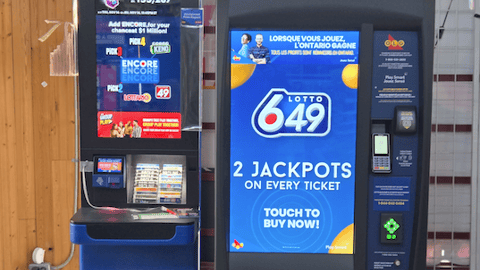
While grocery stores and pharmacies across Canada, the United States and the United Kingdom have gone all-in on the trend, it’s not as common to see self-checkout options in the convenience and gas space. But one technology company believes self-service in retail has become a necessity.
The drive for efficiency
“When organizations started adopting self-checkout, repurposing labour was one of the key reasons they did it, but nowadays, I think retailers’ motivation is a little bit different,” says Nino Hoerttrich, head of global retail marketing for Diebold Nixdorf, which is based in North Canton, Ohio. The company has focused its attention on leading-edge self-checkout technology geared towards retailers.
“In all the segments we’re covering—general grocery, convenience, fashion and apparel, and quick-service restaurants—we see a lot of motivation from retailers to automate things, especially in Europe and North America. Self-service and self-checkout then becomes something customers expect.”
Hoerttrich says smaller-footprint c-stores and gas stations with few staff members are installing self-service checkouts so they can assign their people to other tasks rather than sitting behind the counter checking people out.
“Late at night, or for 24-hour operations, there’s often only one person managing the store, taking care of customers, and making sure shelves are filled, so we’re taking away one of the tasks that keeps staff from other tasks,” adds Hoerttrich, who is based in Paderborn, Germany.
A wealth of scalable options
Busy retailers want user-friendly technology solutions, especially ones that can seamlessly integrate with systems they’re already using, says Hoerttrich.
“From a technology perspective, we’re seeing the demand for self-service environments that are easy to use and easy for customers to access, like larger screen sizes and easy user interfaces,” he explains.
“When shoppers have a pleasant experience the first time they use a self-service technology, they will do it again. If they have a very disruptive journey full of friction, they probably will not return.”
Because Diebold Nixdorf’s products are modular, retailers can customize the solution that suits their needs, he adds. “It’s almost like a Lego approach: you can build it so it fits the purpose of the store environment best.”
To figure that out, Diebold Nixdorf’s advisory service team works with retailers based on their basket sizes, throughput and customer demographics to identify a good checkout mix, then they build the ‘checkout zone’ with the perfect ratio between traditional and self-checkout units, he explains. “You’re also able to identify some KPIs, which helps retailers understand where they need to improve or what is already working very well in their checkout processes.”
Setting goals—such as reducing queues for standard transactions or freeing up more time for staff to tackle other tasks beyond checking out customers—is also part of the process.
“We work with our retail customers to identify their expectations, goals, pain points and challenges in their daily operations. Then, we build on that understanding to find a good technical solution set up. Technology is usually the last building block of the journey,” he notes.
Consumers are mostly on board
Some research from 2025 in the grocery space revealed more than 60% of shoppers now expect an alternative to queuing up in a line behind a manned counter. Yet there will always be consumers who aren’t tech-savvy, or who don’t wish to use self-checkout, says Hoerttrich.
“This is not a bad thing; everyone should be able to check out using the process they prefer. In our advisory service, we never say we want to automate the entire store, or that we believe self- checkout is the only option,” he says.
“It’s important to understand your customer’s behaviour and what the shoppers in this environment want. You need the right mix between a traditional checkout, self-ordering, self-checkout, and using a mobile device to scan articles and check out.”
Overcoming the hurdles ahead
Most Canadians are familiar with how a traditional self-checkout works: Scan your items, check out and leave—but friction points remain, such as handling non-barcoded or age-restricted items.
“Those are the kinds of things we can solve with our advanced AI camera vision technology, which can support the entire process by either video recognition of the face that does an age estimation, or by recognizing fresh produce and multiple non-barcoded items all at once,” says Hoerttrich.
There’s even a way to address retail shrinkage that happens either by mistake when a customer forgets to scan an item, or out of frustration after a shopper tries multiple times and then either leaves it behind or puts it in their bag: 36% of consumers reported leaving a store with an unscanned item without realizing it, according to a recent LendingTree survey, while 15% admitted they gamed the self-checkout system to steal.
“Shrinkage is also a big topic in retail environments, including the convenience space; people think they scanned something, but they didn’t, or they don’t find the right article within the menu. We call that ‘frustration shrinkage’,” says Hoerttrich.
“With our AI platform, we’re helping retailers prevent shrinkage and loss at the self-checkout.”
From self-checkout options powered by AI to traditional POS solutions with click and connect, Hoerttrich says investing in a platform with a modular approach can streamline operations while delivering exceptional customer experiences. Some of the benefits c-store and gas retailers can expect include an end-to-end solution to manage inventory, pricing and suppliers, and real-time reporting analysis that provides insights into business KPIs.
Subscribe here for instant access to the digital magazine and archives!