Canada’s contraband tobacco crisis

Up to one in every two cigarettes sold in Ontario and nearly one in two in British Columbia is now illegal. That is the stark finding from a new independent report prepared by EY Canada for the Convenience Industry Council of Canada (CICC).
Over the past three years, contraband tobacco cost the federal government and both provinces an estimated $1.7 billion to $2.75 billion in lost tax revenue. During that exact timeframe, illicit sellers pocketed between $1.75 billion and $2.84 billion.
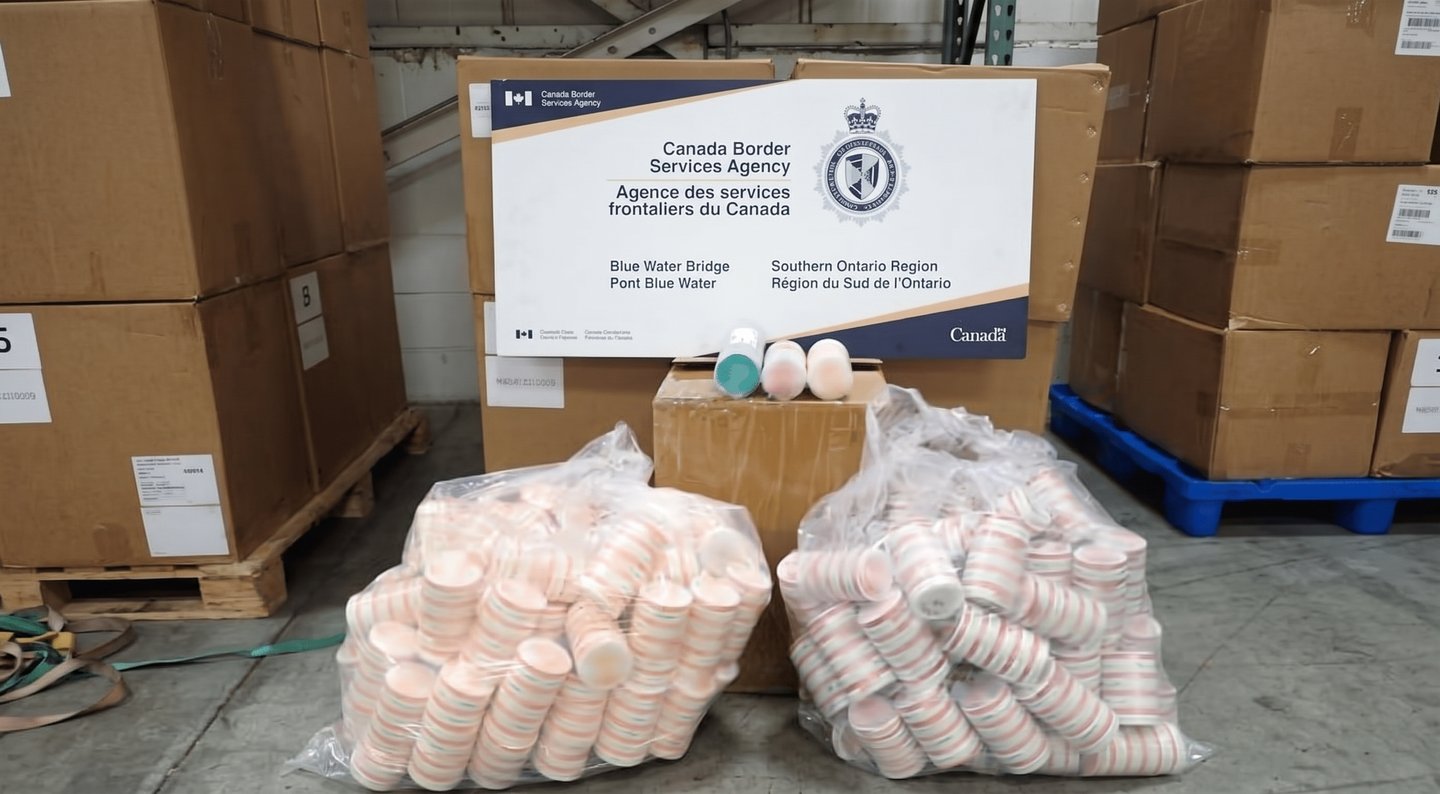
Anne Kothawala, president and chief executive officer of the CICC, warns that the underground trade hurts everyone. In Ontario, the illicit market may now match the legal trade in size, meaning every missed sale for a law-abiding small business is cash stripped straight from government coffers. Retailers follow every rule, check every ID and collect mandatory taxes, yet organized crime continues to undercut them. Kothawala notes that busts now routinely sweep up illegal vapes and nicotine pouches, giving criminals a dangerous commercial edge.
EY Canada report reveals exploding illicit market share
The numbers tell an alarming story across Canada's two major provincial markets. In Ontario, contraband represented between 42% and 53% of the total market in 2025, climbing steadily from 34% to 46% in 2023. Meanwhile, British Columbia's illicit market expanded from 21% to 36% in 2023, reaching 25% to 39% in 2024 and hitting 33% to 46% in 2025.
Because of this surge, legal sales are dropping fast. Since 2019, legal, tax-paid cigarette volumes fell 46% in Ontario and 59% in B.C.
Price gaps remain the primary engine pushing buyers toward illegal operators. EY Canada reported that a legal carton of cigarettes costs roughly $160 in Ontario and $193 in B.C. On the illicit market and through online networks, unregulated vendors offer cartons for as little as $35 to $40.
READ: CBSA seizes $13.8M in illicit tobacco across southern Ontario
Cash flow to organized crime and lost tax revenues
Between 2023 and 2025, provincial governments in Ontario and B.C. missed out on a combined $901 million to $1.48 billion in tobacco taxes. Ontario lost up to $1.08 billion, while B.C. lost up to $400 million. At the federal level, Ottawa missed out on an additional $788 million to $1.27 billion in cigarette excise duties across both provinces. In 2024 alone, combined government tax losses reached up to $1.05 billion.
“Contraband costs us all. In Ontario, the illicit market may now be as large as the legal one, and every sale a law-abiding small business doesn’t make is money taken out of government coffers,” added Kothawala in a statement. “Convenience store owners follow every rule, check every ID and collect the tax, and they are being undercut by organized crime. This isn’t just about tobacco anymore; we are now seeing busts that include vapes and nicotine pouches. It’s out of control, and governments must act now instead of handing a competitive advantage to organized crime.”
The report revealed that unlawful sellers gathered an estimated $567 million to $894 million in 2025 alone. The RCMP and partner law enforcement agencies point out that these proceeds directly finance organized criminal operations, including firearms smuggling and community drug trafficking involving substances such as fentanyl.
Independent retailers pay the ultimate price
Canada is home to more than 21,200 convenience stores employing over 182,000 workers. Yet economic pressures and illegal competition are taking a heavy toll, with an average of 1.5 stores shutting their doors every day last year.
Every illicit purchase pulls a customer away from licensed operators who abide by strict age limits and fiscal rules. Local corner stores rank among the country's most diligent retailers of age-restricted goods. In official Health Canada inspections for vaping products, convenience stores achieved a 99 % compliance rate, standing in sharp contrast to the 43 % pass rate recorded by specialty vape shops.
Kothawala points out that Ottawa already possesses key mechanisms, such as the new Financial Crimes Agency and the National Anti-Fraud Strategy. She argues that authorities must now put these tools to work by tracking the cash flows, funding front-line enforcement and taking down the unregulated web storefronts that sustain this black market.
CICC action plan to halt illicit nicotine sales
To tackle the underground trade, the CICC is urging federal and provincial authorities to adopt four targeted priorities:
First, give the new Financial Crimes Agency a clear mandate to pursue the illicit tobacco and nicotine trade, while using the National Anti-Fraud Strategy to remove illegal seller websites and digital advertisements.
Second, equip law enforcement by significantly boosting funding for the RCMP Contraband Tobacco Task Force, whose base annual budget has stayed flat at $3 million since 2008.
Third, cut off digital distribution by requiring social media channels and search engines to block illegal sellers, alongside rules directing federally regulated financial institutions and payment gateways to shut down their processing accounts.
Fourth, give adult consumers regulated options by allowing licensed convenience stores to carry authorized harm-reduction merchandise such as nicotine pouches once again. Because convenience operators boast a verified age-check success rate above 99 %, keeping these products behind authorized retail counters shields youth while steering adult consumers away from black-market websites.