Healthcare

  • Health Canada recalls more hand sanitizer products

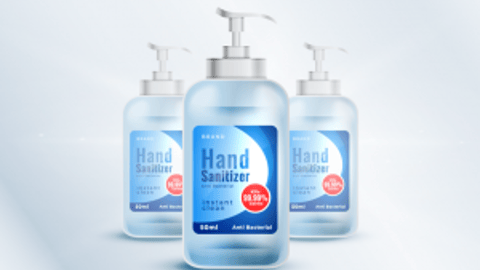
    Health Canada continues to add new products to its growing list of recalled hand sanitizers, included a product is has deemed counterfeit.Hand sanitizer is an important category for c-stores and the ideal last-minute purchase at check-out.Most recently, Health Canada warned a counterfeit version of the authorized Daily Shield hand sanitizer had been found for sale at a Dollarama store in Thunder Bay.The product may not be effective at killing bacteria and viruses, and may pose serious risks to health.It also says the product is suspected to contain methanol, which is not authorized for use in hand sanitizers and could cause severe adverse reactions or death when ingested.The counterfeit version is labelled with NPN 80098979, Lot 6942; Expiry May 2023 and is sold in a 250 mL format.The agency also recently pulled two Sanix products for containing methanol: Prairie Potions' Purify Hand Sanitizer and Antibacterial Spray.Last Best Brewing and Distilling Hand Sanitizer and Rocky Mountain Soap Company's Nomad Hand Sanitizer (Lemongrass) are both being recalled for missing risk statements, in additions to containing unauthorized technical-grade ethanol.Since June, Health Canada has recalled more than 100 hand sanitizer products, often for containing unauthorized ingredients or improper labelling. For the latest recalls, visit the Health Canada website.To find out if the hand sanitizer you're selling is safe, CLICK HERE to search by brand name. 
  • COVID-19 can remain on bank notes and glass surfaces for 28 days: Study

    Research emphasizes the importance of hand washing and stringent in-store cleaning regimesCoronavirus may remain for weeks on bank notes and glass surfaces, such as touchscreen, according to new research from the Australian Centre for Disease Preparedness.The study, which set out to examine the "effect of temperature on persistence of SARS-CoV-2 on common surfaces" shows the virus is “extremely robust.”Polymer bank notes (like the ones used here in Canada), de-monetised paper bank notes and common surfaces, including brushed stainless steel, glass, vinyl and cotton cloth were used as substrates in this study.The research showed SARS-CoV-2 can survive  for 28 days on smooth surfaces, such as glass on mobile phone screens or self-checkout touchscreens, and plastic banknotes, at room temperature (20 degrees Celsius/68 degrees Fahrenheit), compared to 17 days survival for the flu virus.According to the scientists involved in the study, "These findings demonstrate SARS-CoV-2 can remain infectious for significantly longer time periods than generally considered possible.
  • Canadians divided over whether to let pandemic disrupt Halloween, holidays: Poll

    Canadians are divided about whether to let the COVID-19 pandemic disrupt their plans for upcoming holidays and seasonal events, a new poll suggests.The poll, conducted by Leger and the Association for Canadian Studies, comes as COVID-19 cases are surging and public health authorities are pleading with Canadians in places with rising case counts to avoid contact with anyone outside their immediate families or at least to stick to small social circles.The results suggest that message is only partially getting through.Respondents with children who went door to door for Halloween last year were closely divided on whether to let them go trick-or-treating again this year, with 52% saying they won't and 48% saying they will.The poll found sharp regional variations, however.
  • Vapers, smokers take a hit as N.L. budget focuses on prevention

    If you took up vaping to avoid the taxes on cigarettes, your luck just ran out.A 20% tax on vaping products was a key feature of the Newfoundland and Labrador budget September 29, which aimed to focus as much as possible on community health and prevention.Vaping has so far escaped the province's sin tax net, even though research suggests the practice can present significant health risks, especially for teens and young adults.The province also added an extra 10 cents in taxes per gram of loose tobacco and five cents per cigarette.The budget also allocated $1.7 million for school initiatives, awareness campaigns and cessation programs to help reduce tobacco use and vaping.
  • Survey shows a decline in youth vaping

    A new survey finds that young people have been vaping less frequently since the COVID-19 pandemic began.The survey, conducted by the Lung Association of Nova Scotia and Smoke-Free Nova Scotia, finds that respondents decreased vaping to five days per week from six, on average.They also cut back to an average of 19 vaping episodes per day, down from 30.There has been a major push by all levels of government to introduce regulations designed to curb youth vaping.The survey funded by Heart & Stroke also found the decrease in vaping frequency is most notable in British Columbia and Ontario.The researchers say it may be related to warnings of potential complications from COVID-19 for e-cigarette users.The survey heard from more than 1,800 respondents between 16 and 24 years old, and found most begin vaping at around the age of 15.
  • Imperial Tobacco opens vape shop in Toronto

    The company plans to open more locations in cities across the country Imperial Tobacco Canada is opening a new retail store in Toronto that offers adult consumers a full-range of vapour products, while a select portfolio of these vaping products will continue to be available at convenience stores.
    image002
  • OPEC cuts oil demand forecasts, BP sees 'peak oil' in 2020s

    Developing countries' difficulty in containing the spread of the coronavirus pandemic will keep a lid on global oil demand, particularly in India, the OPEC cartel said Monday as it cut its forecasts.
X
This ad will auto-close in 10 seconds