Manufacturer

  • For small businesses that survive COVID, recovery is expected to be difficult

    Having 12 cases of mini eggs on hand sounds like the makings of a grandiose Easter hunt or the ultimate way to soothe a sweet tooth, but for Josie Rudderham, the confections have put her in quite the crunch.“We have joked about pouring them into a bathtub and doing a photo shoot because there is enough to do that, but really they are part of the cycle of investing in ingredients to make a lot of sales that didn't happen,” said Rudderham, the co-owner of Cake and Loaf in Hamilton, Ont.She spent the first months of the COVID-19 pandemic closing one of her two bakeries, taking on debt, laying off workers during the busy Easter season and offering curbside pickup, but the boxes remain.
  • Holiday socializing 2.0: Eat, drink and be wary

    With the constant uncertainty and change that is prominent in a COVID-19 environment, it is vital that we look towards the face of this new reality and consider how we might adapt upcoming fall and winter celebrations.Undoubtedly, foods and beverages will remain at the centre of these celebrations, particularly during the upcoming treat-focused Halloween 2020 season and into the myriad of winter social occasions.
  • Still time to enter Product of the Year Canada Awards

    Deadline for entries is October 31, 2020.
    POY_2021__ENG-230x300
  • COVID-19 can remain on bank notes and glass surfaces for 28 days: Study

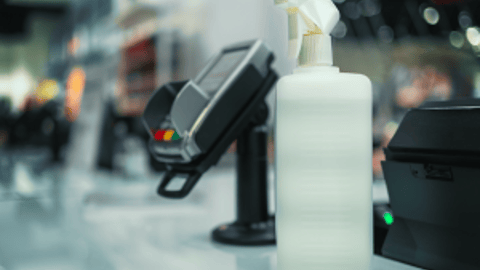
    Research emphasizes the importance of hand washing and stringent in-store cleaning regimesCoronavirus may remain for weeks on bank notes and glass surfaces, such as touchscreen, according to new research from the Australian Centre for Disease Preparedness.The study, which set out to examine the "effect of temperature on persistence of SARS-CoV-2 on common surfaces" shows the virus is “extremely robust.”Polymer bank notes (like the ones used here in Canada), de-monetised paper bank notes and common surfaces, including brushed stainless steel, glass, vinyl and cotton cloth were used as substrates in this study.The research showed SARS-CoV-2 can survive  for 28 days on smooth surfaces, such as glass on mobile phone screens or self-checkout touchscreens, and plastic banknotes, at room temperature (20 degrees Celsius/68 degrees Fahrenheit), compared to 17 days survival for the flu virus.According to the scientists involved in the study, "These findings demonstrate SARS-CoV-2 can remain infectious for significantly longer time periods than generally considered possible.
  • Front-line retail workers call for the return of COVID-19 pay bump as cases spike

    Calls for the return of hazard pay are mounting as workers on the front lines of Canada's retail industry grow increasingly anxious amid rising COVID-19 cases.
    Shutterstock
  • Irving backs away from refinery deal

    Workers to find out this week about jobs at Come By Chance Last May (2020), Irving Oil announced they would purchase the Come By Chance oil refinery owned by the New York-based investment group Silverpeak.
    Unknown
  • 5 simple tips to improve tunnel through-put

    Tunnels run roughly one car per hour per foot of conveyor. Small tweaks can make big differences in volume.
  • Straws, stir sticks and bags among first targets of countrywide plastics ban

    Environment Minister Jonathan Wilkinson says six single-use plastic items that aren't easily recycled and already have more environmentally friendly alternatives will be the first to go under Canada's new restrictions on plastics.
    shutterstock_700694767
X
This ad will auto-close in 10 seconds