OCSA calls on Ontario government to act as contraband sales hurt convenience stores

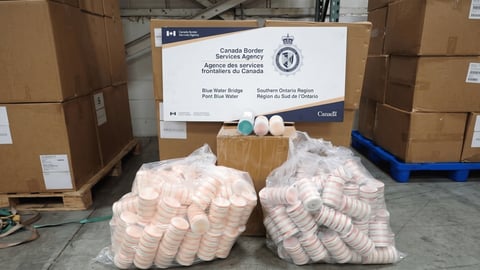
Illegal cigarettes now represent between 42 and 53% of the total cigarette market in the province, according to a recent EY Canada study commissioned by the Convenience Industry Council of Canada (CICC). That figure has climbed steadily from the 34 to 46% range recorded three years ago.
Behind the numbers lies an estimated $1.1 billion in lost tax revenue for Queen’s Park over the past three years. For retail owners, the hit cuts straight to the core of everyday basket size and front-counter traffic.
Why the illegal tobacco price gap crushes front counter sales
The primary driver behind this market shift remains the massive price difference between legal inventory and unregulated supply. A legal carton of 200 cigarettes in Ontario currently retails around $160, while black-market cartons regularly sell for under $50.
As Kenny Shim, chair of the Ontario Convenience Stores Association (OCSA), points out, that gap does more than wipe out tobacco revenue. "We commend the CICC for bringing these facts forward. This report puts a number on what Ontario is losing, but independent operators across Ontario have been feeling the consequences directly for years," said Kenny Shim, Chair of the Ontario Convenience Stores Association. "When a customer starts buying illegal cigarettes, we don't only lose that sale. We lose the coffee, the milk and the lottery ticket that came with it."
That lost foot traffic adds up quickly. EY researchers found that legal cigarette sales across Ontario dropped 46 % since 2019, driven by contraband access along with smoking cessation and product substitution. For a typical family-run location, that amounts to an annual revenue drop between $50,000 and $100,000.
In an industry built on tight margins, losses of that scale directly fuel the steady decline in licensed store fronts across the province.
Contraband market expands into illicit vapes and nicotine pouches
Contraband distribution networks are no longer sticking strictly to unbranded cigarettes. Illicit wholesalers have rapidly expanded into counterfeit vapes and flavoured nicotine pouches.
Because these underground sellers operate without age verification, retail compliance audits or tax collection, they bypass every public health barrier that legal stores uphold.
Industry advocates warn that layering new restrictions onto regulated retailers only drives more adult consumers toward these untamed channels. Legitimate businesses bear the compliance costs while illicit sellers continue unchecked.
What Ontario c-store retailers need from Queen’s Park
Ontario faces a projected $16.9-billion fiscal deficit, meaning the province cannot afford to surrender hundreds of millions of dollars each year to illegal trade networks.
The provincial government has made initial headway by increasing fines for contraband tobacco, renewing partnerships with the OPP Contraband Tobacco Enforcement Team and reviewing stronger police powers under the Tobacco Tax Act. Neighbouring Quebec has already demonstrated that dedicated provincial enforcement keeps illicit volumes well below Ontario levels.
OCSA urges government to take two actions
To turn the tide for neighbourhood retailers, the OCSA urges the Ontario government to take two concrete actions:
Deliver the expanded police enforcement authorities currently under provincial review so law enforcement can intercept illegal shipments and shut down rogue sellers.
Mirror Alberta by petitioning Ottawa to reverse the 2024 federal order that pulled Health Canada-approved nicotine pouches from convenience shelves. Banning regulated sales at front counters did not eliminate demand; it simply handed a booming market directly to illicit suppliers.
For Ontario store owners, defending retail margins comes down to fair competition. Regulating the businesses that follow the rules while curbing those that break them remains the only path forward.