Retail media takes centre stage
The most coveted space in convenience is no longer on the top shelf—it’s on the screen.
Retail media—ad placements within a retailer’s own platforms, such as websites, apps and physical stores—is surging. In Canada, retail media will account for one in five digital ad dollars this year, doubling its share since 2020, according to eMarketer. Spending is expected to more than double between 2023 and 2028, rising from C$2.58 billion to C$6.02 billion.
“Retail media is absolutely on fire,” says Victoria Cromie, managing director for Canada at Mars United Commerce, a global commerce marketing practice. “We’ve seen a hockey-stick trajectory in retail media revenue and where brands are shifting their dollars.”
For brands and retailers alike, retail media offers powerful advantages: the ability to leverage first-party data, create highly relevant messaging, measure return on investment and enhance the overall customer experience.
Retail media networks (RMNs) are the platforms that make this possible. These networks connect brands with valuable advertising space within retail environments, enabling retailers to monetize their digital and physical spaces. They generate revenue from brands’ ad spend, while also driving product sales.

While retail media was slower to take off in the convenience and gas sector compared to grocery and mass retail, that’s changing. In a sector that traditionally relied on ad partners to put up posters and POS materials in stores, operators are increasingly recognizing the opportunity to monetize their assets, observes Jamie Thompson, CEO of Adapt Media, an out-of-home advertising provider. “Retail media also allows organizations to better reach and communicate with customers, which will create a better experience,” he says.
How digital screens drive engagement
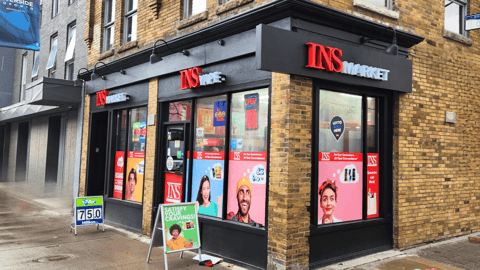
At INS Market, which has more than 100 locations across Canada, in-store digital media has become a cornerstone of its marketing strategy over the past two years. Amedeo Catenaro, director of marketing and a 2025 Future Leaders in Convenience + Car Wash winner, explains that the retailer was seeking a more effective way to engage customers directly.
“We had our social media channels and our website, but something was missing,” he says. “We wanted something on the ground level, in-store, that we were able to use to communicate our promotions and community messaging to our consumers.”
INS Market also saw the potential to tailor messaging based on location. “Our locations in British Columbia compared to those in Toronto differentiates a bit,” Catenaro says. “Having a network in place that allowed us to make adjustments accordingly was of critical importance to us.” By partnering with Adapt Media, INS Market rolled out a digital retail network across its stores in Canada, with the ability to run highly targeted campaigns.
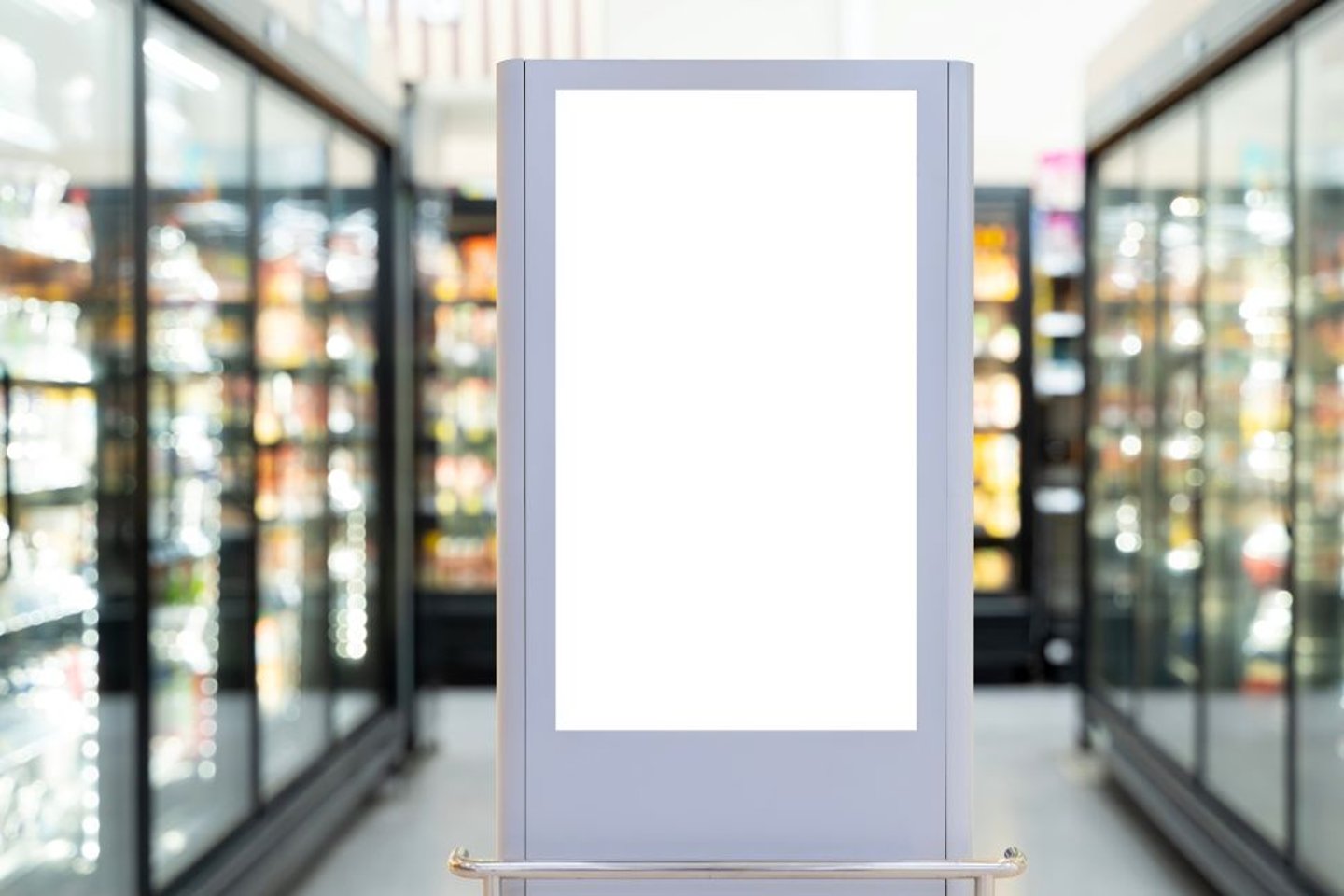
The retailer’s digital network includes prominent vertical screens placed in high-traffic, pedestrian-facing areas of stores, such as near entrances or concourses. It also uses horizontal point-of-purchase displays located in checkout areas. These displays can be remotely controlled and allow for instant updates, enabling dynamic advertising like new product launches from vendor partners. “For example, if Coke has a new product, the network can upload the creative and have it displayed immediately, which is a very cool concept,” says Catenaro.
At high-exposure locations, such as Toronto’s Union Station and Vaughan Mills shopping centre in Vaughan, Ont., digital media is delivering strong results. “They not only provide the ability to increase the basket size of the store, but they also bring people in the door,” says Catenaro.
Since convenience store customers are typically in and out quickly, engaging them can be tricky. “Our consumer is on a mission, and they typically come to a convenience store for a quick grab-and-go option,” he says. “In that fast-paced purchasing environment, it can be challenging to get your branding and messaging across. So, having an additional medium to communicate to your customer only elevates their experience… and makes their journey more fun and more personal. And I believe it helps in driving revenue for your business.”
INS Market has seen strong results from its retail media network, especially for products on promotion. “We’ve seen an uptick of upwards of 20% to 30% on the promo volume when utilizing the digital screens in our stores,” says Catenaro. “So, it’s a very effective tool.”

Cromie from Mars United Commerce highlights the opportunity to capture shoppers’ attention at dwell times, like when they’re fuelling up. During a recent visit to Costco, for example, Cromie herself was focused on the ads at the pumps. “There’s nothing else for me to look at other than the price of gas, so that gives me an opportunity to have that quiet moment where I’m engaged with the ad unit,” she says.
Unlocking the power of data
Retail media is built on data, which is transforming how retailers and brands engage with customers. As Adapt Media’s Thompson points out, by combining first-party data like transactions and loyalty programs with mobile location data and social media listening, retailers can build more detailed customer profiles and create more tailored messaging—whether in store, online or on mobile.
“We can take all this data together to truly understand who’s going online and who’s coming into the stores—and are these different audiences? Are we creating the same ads for these people? How are we going to effectively communicate with them?” Thompson says. “That’s the omni channel approach people should be looking at when they build a retail media network—not just how they communicate to people in store.”

This data-driven strategy doesn’t just improve how brands reach their customers—it allows them to adjust their messaging on the fly. “Now, we have more complex and more in-depth data that comes to us in real-time, which allows us to capture insights, optimize creative and adjust strategies,” says Cromie.
For example, when the weather is hot, the network could trigger an ad for an electrolyte drink, or if a store is near a beach, it might promote large snack sizes for groups of beachgoers. “What powers our decisions and where we put our brand partners’ dollars is that data collection,” says Cromie.
Looking ahead, Cromie sees continued growth in retail media, especially with a growing emphasis on the lower funnel of marketing—conversion, meaning turning potential customers into actual buyers. “If we want to convert, it comes down to being in retail—online and in store—and that’s what drives strong results.”
This article first appeared in the September | October issue of Convenience Store News Canada.
Retail Media 101
What is retail media? Retail media refers to any advertising within a retailer’s owned media channels, such as websites, mobile apps and physical stores. This can include everything from display ads on a retailer’s website to digital signage in stores.
What are retail media networks (RMNs)? RMNs are platforms that allow brands to place ads within a retailer’s ecosystem. These networks provide the necessary tools, data insights and ad inventory needed to run retail media. While many retailers partner with specialized media to manage and optimize these networks, large retailers like Amazon and Walmart manage and control their own RMNs.
What are the benefits? RMNs leverage first-party data, enabling brands to deliver targeted ads—increasing relevance and conversions. They also create new revenue streams for retailers by monetizing their own channels, while boosting sales and customer engagement.