Designing the forecourt of the future


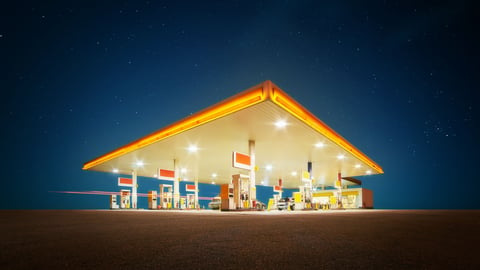
The traditional forecourt has changed significantly over the years. In the 1960s, they were often utilitarian—exposed pumps, basic lighting and large signs showing the fuel brand and price. Later enhancements included canopies for weather protection, better lighting and the addition of convenience stores. While there were design variations, the core idea remained: a place to pump fuel, pay and leave.
Over the past decade, there’s been a complete rethinking of what a forecourt should be and do. Linda Thompson, managing partner at Fuel Partners, a consultancy focused on retail fuel, car wash and convenience, says forecourts have moved away from those basic designs, where most gas stations housed functional small kiosks with limited lighting and focus on moving fuel volume.
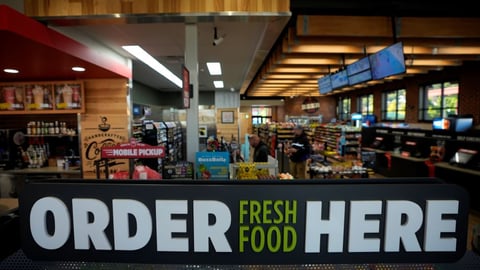
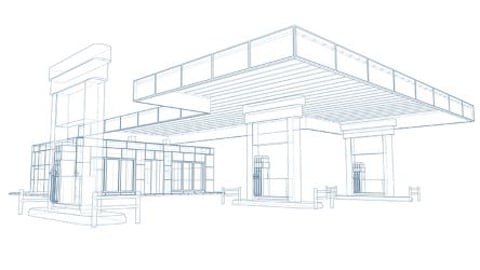
“The kiosk has been replaced with 3,000-sq.-ft. convenience stores, integrated QSRs, modern car washes and propane refilling,” she says, adding “these expanded layouts support a stronger customer experience—with fresh food, coffee bars, Wi-Fi and space to linger—all designed to drive in-store traffic and sales. Retailers today are highly strategic about forecourt design. The goal is to create a destination that is functional, inviting and profitable. From site layout to branding and amenities, every element plays a role in attracting customers, improving their experience and maximizing profit.”

Fuel Partners sees today’s customer as prioritizing more than just fuelling up. “The broader experience—how smooth, pleasant and frustration-free it is—often determines whether someone chooses your site over the one down the street,” Thompson says.
Clean, bright and safe
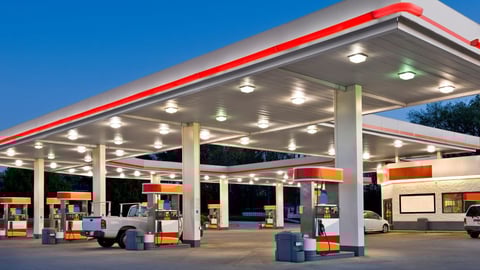
Modern forecourts focus on visibility and security with bright canopy lights, clean pump islands, tidy windshield stations and well-maintained garbage bins.
Jayme Leonard, owner of Red Leonard Associates Inc., says lighting design has become more scientific. Photometrics—a key part of designing lighting—measures how visible light interacts with people, objects and environments. This helps ensure surfaces where customers interact, such as the fuel dispenser or payment terminal, are well-lit.
“You have task areas where the customer is interacting—from fuelling to inserting their credit card,” Leonard says. “You must ensure the lighting is enough to illuminate those surfaces.”
He adds that good lighting should also minimize spillage—light shouldn't be so bright or wide-reaching that it affects nearby homes or businesses. It must also make signage and the forecourt visible from the road, without distracting drivers.
Inside the store, lighting becomes even more critical.
“The right lighting can guide people to specific areas and increase sales,” Leonard says. “Poor lighting can make products appear dull. Good lighting enhances packaging and drives impulse buys.”
READ: Parkland receiving Quebec government support in its EV charging expansion efforts
-
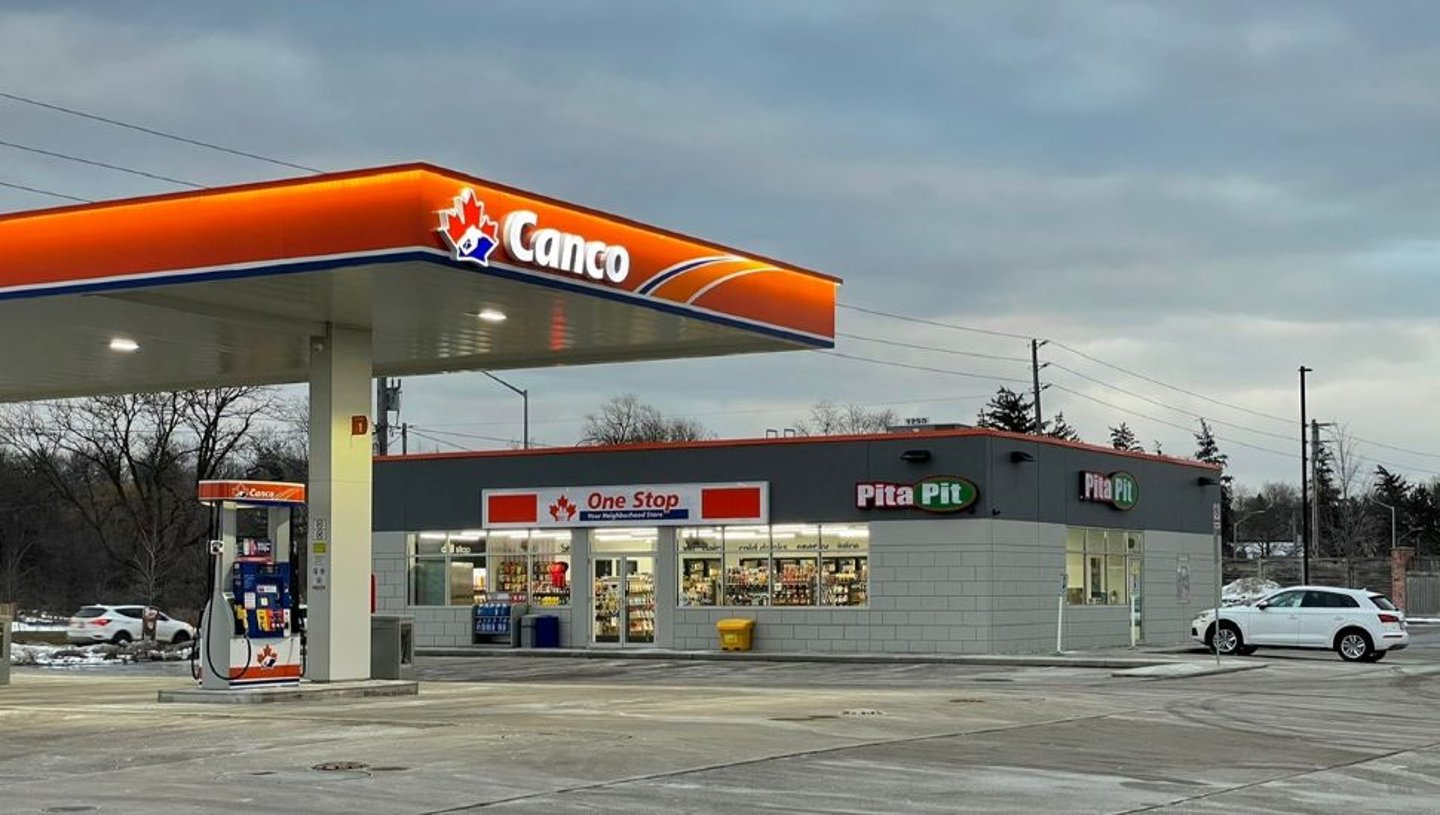 Retailers today are highly strategic about forecourt design. The goal is to create a destination that’s functional, inviting and profitable.
 -
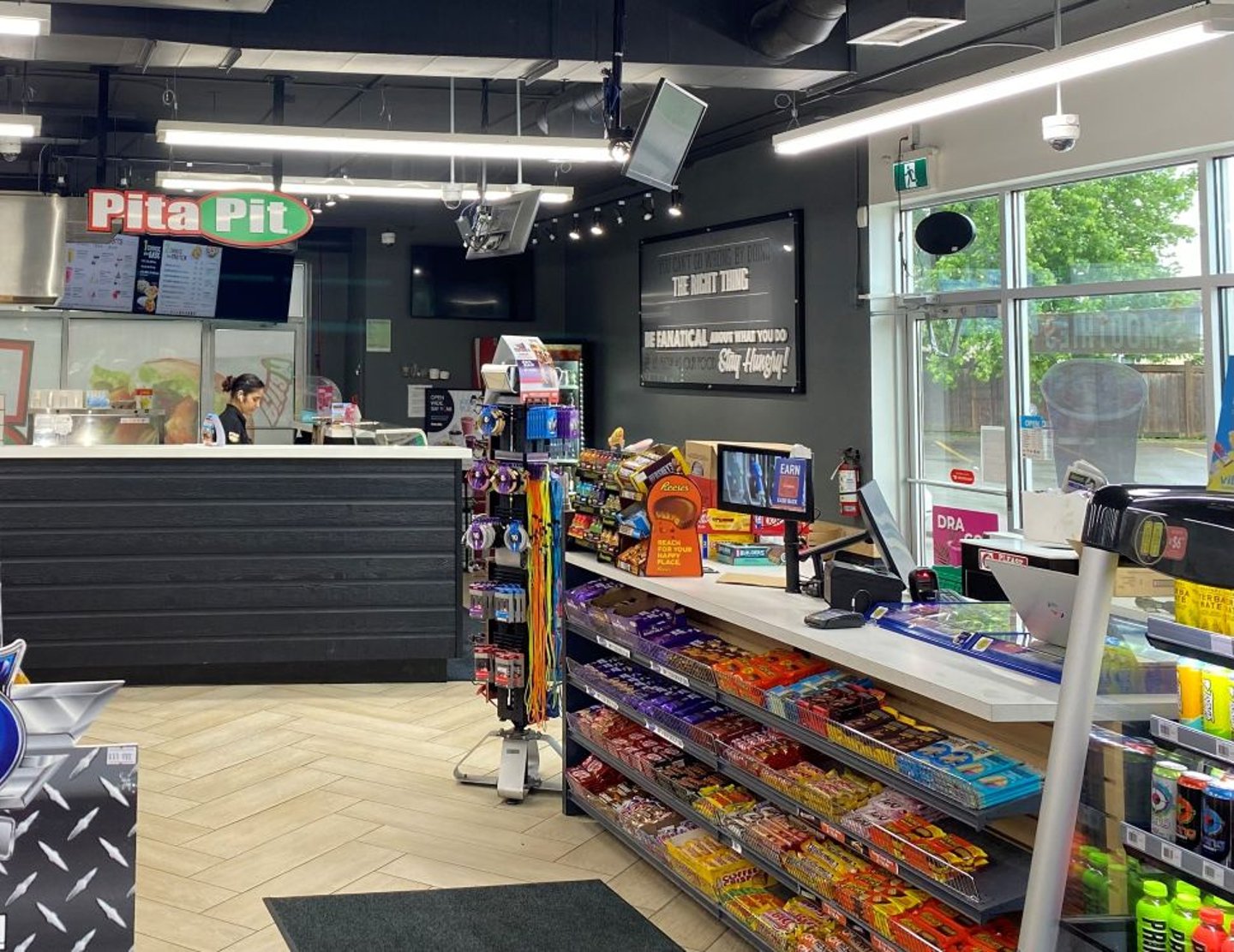 Good forecourt design should create a seamless transition from the pumps to the c-store, where creative layout and design elements can guide customers to needed items, foodservice offerings and friendly staff.
Modern amenities matter
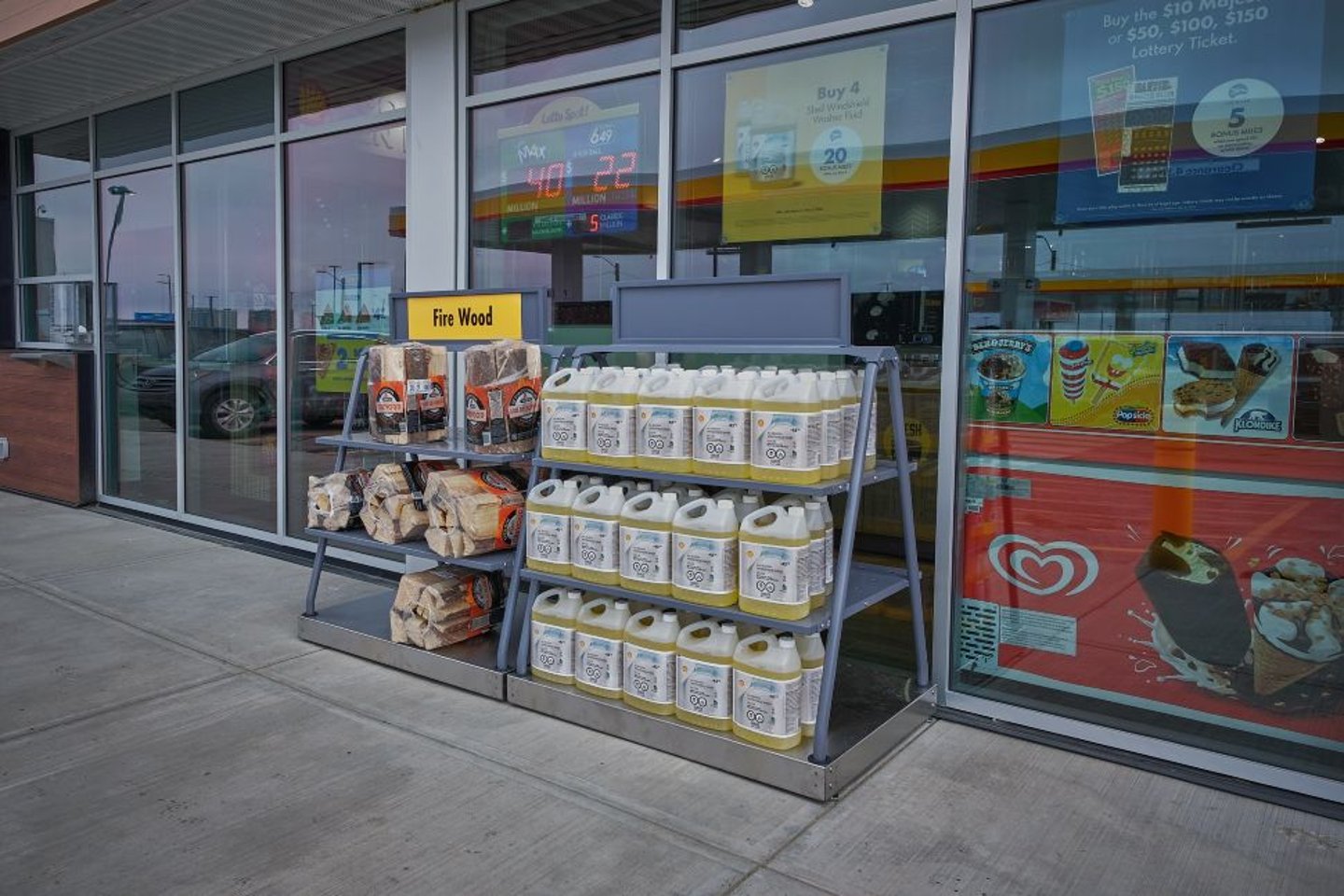
Even traditional items like windshield wiper stations and garbage cans are getting makeovers.
“I always tell our national partners and independent customers: the forecourt is your first impression,” says Chris Soucie, director of sales and marketing at McCowan Design & Manufacturing. “Customers gravitate toward forecourts that feel safe, well-lit and inviting.”
McCowan has modernized these basic forecourt tools to better align with today’s designs. Using more durable materials and sleeker aesthetics, their new products include weather-resistant bins with lids to keep out snow and rain.
“We looked at modern fuel dispensers and EV chargers—which have sleek, curved designs—and our new products were designed to fit in aesthetically” Soucie explains. “We asked: what will these look like next to the newest dispensers?”
-
-
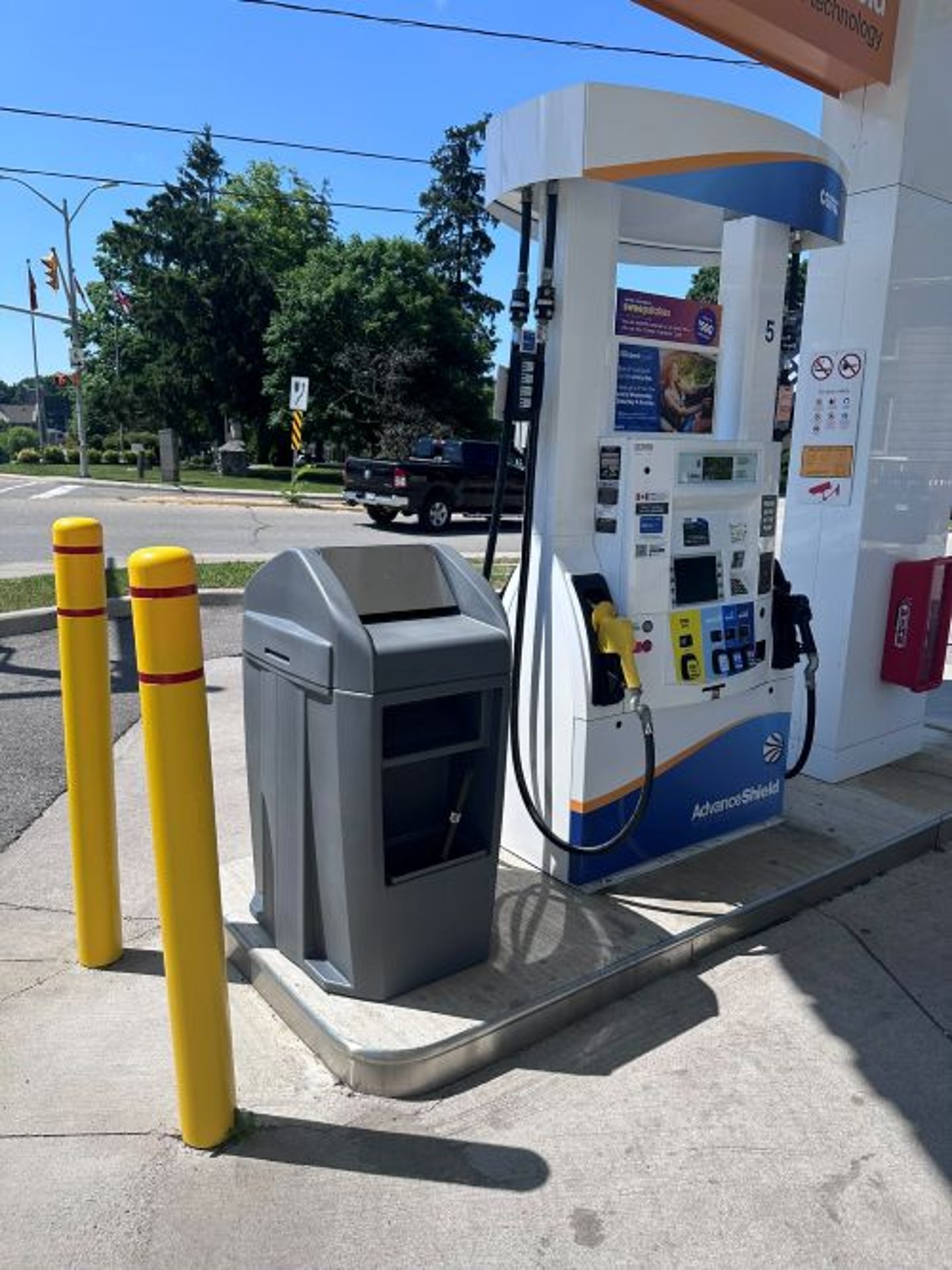 McCowan Design & Manufacturing's newly redesigned elements are made to weather Canada's harsh climate, while also contributing to a modern aesthetic forecourt experience.
Fuel dispensers become smarter
Gone are the days of small digital displays. Today’s fuel dispensers feature large screens—some up to 27 inches—designed to resemble smartphones or vehicle infotainment systems.
Scott Negley, senior director of product management at Dover Fueling Solutions, says its Anthem UX dispensers with Bulloch POS technology offer “a real opportunity to drive revenue.”
“These screens can be used to run promotions, reinforce brand messaging, connect to loyalty programs or even rent out ad space to local businesses,” he says.
AI arrives at the forecourt
Artificial intelligence is beginning to reshape the forecourt experience.
Jason Chiu, professional services group manager at Axis Communications, says more retailers are exploring AI to better understand customer behaviour—both at the pump and inside the store.
For example, AI can track foot traffic to identify patterns, such as peak times or customer flow. This helps optimize product placement by positioning high-demand items in high-traffic areas or adjusting displays seasonally.
At the pump, AI could soon recognize repeat customers and tailor on-screen promotions based on past purchases or loyalty program activity.
“The technology is advancing,” says Chiu. “We’re having more discussions with customers who want to use these tools in the future.”
This feature first appeared in the September|October 2025 issue of OCTANE magazine