What does dropping tariffs on Chinese electric vehicles mean for Canada?

Earlier this year Prime Minister Mark Carney reached a deal with China to allow nearly 50,000 Chinese-made electric vehicles (EVs) into Canada and dropped the 100% tariff on such vehicles to 6.1% starting in March. In five years, the number of vehicles allowed in will rise to 70,000 vehicles.
China will, in return, commit to dropping tariffs on Canadian canola and other fish and agricultural products that are important to such provinces as Alberta and Saskatchewan.
The announcement caught many by surprise, and some were not pleased. Ontario’s Premier Doug Ford called it a threat to the province’s auto industry. Some auto parts manufacturers and suppliers argue that reducing tariffs will stall or even derail EV manufacturing here. Then there are the more “paranoid” musings of some on talk radio who warned of security threats, Chinese spying and how such vehicles can be “controlled” by the Communist Party of China with a push of a button.
Let’s cut through the fog of commentary and get to the crux of the announcement.
First, while the tariffs will come down in March, it does not mean there is going to be a flood of Chinese EVs. While nearly 50,000 vehicles sound like a lot, it is a relatively small number of the overall vehicles sold in Canada: Last year, there were some 1.9 million sold and of that only some 6% were fully EV. Even at 70,000 vehicles, these Chinese-based makers will only have a very small slice of Canada’s overall auto market.
If any of the Chinese automakers, including BYD, Geely, Xiaomi and NIO, wish to come here, the number of vehicles allowed would need to be split between them, creating a set of unique challenges. To sell in Canada, one needs to have a dedicated dealership and maintenance network.And the numbers right now look to be too small to make it profitable to set this up.
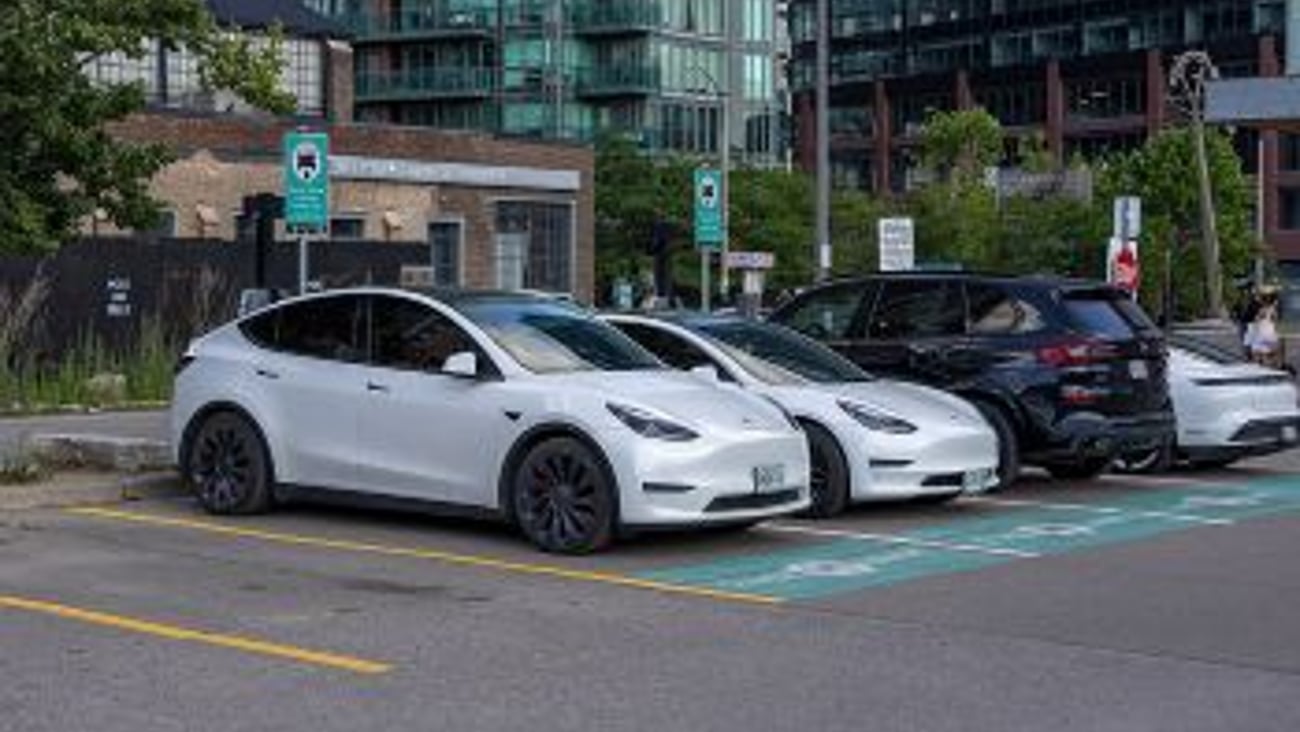
As well, the vehicles coming into Canada from China will likely be those made in China by well-known automakers that already have a presence in Canada—think Tesla, Volkswagen and Volvo.
This is not to suggest that vehicles made by Chinese brands will not in the future be sold in Canada. I believe they will be sold here and will be successful.
Let me explain.
Higher prices
In the current North American automotive market, all the major automakers currently building or selling vehicles have largely stopped building and selling smaller, inexpensive vehicles. The compact reasonably priced family car has been supplanted by large and much more expensive crossovers and SUVs, as well as trucks. These vehicles sell at higher prices and have more advantageous margins to the automakers. Step into any dealership today, you will find the average sticker price for a new gasoline powered vehicle starting at around $50,000. Even EVs on the low end start at a little over $40,000 and the price rapidly goes up.
And with today’s vehicle financing rates, it is not uncommon for consumers to be paying close to $1,000 a month in vehicle payments. Is it any wonder that North American consumers feel either squeezed out of buying a new vehicle or must take on near-ruinous vehicle payments?
Many Chinese EVs start at prices—when converted to Canadian dollars—lower than $30,000. These are not “cheap” vehicles, where people use that word as a pejorative, suggesting poorly made and sub-standard. Anyone who has had a chance drive a vehicle made by BYD, Greely or any of the others finds they are well-made, equipped with all the latest technologies and features familiar to anyone in North America, and well-appointed with stylish interior designs and plenty of comfort. The only thing “cheap” about them is their price.
Under the new Canadian tariffs, Chinese-made EVs fit nicely into a market segment that North American automakers have largely left; and I am certain Canadians looking to purchase a new vehicle, and considering an EV, would not hesitate to purchase. Even on the luxury end of the electric vehicle market, the Chinese automakers are selling vehicles equally to what the European and North American automakers are producing and selling them for much more reasonable prices in Europe and South Asia.
Some history
There is history to back this up. In the 1970s, when Japan began to export their vehicles to North America, they were dismissed by the automakers here as “cheap” and unappealing to consumers. That changed when the oil crisis hit and that small, well-made and fuel-efficient Japanese vehicle, priced much more reasonably than the Big Three automakers’ vehicles, sold well. So well, they soon began to capture greater market share, eventually forcing the Big Three automakers to start building better quality, smaller and more fuel-efficient vehicles as well.
That could happen here. If Chinese-made electric vehicles sell well and grow in numbers and over time sell more higher-end electric vehicles, followed by Chinese firms building plants here in Canada, then other automakers will follow to build quality, but less expensive, EVs to stay competitive and meet consumer demand. Remember Elon Musk promising that soon there would be a $35,000 Tesla? It’s happening and that $35,000 Tesla is made at the automaker’s plant in Shanghai.