Big data and foodservice drive Canada’s convenience future: CICC Summit 2026

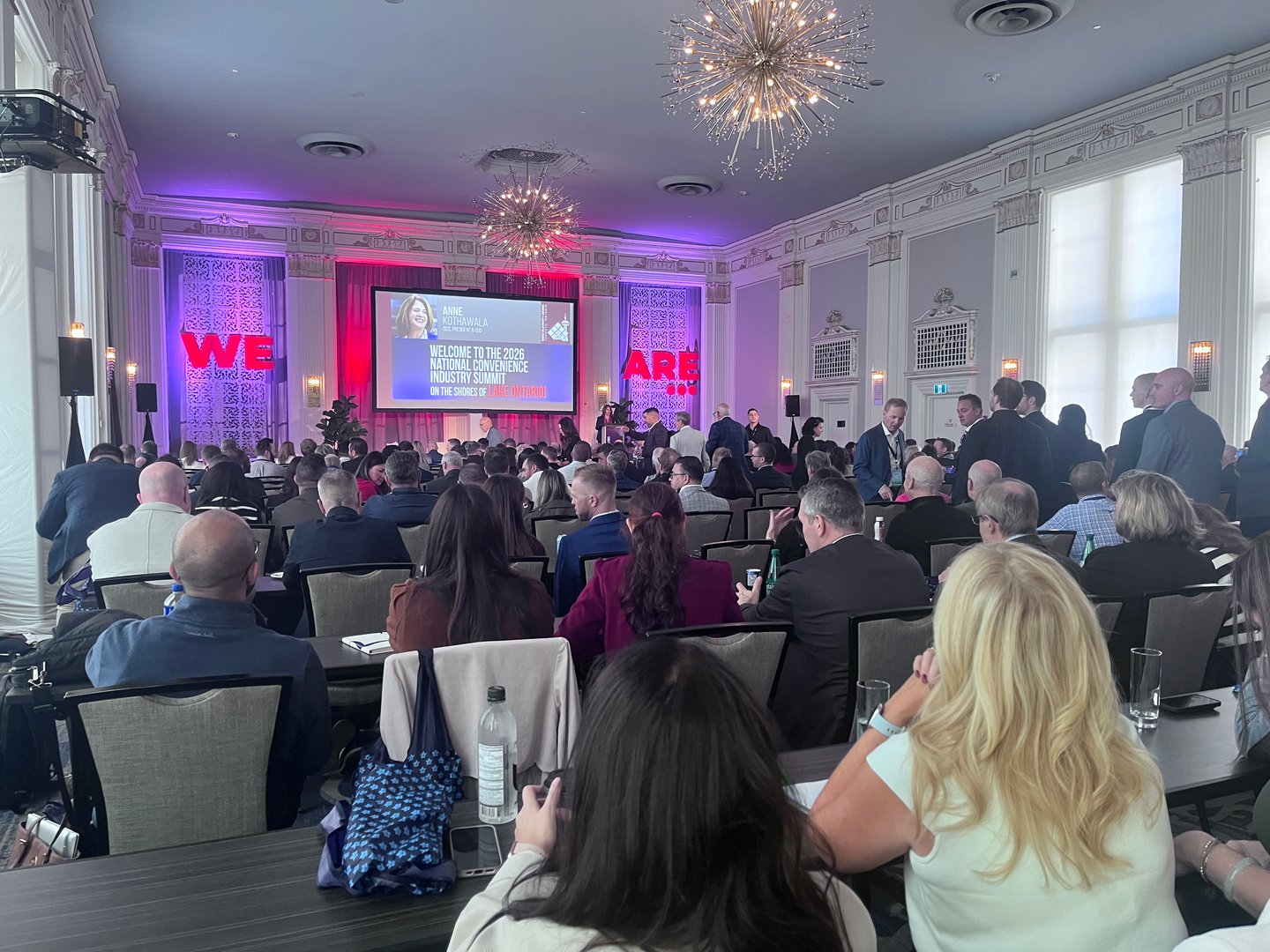
Convenience Industry Council of Canada (CICC) presented the 2026 CICC summit to the King Edward Hotel in Toronto September 23-25. Canadian convenience and fuel operators gathered to tackle the industry’s toughest challenges. Armed with fresh data and bold strategies, industry leaders mapped out clear ways to drive sales and stay ahead in a shifting market.
Key points from the 2026 CICC summit
Frequency beats penetration: Two-thirds of Canadians already visit convenience stores at least once a month, making customer acquisition a secondary issue compared to trip frequency. Converting occasional shoppers through daily food and beverage occasions like fresh bakery, specialty coffee and quick meals represents a $1-billion revenue opportunity across Canada.
The illegal tobacco crisis: Experiences from international markets like Australia demonstrate how rapid spikes in contraband nicotine and vapes can devastate legal retail sales, shifting store product margins entirely toward fresh foods and prepared beverages to offset transaction losses.
Fuel conversion and food service expansion: Over half of gas station customers never step inside the store. Capturing this foot traffic requires positioning convenience stores as fast, high-quality meal solutions—such as quick-prep lunches, local products and premium coffee—rather than simple emergency stopovers.
CICC Summit highlights foodservice growth and tobacco reform
Convenience Industry Council of Canada (CICC) members, board representatives and vendor partners gathered at the organization’s national summit to discuss emerging trends, operational challenges and growth strategies across the country. Convening at a time when over 21,000 retail locations face shifting consumer habits and regulatory hurdles, speakers highlighted operational data, foodservice expansion and legislative advocacy.
CICC president and chief executive officer Anne Kothawala opened the event by emphasizing industry resilience, responsible retailing and community involvement under the summit theme of bricks and mortar. Kothawala noted recent association achievements, including expanding membership among independent retailers, updating IDP safer-retailing modules, celebrating the second year of beverage alcohol sales in Ontario stores and taking contraband nicotine concerns directly to Canada’s provincial premiers at the Council of the Federation.
She also announced the launch of the CICC’s first national digital campaign, We Are Canadian Convenience Stores, designed to highlight the frontline workers, suppliers and distributors who keep neighbourhood stores operating every day.
Increasing visit frequency among occasional shoppers
Research presented by Katerina Almagestov from NIQ revealed that attracting brand-new customers is not the primary growth barrier for Canadian convenience stores. The survey of more than 7,700 Canadian consumers showed that 67% visit a convenience store at least once a month, while only 4% never visit at all.
Instead, the primary opportunity relies on increasing visit frequency among occasional shoppers, defined as those who make one to three purchases per month. This group represents roughly one-third of Canadian consumers, skews younger and includes a diverse demographic spread across all regions.
Almagestov pointed out that moving occasional shoppers to buy one additional item per month in key categories would generate over $1 billion in incremental sales annually across Canada’s 15.7 million households.
While coffee remains a top draw, consumers cited cleanliness, quality perception and fresh offerings as essential factors in choosing convenience locations over traditional coffee shops. Furthermore, while nearly half of Canadians express a need for quick meal solutions, only 13% consider convenience stores for those purchases, leaving fast-food outlets and grocery stores to dominate the market. Younger adults aged 18 to 34 and newcomers to Canada showed the highest willingness to adopt convenience stores as meal destinations.
Local innovation and fuel court conversion
To capture shifting consumer interest, conference speaker Tony Chapman urged retailers to move beyond standard location convenience and focus on unique product offerings. Chapman presented data indicating rising consumer demand for local products, organic choices, functional foods and Made in Canada brands.
Wearable AI and digital assistants are taking over the decision-making process. Technology now evaluates price points, dietary needs and locations in real time to direct consumers toward specific products, neutralizing traditional in-store merchandising tactics before a customer even walks through the door.
Online discussions directly dictate off-screen eating and buying behaviours. Social media fuels quick-burst viral trends—such as the massive rise in pre-mixed alcoholic coolers, late-night party snacks, GLP-1 weight-loss nutrition and functional "food as medicine" tonics—that go from digital hype to physical store demand overnight.
Platforms like Instagram and TikTok have turned everyday food entrepreneurs and unique products into viral hits. Social media drives consumers to seek out distinct, "Made in Canada" local products over generic global brands so they can share their discoveries online.
Convenience store operators can gain a competitive edge with an active social media presence and using AI tools to track fast-moving product trends in real time.To capitalize on the soaring demand for takeout and delivery, store owners should also consider partnering with third-party food delivery apps to expand their customer reach beyond the forecourt.
Making coffee a destination: From gas pump to café
Converting gas-pump customers into in-store shoppers remains another critical priority. Survey data indicates that three out of four Canadians visit gas stations regularly, but 60% rarely or never step inside the store. Younger consumers expressed a willingness to convert if stores offered faster checkouts, better coffee, convenient packaging and fresh handheld meal options.
Lessons in tobacco crime and retail margin shifts
Chief executive officer for the Australian Association of Convenience Stores (AACS), Theo Foukkare delivered a Canadian/Australia comparison to the convenience and fuel industries. His international perspective on retail crime, merchant fees and contraband tobacco resonated with the audience. Foukkare’s cautionary tale of the tobacco wars detailed how illegal tobacco and unapproved vapes took over the Australian market, where organized crime groups currently supply 80% of consumed tobacco and 97.5% of illicit vapes. “This is the turning point for us in Australia… basically, you could argue that market's gone. The legal market can't get it back.”
This shift severely reduced transaction volumes and foot traffic in Australian convenience stores, forcing the industry to lobby for strict enforcement laws. Recent Australian legislative reforms now include criminal background checks for tobacco sellers, public registers, 90-day store closure powers, lease terminations for offending tenants and dedicated law enforcement task forces. In regions where authorities closed illegal storefronts, legal tobacco volumes recovered by 44%.
Foukkare urged Canadian operators to act proactively against contraband products while adapting store layouts to rely more heavily on packaged beverages and fresh food service. “The only way we can tackle organized crime is to bring down excise by 80% to regulate vapes and pouches, and to educate consumers around the dangers and harms, and to actually spend more money on enforcement,” said Foukkare.
In Australia, food and beverage sales now account for nearly 70% of total in-store revenue, illustrating how convenience stores can transition into fresh food and hydration hubs to sustain long-term growth.
The day one conference was capped by a speech from Ontario Premier Doug Ford, who championed c-stores' fight to bring alcohol to the convenience channel. Ford touched lightly on his relationship with U.S. President Donald Trump. “You tell the most powerful guy in the world to kiss your ass, and he changes Lake Ontario on you,” he guffawed. “It's always going to be Lake Ontario.”
Ford continued, “as President Trump's tariffs reshape the global economy and create uncertainty for Canadian businesses, our government is doing whatever it takes to stand up for employers, employees and all the people that work on the front lines.”

Awards
The three-day Summit at the included two Trade Exchanges, marquee speakers and the Convenience Industry Awards Gala.
Congratulations to all the winners!
Outstanding Industry Leader: Kory McDonald, Rothman's Benson & Hedges
Outstanding Partner of the Year: Labatt Canada
Beer: Labatt Breweries of Canada, Busch Light Apple
Beverages (Energy/Hydration): Canada Dry Mott's, Bloom Sparkling Energy
Beverages (Low / Non-alcoholic): Molson Coors, Blue Moon Non-Alcoholic
Beverages (Regular): Collective Arts, Slurpee Soda Lychee Lemonade
Chocolate: Nestle Canada, KitKat Icon Car
Confectionery: Mondelez Canada, Sour Patch Kids Glow Ups Strawberry Watermelon
Craft Beverages: United Craft, FBombz Cranberry Cosmo Twist
General Merchandise: Greenhouse, Ginger Defence Wellness Shot for Immunity
Ready-to-Drink: Happy Dad Canada, Happy Mom Hard Seltzer Rasberry
Savoury Snacks: Direct Food Plus Group, McSweeney's Hot Honey Chicken Nuggets
Sweet Snacks: Magnum Ice Cream Company, Reese's Peanut Butter Ice Cream Bar
Wine: Andrew Peller Limited, Laylow Crisp Rose
In a very special presentation, Serge Nadeau, now retired from Groupe Beaudry, and Ian White, formerly of Parkland, were presented with the prestigious Founders Circle Award for their leadership in setting the CICC on it's "path of becoming the strong united voice it is today," said Kothawala.
Focus on innovation
Friday opened with the annual Trade Exchange, an incredible showcase of product innovation for the Canadian convenience market. From protein to gummy snacks, wellness beverages and all things pickle, there are many exciting new products hitting store shelves.
(Convenience Store News Canada will profile these in the upcoming New on Shelf newsletter October 1.)
The conference closed with an inspired keynote by Canadian retail icon Joe Mimran, who traced his retail journey, discussed the highs and lows that shaped his career and company. The fashion designer and entrepreneur spoke about opportunities to connect with customers and how convenience, with its steady foot traffic, is uniquely postioned. "A retailers we are always looking for that next concept, what's exciting and what are we going to bet on."
Mimran highlighted the growth of collectibles in the toy space and challenged retailers to keep up with the customer's wants and needs. "Standing still only feels safe until you notice the customer has already moved away from you."
He ended with: "After all these years I still keep grappling with the same question: What does the customer want next?
Board co-chairs Marc Goodman, 7-Eleven Canada vice-president and general manager, and Steven Pitts, SVP operations Circle K, closed the event with a fireside conversation led by CICC's Kothawala. The trio surmised the learnings and insights from the three-day event, with a strong focus on understanding and meeting the needs of the customer at all life stages.
"We need to stop talking about how the industry is changing and evolving and actually do something.... We need to redefine ourselves," said Pitts of the urgency to respond quickly to the headwinds and opportunities facing the channel."
Goodman echoed this sentiment: "Evolve your business or your business will be extinct."
The fireside chat then turned to the CICC's advocacy on the big issues and the collaborative work and accomplishments of the organization since it was founded in 2019.
"It's the progress and relationships we make along the way that allows us to break open doors," said Goodman.
*More to come