Brewing bigger profits

You might say it’s a tall order
Convenience store beverage programs have long competed on speed and value, but as Canadian hot beverage consumers have become more sophisticated, they’re demanding much more in terms of freshness, flavour options, customization and interactive experience. And still, it must be fast and affordable.
“They want it all,” says Jeremy Poty, regional foodservice growth manager, Core-Mark Canada, a leading distributor to Canada’s convenience retail industry.
“They don’t just want the creamers and the sugar, they want the syrups, they want variety. They want control, they want to push the button, they want to experiment, they want to make it their own.”
Aron Bjornson, vice-president, marketing & foodservice, national accounts, at B.C.-headquartered Canterbury Coffee, puts it this way: “Consumers increasingly compare c-store coffee offerings with cafés and QSRs, raising expectations for both quality and variety,” he says. “Customers want coffee experiences they cannot easily replicate in their own kitchen.”
Meanwhile, he says, away-from-home coffee consumption still has not recovered to pre-pandemic levels, so c-store operators must work harder to attract customers back.
Clearly, simply setting out a few pots and stacks of cups is no longer going to cut it. So, what is?
Along with meeting today’s consumer expectations, the key, according to experts, is gearing your beverage program precisely for your market and demographic—while avoiding key coffee-program pitfalls.
The opportunity
“Coffee’s the number one consumed beverage in Canada,” says Robert Carter, president of the Coffee Association of Canada (CAC). “So, focusing on a good coffee program should drive incremental traffic.”
While cold brew is “hot,” especially among the younger demographic, and tea and hot chocolate are an important part of a complete hot-beverage lineup, traditional hot coffee remains the foundation of the hot beverage category, he notes. Eight in 10 cups of coffee consumed in Canada are hot, according to CAC’s 2025 Canadian Coffee Trends report. Customization is already an established part of Canadian coffee consumption. According to the report, 77% of coffee is consumed with an addition such as milk, cream, sweetener or flavouring. Speed also plays an important role, with 25% of Canadians identifying speed of service as a key factor when deciding where to buy coffee.
But expectations continue to evolve: customers increasingly want beverages and experiences they cannot easily reproduce at home.
Know your market
For convenience retailers looking to build a coffee program, the most sophisticated equipment is not necessarily the best place to start. In-depth knowledge of their market, demographic, competition and traffic patterns is.
“Stores first need to understand their location, their competition and the customers they serve,” says Poty. “A rural store with few nearby coffee options may have a very different opportunity than an urban location surrounded by established cafés and quick-service chains—or across the street from an elementary school. Proximity to workplaces, highways, colleges and senior high schools can also influence demand.”

Start small
Retailers entering the category should therefore begin with a relatively simple offer, evaluate how customers respond and expand from there, he says. A basic program might include medium and dark roast coffee, supported by a machine offering cappuccino, latte and hot chocolate, along with a manageable selection of syrups and creamers.
“There’s no sense in going from zero to 1,000, because you have no way of gauging what is going to be successful,” says Poty. “Starting off simple is the way to go.”
Customers can then help shape the next stage of the program with their feedback on which blends, flavours or beverages they would like added. Retailers should watch sales closely and be prepared to adjust if the offer is not gaining traction.
Bean-to-cup equipment can help stores meet today’s expectations. By grinding and brewing each drink on demand, the process gives customers a more visible and interactive freshness cue than coffee that has been held in a pot. “It’s momentarily a fun experience,” says Poty. “You get to hit the button and watch it do the whole grinding and brewing. It’s a little bit more interactive.”
Merchandising and promotion
However, the equipment alone will not turn coffee into a destination. Poty points to a Calgary store Core-Mark worked with that had been selling only two or three pots of coffee a day from a tired-looking drip program.
After assessing its surrounding location, the retailer added new equipment, stronger signage, digital menu-board promotion and food-and-coffee combinations. The coffee station area was refreshed and repositioned as a visible destination rather than an old set-up, tucked into a corner.
“They put the banners up, they put the signs up, they put the digital menu boards on their screens and it opened people’s eyes,” says Poty. “[Customers] now don’t see this little coffee pot in the corner anymore; they see a rewarding destination.”
Within about three weeks, sales rose more than three-fold, he says. Over the following months, the store began selling hundreds of cups. The experience illustrates the importance of merchandising and promotion alongside an improved offering, he notes.
Delivering indulgence
Stores must also find the right balance between value and premium appeal, Bjornson says. “As consumers face escalating economic pressure, they are searching for places that they can get both a great price and find affordable luxuries.”
Canterbury helped one convenience store build excitement around their upgraded coffee program by launching and promoting a limited-release holiday blend. The retailer supported the launch with seasonal cups, point-of-sale materials and an omnichannel marketing campaign designed to build awareness and drive store visits.
“The holiday blend provided customers with a reason to visit the newly updated coffee station, while the improved experience encouraged repeat purchases throughout the promotion period,” Bjornson says.
The campaign increased sales and visits, prompting the retailer to expand the program for the following holiday season. More importantly, the gains extended beyond the limited-time offer, with the retailer continuing to see year-over-year coffee sales growth.

Meeting demand for values-driven product
Modern consumers are looking for more than just a caffeine fix; they increasingly prioritize high-quality coffee and demonstrate a strong desire to purchase products that are responsibly sourced.
&Back Coffee (a 2026 Impact Awards winner) serves as a prime example of a brand meeting these expectations by focusing on transparency and sharing the human stories and purpose behind every cup.
By providing retail partners with turn-key promotional messaging and assets—such as ready-to-use stories about supporting women farmers and protecting ecosystems—the brand makes it easy for convenience retailers to effectively amplify these values and communicate the measurable impact of the program to their customers.
Demographics, flavour, choice
Carter says while the older demographic is still relevant, a large focus should be on Gen Z and younger millennials, who will continue to grow the category in the future. “If you don't have a program that’s targeting these younger consumers, then that’s a huge miss,” he says.
For older demographics, have that stable brewed coffee program, “focused on the quality, countries of origin, that sort of thing,” notes Carter.
On the other hand, he says, “Younger Canadians want to make it their own. They expect multiple, different types of profiles, beverages and flavours. That doesn’t mean that you have to have 10 distinct different beverages. It can be espresso-based beverages that are served in several different styles, formats or with different additives, but the perception that there’s a wider selection of offerings and flavours is important.”
Monin, a global supplier of flavouring syrups, concentrates and beverage solutions, tracks emerging tastes and how they are showing up across food and drink menus. For adventurous consumers, its 2026 Flavour Trends report points to coconut, ube, guava and dragon fruit; Mediterranean-inspired pistachio, rose, pomegranate and cardamom; naturally vivid matcha, hibiscus, turmeric and butterfly pea flower; and bolder sweet-savoury notes, such as hot honey, hickory smoke and oak barrel.
For fall and winter, pumpkin spice, peppermint, cinnamon, apple cider and gingerbread remain dependable seasonal choices, says Poty.
In addition, Carter says functional beverages “are going to see a lot of movement over the next five to seven years. As c-store operators know, energy drinks are doing really well. So, think functional coffee that talks about energy, health and wellness, and ‘good for you.’ There’s an opportunity to be a leader in that category.”
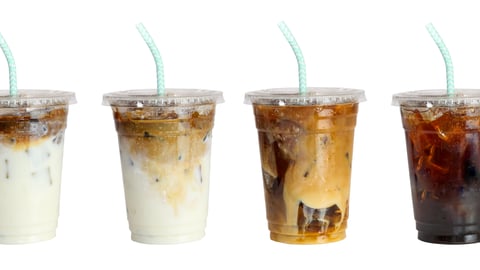
And despite the cool-weather focus on hot beverages, retailers should not overlook cold coffee. Today’s Canadian coffee consumer loves ice, and 21% of the total coffee market was cold in 2025, according to CAC data. Some machines produce cold coffee, but ice is still needed on the side. “Cold coffee in particular continues to see strong growth as younger consumers embrace these beverages year-round,” says Carter. “I would recommend a complementary functional, energized-style cold-beverage program.”
Putting it all together
In today’s economic environment, winning and keeping hot-beverage customers can be challenging, particularly for c-stores that do not naturally benefit from heavy nearby traffic. But the winners will not necessarily be the stores with the biggest menus or most sophisticated machines. They will be the ones that understand their customers well enough to offer the right amount of choice, consistently provide a fresh, good-tasting drink in a clean, welcoming environment, and deliver value at a price customers find attractive. It’s a tall order—but one that can turn a routine coffee stop into a reason to return.

One of the biggest mistakes convenience retailers make is treating the coffee machine as the entire program.
“The most successful coffee programs view equipment as just one part of a larger ecosystem that includes ingredients, maintenance and execution,” says Gage Johnston, market manager, Franke Coffee Systems Americas. “Long-term results are usually determined by operational discipline rather than the machine itself.”
Another risk is offering too much. Although today’s fully automatic machines can produce dozens of drinks, an extensive menu can slow decision-making and create unnecessary complexity.
“A streamlined menu built around clear consumer preferences typically outperforms an overly complex assortment,” says Johnston. “The goal is to balance variety with simplicity so customers can order confidently and quickly.”
At the same time, retailers also need equipment suited to the operational realities of the convenience channel. Labour shortages and high employee turnover have made ease-of-use increasingly important.
Equipment should require minimal training and be easy to maintain, while matching the store’s demographic and speed-of-service requirements.
According to Johnston, water quality is among the most frequently overlooked considerations. It affects both the flavour of the drink and the life of the equipment. Retailers may also underestimate the need for employee training, regular cleaning, preventive maintenance and ongoing oversight after installation.
Ultimately, sophisticated equipment cannot overcome stale ingredients, machine downtime, inconsistent recipes or a confusing customer experience.
“Repeat business is driven by delivering the same exceptional experience every time a customer visits,” adds Johnston.
Is the price right?
Another possible pitfall is price: If it’s too high, consumers may think they might as well go to a high-priced specialty coffee shop. But a too-low price is not good either.
“The challenge with coffee is that, if your price point is too low, then there's a question around the quality aspect of it,” says Carter. “Canadians understand that there is a certain price associated with a good quality coffee. So, I would be focusing more on the quality, the story, the innovation, the convenience—just making it very easy—and the excitement around that beverage brewing experience, before I would focus on price.”
- Are you equipped?
“There are two distinct markets to consider when launching a new or upgraded coffee program,” says Johnston. The right solution depends on customer demand, menu strategy and the experience a retailer wants to deliver.
Brewed coffee: Bean-to-cup brewed technology offers freshness and reduces waste by brewing on demand. While batch brewing works for high-volume cafés, it can lead to 35 to 40% waste in c-stores. Bean-to-cup systems typically pay for themselves within the first year by eliminating waste and brewing labour.
Specialty coffee: With 29% of Canadians selecting espresso-based coffee—including 50% of Gen Z consumers, 45% of whom prefer iced options (Canadian Coffee Association)—fully automatic systems allow operators to expand their menus without adding complexity. “The best decision starts with the desired beverage mix and profit objectives, not just equipment cost,” Johnston notes. Beyond machine selection, retailers must weigh peak-hour traffic and labour constraints. Equipment must handle high volume without compromising quality or requiring constant staff attention. In some locations, multiple medium-sized units may serve customers more effectively than a single large machine. “In self-service, consumers won’t wait for more than one person, so multiple points of service are needed,” Johnston adds. Modern systems further streamline operations through automated cleaning, touchscreen ordering, remote monitoring, and diagnostics—invisible technologies that ensure every cup meets expectations.
Machines in action
At 7-Eleven Canada’s Toronto Pearson location, four bean-to-cup machines were installed based on customer arrival patterns rather than just total volume. During a recent visit, Greg Alford, country manager Canada and director, global key accounts at Franke Coffee Systems Americas, saw the impact during a border officer shift change.
“There were about 10 people in front of the machines, and I thought, ‘I’m in a hurry. I don’t know if this is going to work,’” recalls Alford. “I was in front of a machine about a minute later because there were four machines along the wall and everybody was getting served.”
This illustrates why retailers must understand how customers enter their store. Locations near schools or workplaces may receive sudden surges, requiring multiple machines operating simultaneously, while a typical c-gas operator might see steadier traffic.
“It’s about matching your customer arrival rate,” says Alford, noting that shoppers have little patience in self-serve environments and may abandon purchases if they see a queue. Multiple service points reassure customers that lines will move efficiently.
Understanding these patterns also helps retailers plan their wider foodservice offering. Quality coffee draws customers inside, while well-positioned breakfast foods or snacks can turn that coffee visit into a larger transaction.
“Once they’re in the store, the opportunity for attachment is very high,” says Alford. “The best retailers I see are doing combined food programs or sweet treats that combine with coffee.”
This article was originally published in the September/October 2026 issue of CSNC.