Are micro-markets competing with traditional convenience stores?

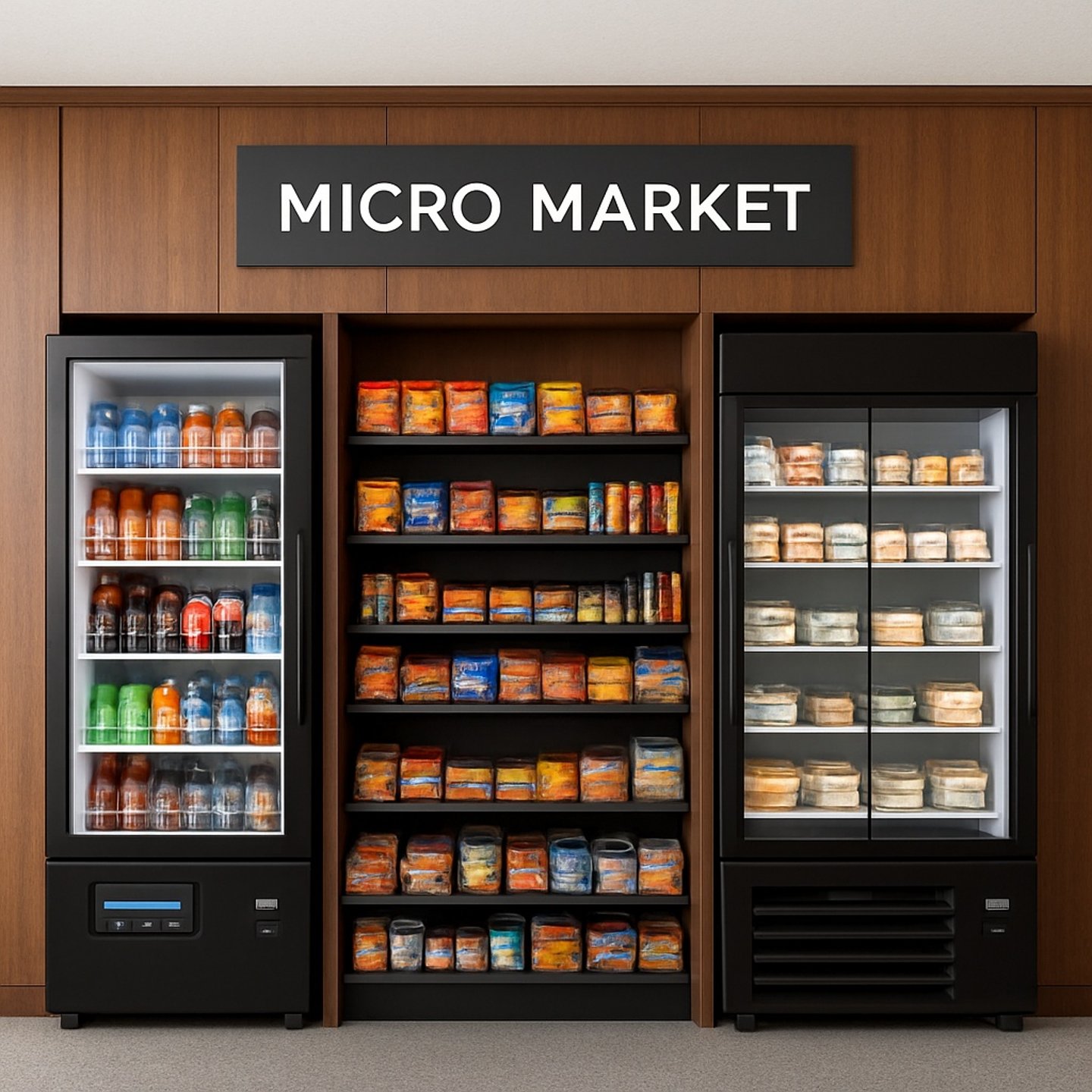
While micro-markets were once viewed as a disruptive threat to traditional convenience stores, the industry has evolved differently than many predicted. It has been more than a decade since micro-markets began entering the convenience retail and grocery landscape in Canada. Advances in technology made it possible for these stores to operate without on-site staff, introducing a model that seemed poised to transform convenience retailing entirely. However, micro-markets have since evolved into a hybrid between a traditional convenience store and an upgraded vending operation.
The original appeal of micro-markets was clear. They addressed two major challenges facing convenience retailers: Rising labour costs and ongoing labour shortages. During the COVID-19 pandemic, many believed micro-markets could provide a long-term solution for high-volume retail environments where staffing had become increasingly difficult.
At the same time, micro-markets represent a significant evolution of traditional vending. While basic vending machines remain effective in sports arenas, schools, transit hubs and other public spaces, they typically offer limited product variety and little in the way of fresh food options. Micro-markets expanded those possibilities by offering broader assortments like grab-and-go meals and offer a more modern shopping experience. There is no question that micro-markets offer advantages in certain environments. They can reduce staffing pressures, operate around the clock and provide flexible foodservice options in locations where a traditional store would not be economically feasible.
Today’s micro-markets appear to have settled into a more defined niche. Rather than dominating high-street retail locations, most successful micro-markets operate in controlled environments such as offices, factories and secure campuses. These locations provide a consistent and captive customer base while also reducing theft concerns through visibility, surveillance and social accountability. Few employees are willing to risk workplace consequences over unpaid purchases.
Despite continuing technological improvements, many micro-markets still rely heavily on an “honour system,” where customers scan and pay for their own items independently. Without strong controls, shrink remains a serious operational challenge. As a result, success often depends more on the environment and customer demographic than on the technology itself. In some cases, so-called micro-markets are little more than sophisticated vending systems with open shelving.
Consumer feedback on storefront micro-markets has also been mixed. Some customers appreciate the speed and convenience, while others dislike having to download an app for a simple purchase or express concerns about cleanliness, stock levels, and the absence of staff assistance as well as the inability to use cash. The overall response tends to fall somewhere in the middle—some customers embrace the concept, some reject it entirely and many remain undecided.
What does this tell us?
First, it suggests that fully unattended convenience retail has not yet achieved universal consumer acceptance. Younger generations may be more comfortable with self-service technology, but many older consumers still value human interaction and personalized service. Second, it highlights that shrink and operational control remain unresolved issues, underscoring why many micro-markets have retreated into more controlled environments.
For traditional convenience operators, this is both reassuring and instructive. Micro-markets have not replaced conventional convenience stores—at least not yet. However, retailers should not dismiss the model entirely. Technology will continue to evolve and future consumers may become increasingly comfortable with unattended retail experiences.
That means traditional convenience operators must focus on what technology cannot easily replicate: a memorable customer experience.
Customers should feel welcomed, recognized and feel appreciated when they enter a store. A friendly greeting with helpful assistance paired with and a clean and well-managed environment create emotional value that self-checkout technology cannot provide. In a sector where products are widely available from multiple channels, customer experience becomes a critical differentiator.
Training remains central to that success. Front-line employees understand customers better than anyone else in the organization. Retailers should encourage and empower staff to make decisions and contribute ideas that improve the customer experience. The goal is not simply to sell convenience items, but to create an environment where customers actively choose to return.
In the end, convenience retail is still a people business. While technology will continue to shape the industry, the stores that succeed in the future will not simply sell products—they will deliver experiences that technology alone cannot replace.