Ask the Expert: Balancing functional nutrition with premium branding to rewrite the salty snack category

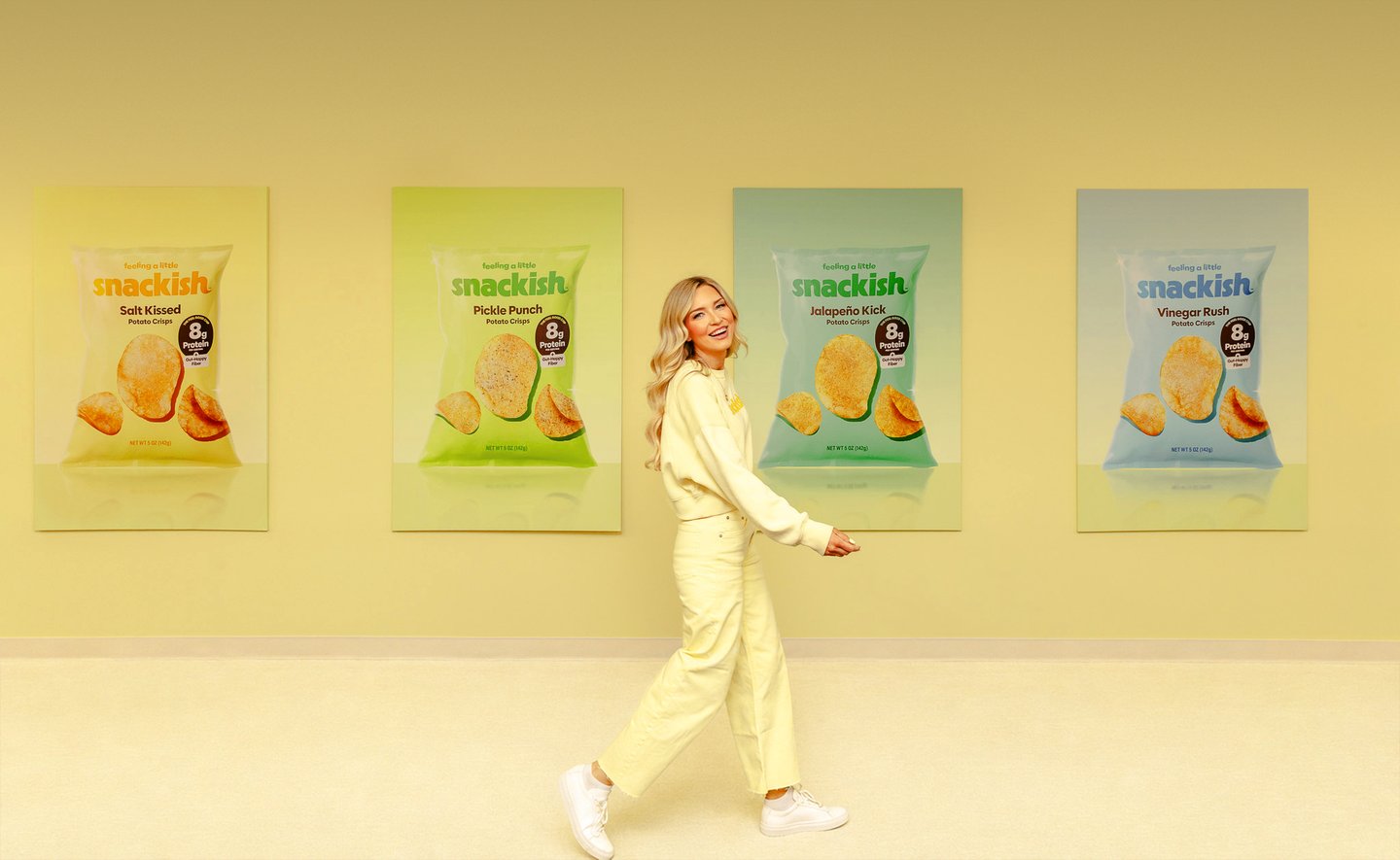
In the competitive salty snack aisle, convenience store retailers are constantly hunting for the holy grail: a high-margin, better-for-you product that actually drives repeat foot traffic. Enter Snackish, a line of protein-powered potato chips launched by SmartSweets founder Tara Bosch. This is not Bosch’s first foray into snack food. Her previous product, SmartSweets was a hit with candy lovers and those looking for better-for-you treats.
By bypassing traditional co-packers to build North America’s first dedicated "Snacktory," the brand is offering c-store buyers absolute supply chain reliability, a nostalgic crunch and a high-basket-value proposition designed to turn everyday snacking into a massive category driver.
Convenience Store News Canada caught up with the snack entrepreneur to discuss her research into the trends that inspired her launch of protein potato chips.
Why owning the "Snacktory" creates supply chain control
CSNC: How does owning the "Snacktory," the first of its kind in North America, give you better operational control and supply chain reliability for your retail partners compared to using a co-packer?
TB: For us, the Snacktory is one of the biggest decisions behind the brand because it allows us to build Snackish with the same level of intention as the product itself. We are not just launching a chip, we are building the infrastructure behind a new kind of snack company.
Owning our manufacturing gives us more control over quality, consistency, innovation and supply. In a category like salty snacks, where taste, crunch, seasoning coverage and freshness
matter so much, every detail counts. Having our own facility means we can move faster, test faster, iterate faster and make sure every bag reflects the standard we set for the brand.
It also creates more reliability for our retail partners. We are not competing for production time with other brands or dependent on a third-party co-packer’s priorities. We have visibility across the process, from formulation to production to scaling, which helps us support national retail from day one and continue to grow with our partners in a thoughtful way.
The strategy behind balancing gut health with taste
CSNC: How do you balance better-for-you health attributes with the goal of driving "repeat behaviour" based on taste?
TB: The development process took about a year, and the biggest unlock was staying extremely clear on what we would not compromise. I learned through SmartSweets that if you want to change a category, the product has to be excellent and the operations have to be built to support that vision.
It also creates more reliability for our retail partners. We are not competing for production time with other brands or dependent on a third-party co-packer’s priorities. We have visibility across the process, from formulation to production to scaling, which helps us support national retail from day one and continue to grow with our partners in a thoughtful way.
I never wanted Snackish to feel like a “healthy alternative” that asked people to give something up. Chips are emotional. They are fun, craveable, salty, crunchy and a little nostalgic. So we started with the experience people already love, real potatoes, bold seasoning and that satisfying crunch, and then rebuilt what was inside the bag.
Taste had to lead. We use potato-powered protein, gut-happy fiber and 100% avocado oil, but if people do not want to come back for another handful, none of those benefits matter. Repeat behaviour comes from craving, not claims.
CSNC: You are launching with a Canadian-exclusive flavour, "Best Dressed." What was the strategy behind creating a specific flavour just for the Canadian market, and how do you expect it to perform?
TB: As a Canadian founder, launching Snackish in Canada is really meaningful to me, and I wanted the Canadian customer to feel that in the lineup. Best Dressed is a love letter to a flavour profile Canadians know and love.
I expect it to be a strong performer because it taps into something familiar while still feeling new. It has that “one more handful” quality, which is exactly what we look for in every flavour.
How a premium price point drives retail turn rates
CSNC: Each bag of Snackish retails for $7.99. For retail buyers, what is your pitch on how this premium price point translates to strong turn rates and high basket value?
TB: Snackish is built to bring incremental value to the chip aisle. The $7.99 price point reflects a product that is meaningfully different: real potatoes, protein, prebiotic fibre and avocado oil, bold seasoning and a brand that is designed to create excitement.
For retailers, the opportunity is that Snackish brings together two behaviours that do not always sit in the same bag: everyday snacking and better-for-you decision making. Consumers are already buying chips. They are also looking for products that fit their lifestyle, feel more intentional and still taste amazing.
CSNC: You've secured initial nationwide distribution in Canada with Loblaws and Whole Foods. Are there immediate plans to expand the "eat chips every day" promise into traditional convenience across Canada?
TB: Convenience is a very natural opportunity for Snackish. Chips are an on-the-go, high-frequency snack, and our whole promise is built around making chips feel like something you can reach for more often. So yes, we see a lot of potential in traditional convenience across Canada.
CSNC: You previously built SmartSweets into a major success before its 2020 acquisition. What key lessons from rewriting the candy aisle are you applying directly to this launch in order to "bring fun and aspiration back to the chip aisle"?
TB: With SmartSweets, I was not trying to make people stop loving candy. I was trying to change what candy could be. Snackish is the same philosophy in a completely new aisle. The idea for Snackish came from a very real place: what if we could eat chips every day and feel good about it?
The biggest lesson is that people do not want to be told to give up the foods they love. They want a better way to enjoy them.
Another lesson is that the brand has to carry as much energy as the product. Better-for-you does not have to feel clinical or restrictive. It can be colourful, bold, social, funny and a little unhinged in the best way. Snackish is designed to bring that fun and aspiration back to salty snacks.
3 Key trends shaping the better-for-you market
CSNC: What trends have you noticed coming up in the salty snacks division?
TB: There are a few big shifts happening in salty snacks right now.
First, consumers are looking for more from their snacks, but they are not willing to compromise on taste. Protein, fibre, cleaner oils and more intentional ingredient choices are all gaining attention, but the product still has to deliver on crunch, flavour and craveability.
Second, I think people are moving away from the idea that better-for-you has to mean less fun. The brands winning today are the ones that can create permission and excitement at the same time.
Third, there is a lot of interest in snacks that feel culturally relevant. People want bold flavours, strong brand worlds and products that show up well socially. The chip aisle has always been high-frequency, but I think the next generation of salty snacks will be built around both function and feeling.