Trust could be the next competitive advantage for convenience stores


For convenience stores, competitive advantage has traditionally come down to location, speed, product selection and having what customers need when they need it. But as delivery services and digital technology reshape shopping habits, those advantages may no longer be enough.
Doug Stephens, founder and CEO of Retail Prophet and an internationally recognized business futurist, believes the next differentiator could be something less tangible—trust.
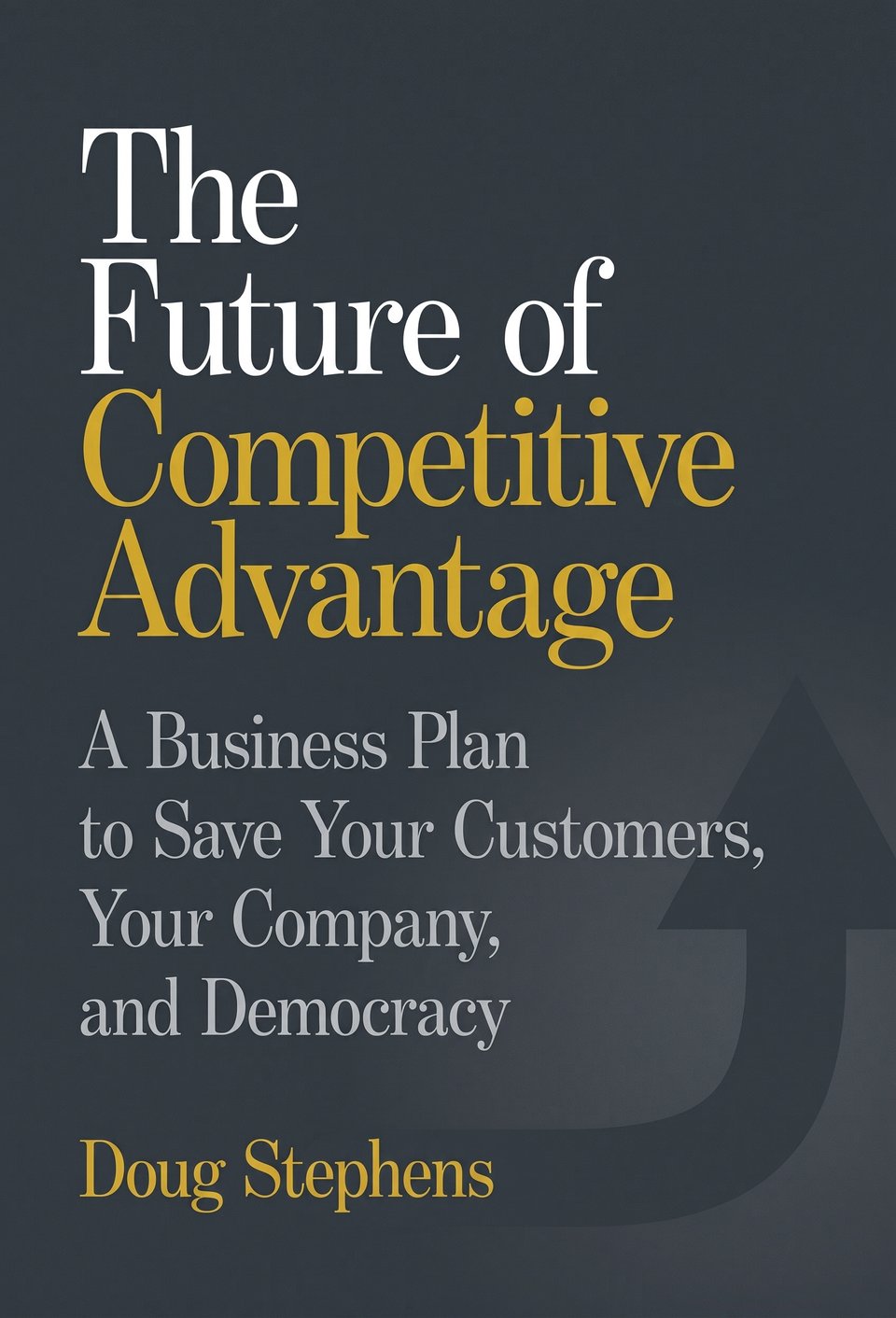
In his fourth book, The Future of Competitive Advantage: A Business Plan to Save Your Customers, Your Company, and Democracy, Stephens argues that businesses can be profitable while helping build a healthier society. His previous books include The Retail Revival, Reengineering Retail and Resurrecting Retail.
The idea for his latest book grew out of a disconnect he observed in 2023 and 2024. Business conversations continued to focus on familiar topics such as customer experience and omnichannel retailing, even as economic inequality, declining institutional trust and social tensions were becoming harder to ignore.
Stephens began examining whether companies could thrive indefinitely in a society whose foundations were weakening. “I think that you can be a good business and you can be wildly successful at the same time,” he explains.
For convenience retailers, that means looking beyond the next transaction to consider how everyday decisions can build lasting relationships with customers, employees and suppliers.
On trust as an untapped market opportunity
Stephens sees declining trust not simply as a reputational problem, but as a business opportunity.
“If we accept that the first rule of any market evaluation, you know, if you look at business 101, how do you identify a market opportunity? Well, you look for places where there's a demand for something that is very high, but the supply to that demand is very low,” he says.
Trust, he argues, fits that description. Consumers want to believe businesses are acting fairly, but many have become sceptical about corporate motives. Retailers that demonstrate a genuine commitment to fairness can give customers a reason to choose them.
For convenience stores, that commitment could start with transparent pricing. Customers may accept paying more than they would at a supermarket in exchange for proximity and speed, but explaining the factors behind prices and markups could help prevent shoppers from assuming the worst.
Stephens also suggests that retailers could make a public commitment to avoiding surge pricing —raising prices simply because demand is high or customers have few alternatives. The principle extends to employee safety, particularly in stores operating overnight or in higher-risk locations.
“Consumers gauge, in many cases, the trustworthiness of a company directly by how they treat their employees and the care and concern that they show,” he says.
Fair treatment of workers and suppliers, clear pricing policies and visible safety measures can demonstrate a retailer’s values more convincingly than advertising alone.
On why fairness makes business sense
For Stephens, trust begins with fairness and fairness must extend beyond the customer at the till. It also involves how companies negotiate with suppliers, protect employees and compensate the people who keep their businesses running.
He draws a distinction between minimum wage and living wage. “Minimum wage is a statutory requirement,” he says. “Living wage is the requirement to put a roof over your head and food in your stomach in the place that you live and work.”
Because living costs vary across Canada, a wage that covers basic expenses in one community may fall short in another. Stephens argues that paying employees enough to achieve financial security should be viewed as an investment rather than simply an expense. Financial stress can affect concentration and productivity, while insecurity may contribute to absenteeism and turnover—both costly problems for employers.
He points to PayPal as an example of a company that examined employees’ financial circumstances and changed its approach to compensation. Stephens says the company subsequently recorded a 28% increase in profitability, alongside declines in absenteeism and turnover.
The lesson for convenience retailers is not that every business will achieve the same results, but that employee well-being and commercial performance need not be competing priorities. In an industry reliant on frontline staff, a stable, supported workforce can also contribute to a better customer experience.
On why people matter as much as technology
Artificial intelligence promises to transform retail operations, from inventory management and forecasting to customer service. But Stephens cautions against assuming that buying the latest technology will automatically create a lasting competitive advantage.
“Technology scales pretty quickly across industries and across sectors. It becomes reasonably ubiquitous in a short period of time. It gets cheaper, more accessible,” he says.
As AI tools become widely available, retailers may find themselves using many of the same applications as their competitors. The real difference, he believes, will be how effectively employees use them.
That requires critical thinking, sound judgment and the ability to recognize when AI produces inaccurate or misleading information. Instead of focusing exclusively on which applications to buy, companies should develop the human skills needed to use those tools well.
As Stephens puts it: “Where most companies now are starting to be worried about the applications and investments in AI, what they really ought to be more concerned about is making sure they have the right human skill sets internally and the intellectual capacity to use those tools to their optimal effectiveness.”
He also urges businesses to consider who benefits when AI boosts productivity. Retailers should be clear about how they intend to use the technology and whether its gains will be shared with employees rather than simply used to cut costs.
For convenience operators, a thoughtful approach to AI could become another way to demonstrate fairness and earn trust.
On redefining convenience
Convenience has long been the defining promise of c-stores. But Stephens argues that retailers need to reconsider what the word means as consumers become accustomed to home delivery, digital ordering and services that eliminate traditional shopping barriers. “Convenience is being redefined every day,” he says.
Historically, convenience meant proximity, accessibility and a useful selection of essentials. Customers accepted a price premium in exchange for saving time and effort. But as digital services change expectations, physical location may become less decisive.
Stephens suggests retailers explore services that address other everyday needs, potentially including dry cleaning or pet-related services. These are possibilities, not prescriptions. The right approach, he points out, will depend on a retailer’s customers and local market.
The broader challenge is to identify unmet needs rather than assume traditional advantages will last indefinitely. Retailers must understand what customers value and find creative ways to remain relevant in their daily lives.
As Stephens explains: “Convenience has to do this.” What those changes look like, he adds, will require “someone’s creativity and know-how.”
On making values a point of difference
Retailers often look for ways to distinguish themselves, yet competitors can end up with similar products, promotions, technology and strategies. Stephens believes a company’s values could offer a more enduring point of difference.
Imagine a convenience chain making a public commitment to transparent pricing, fair supplier relationships, employee safety and responsible AI use, then demonstrating those principles through its daily decisions.
“Anybody can match your price on butter, but are they prepared to match your values?” he asks. That question is relevant even in a business built around quick, routine purchases. Customers may not dwell on a retailer’s philosophy when buying coffee, milk or a snack, but repeated experiences of fair treatment and reliable service can influence whether they return.
A clear commitment to fairness could also help independent operators compete with larger chains without matching their spending power. Rather than relying solely on discounts or loyalty offers, they can give customers a reason to believe in the business behind the counter.
For Stephens, the larger point is that commercial success depends on more than transactions. “Businesses need customers with money to spend, employees who can contribute effectively and communities where people have confidence in the institutions around them,” he says.
Rebuilding that trust, he emphasizes, is not separate from building a successful company. It can be part of the competitive advantage itself for convenience retailers.