CSNC Exclusive Q&A: Sean Claessen on the evolution of loyalty programs

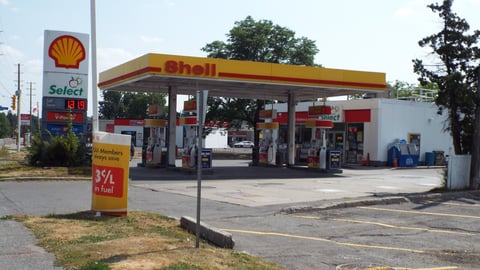
In Canada, loyalty is shifting from standalone points programs toward bigger, better-connected “ecosystems” that link everyday spending across banking, grocery, travel and now fuel. With Shell moving into Scene+, and BMO retiring the Air Miles brand in favour of a reimagined rewards platform, many operators are asking what this consolidation means for convenience and fuel retail—and how to compete when customers have more reasons than ever to keep their spend in one orbit.
In this exclusive Q&A, Convenience Store News spoke to Sean Claessen, chief strategy officer from Bond, a loyalty and customer engagement company. In its recent Loyalty Report, Bond predicted that there will be even more moves in the loyalty space as 2026 rolls out. He unpacks what’s driving the evolution, what the data suggests about member behaviour and where operators can win.
What does Shell joining the Scene+ ecosystem signal about where loyalty is heading in Canada?
Large coalitions have largely dominated the broader story of loyalty in Canada. That’s not a model that’s as familiar in the U.S., but it is in the U.K. and other mature markets. With the consolidation we have in Canada—telco, grocery, banking—there has always been gravity around a coalition of partners.
Aeroplan and Air Miles went through a well-storied set of turbulence. Aeroplan has successfully peeled off and rebuilt gravity a couple of times in its history. Air Miles has not been quite as successful. As a result, it lost some critical mass. Programs like Scene+, Triangle and Optimum have all contended to be the new “sun” that other planets orbit.
At some point, the Shell-Air Miles relationship would need to end. These coalition circuits are about frequency, regularity, habit and ritual. When you’re the last large tenant in an aging coalition, there’s a natural conclusion.
Scene+ has diversified significantly. It began as a focused effort between a bank and a cinema exhibitor. Adding Sobeys, travel partners and broader retail has expanded how Canadians get rewarded. It didn’t have a fuel partner until recently, and that’s a major leg of the stool. Now it’s more complete. Not all ecosystems will reach full critical mass, but this one is closer.
Can you talk about BMO replacing Air Miles?
Outsider looking in, they tried to revive the Air Miles brand with a big campaign about a year ago, even after it changed hands to BMO. The brand was suffering decline and needed a restart. This move likely confirms that the restart never really took off. BMO had a lot of eggs in that Air Miles basket, so fully retiring it was probably never the right strategic answer. Sharpening its intent, narrowing its focus and rebranding feel like logical conclusions, especially with Shell out.
Why are coalition programs becoming more attractive right now for brands and retailers?
They’ve always been attractive to some degree. The new ecosystem version is just better connected and more intelligent. Canadians have always liked collecting value across frequented retailers. Over the last five to 10 years, we’ve seen old coalitions dissolve and new ecosystems emerge. The momentum is in growth mode. It’s a smarter, more valuable version of what existed before.
For convenience and fuel operators, what are the pros and cons of joining a large ecosystem?
It’s a high-frequency, highly-fragmented category. It’s a competitive battleground. Anything like that requires buttressing, and ecosystems do that. Once customers are in one of these circuits, they don’t have much reason to reconsider where they get gas or convenience items. They’re invested in the ecosystem. It becomes the default. We know this consolidates spend and increases frequency. It does the right job for brands and for consumers by providing more value.
How can operators use rewards to drive traffic and larger baskets?
Driving traffic is the first job of loyalty. With a coalition like Scene+, you might stop at Harvey’s next to Shell and earn points across both. That math encourages consistent behaviour. Two, three or four more visits a year can make a huge difference. On the backcourt, points can be applied to specific items, sometimes subsidized by CPGs. That’s a cost-effective way to create value and move customers from fueling to buying. If Monster helps fund points on its drinks versus competitors, that influences shelf choice. Loyalty becomes a win-win for CPGs, operators and customers.
What kinds of rewards work best?
Across North America, cents-off-per-litre is dominant. It’s easy to understand and delivers immediate gratification. In large coalitions like Scene+, points can work because they’re earned everywhere. In smaller partnerships, you usually need to keep it in dollars because points lack perceived value.
How do loyalty members behave compared to non-members?
Members are almost always more valuable. They buy more, cross from forecourt to backcourt more often, and generate more margin. There’s variability by operator, but members are consistently more valuable than non-members.
Is there a risk of sacrificing too much margin?
Loyalty allows brands to harmonize value across fuel and in-store discounts. Before loyalty, these discounts were disconnected. Now brands can see what’s being stacked and manage limits. Individual transactions may lose margin, but if you gain two or three extra visits per year, it’s positive. In the U.S., Walmart can trade fuel margin for basket margin. They ask: Can I lose five cents per gallon to win a $140 basket? I think should be true of the average fuel and c-store. You should be able to make these kind of trade-offs, especially in a points-based program where maybe a vendor on the shelf is helping to subsidize the whole. With vendor subsidies, these trade-offs become easier.
How do personalized offers fit in?
Loyalty lets you see past purchasing patterns and tailor offers. You avoid wasting messages on irrelevant products and avoid giving away value on things customers would buy anyway. Eliminating those two forms of waste allows more effective offers. It’s about being more surgical instead of blunt.
What about gamification?
Game mechanics have always been part of loyalty. They add a bit of joy and recognize behaviour people are already inclined toward. Badly designed quests try to force unnatural behaviour. That doesn’t work. Good gamification gives people an extra reason to do what they were already likely to do. That’s the sweet spot.
What execution mistakes do you see at the site level?
There’s often a loss in translation between program design and frontline explanation. Brands don’t always prepare staff to explain what’s changed and why it matters. Too much focus is on digital systems and not enough on human interaction. If staff can explain and promote programs, rollouts are smoother and satisfaction is higher. Starbucks is about to go through this in Canada, and frontline readiness will matter.
How will EV charging affect loyalty programs?
Most EV charging happens at home. That changes visit frequency and the opportunity to drive backcourt traffic. These mechanics need to be reconsidered. Tesla uses badges as gamification. The question will be where loyalty lies for charging versus fuelling. Households with EVs and gas vehicles will require more sophisticated loyalty structures. It forces operators to rethink value exchange. If customers don’t need fuel, you need new reasons for them to stop.
For operators who feel left behind, what should they focus on in 2026?
I don’t think many are truly left behind. Technology is more affordable than ever. Patterns are better understood. Late adopters can avoid early mistakes and skip to better models. That can be an advantage. If operators lack modern tech stacks, data capabilities, or vendor participation, the opportunity is huge. There are more mechanisms now than 10 or 15 years ago.