LCBO says wholesale modernization is a marathon, not a sprint

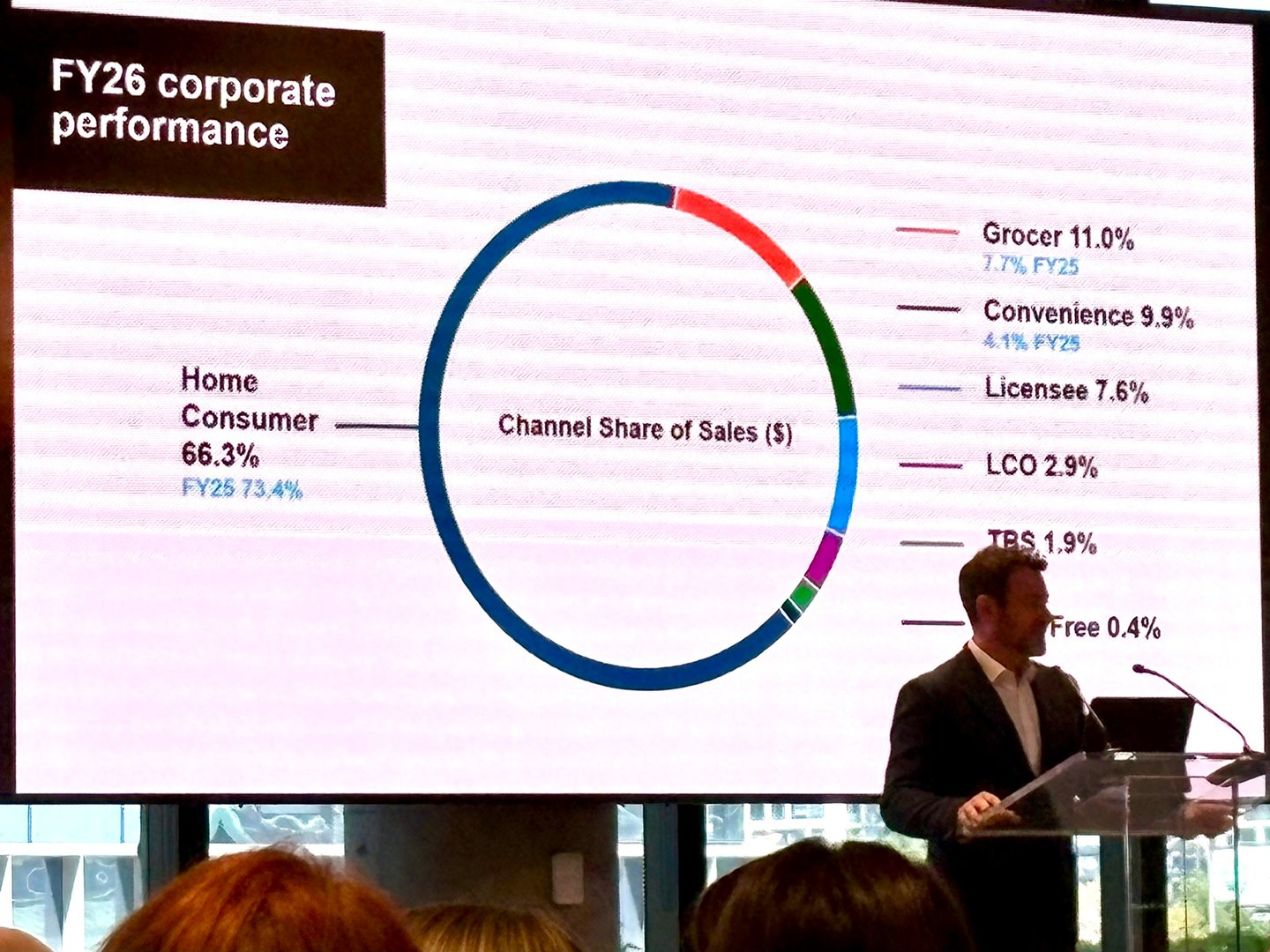
Drinks Ontario, a leading advocate for agents, suppliers and associations in the Ontario beverage alcohol industry, hosted its annual conference on June 1, 2026 and the overarching message was clear: it's been a remarkable year of transformation for beverage alcohol stakeholders and there’s more to come.
Hundreds gathered at the Toronto Region of Trade in Toronto to discuss the big issues at the day-long event, which featured an appearance by Ontario Premier Doug Ford and several MPPs; executive and committee members from Drinks Ontario, including president Ryan Keery (Suntory Global Spirits) and secretary/treasurer, Andrea Backstrom; Professor Dan Malleck who espoused the benefits of booze; David Coletto founder, chair and CEO, Abacus Data, who talked about consumer behaviours influences purchasing; and several executives from the LCBO, including interim president and CEO, Aaron Campbell.
Throughout the day and across speakers, there was a strong focus on the LCBO’s new platform, which, as many convenience retailers and category managers tell Convenience Store News Canada, is not without its pain points.
However, two months after the initial launch, executives are asking suppliers, agents and retailers for patience as the organization works through challenges tied to one of the largest technology transformations in its history.
“I cannot understate the amount of change that has taken, particularly on the wholesale side, in the last three years,” said Campbell, who took over as head of the LCBO just four months ago with the retirement of George Soleas on January 31, 2026.
Campbell acknowledged it's been a “pretty intense” period for everyone involved in the transition at LCBO, but also for suppliers and wholesale customers, including convenience retailers: “We do understand that there are issues that persist. We are absolutely committed to supporting you through this process.“
He pointed out that for nearly 100 years, the LCBO was primarily identified as a retailer. But, so much has changed with the expansion of beverage alcohol at convenience and grocery that now the LCBO is operating two distinct businesses.
While much is happening with the organization at the retail front, as the LCBO reinvents the in-store experience to differentiate itself in an increasingly competitive market, Campbell notes "Wholesale is the area where we have seen the greatest amount of policy change.”
In turn, a primary focus now is on developing the “capabilities and capacity to support the growing wholesale channel.” (It’s worth noting that, in order to level the competitive playing field, LCBO Retail will purchase from LCBO Wholesale at the same rate as other retailers.”
LCBO changes 101
If you're just catching up on the dizzying array of changes to the system and what it means for your business, here's what you need to know, we've broken it down into six key questions.
- What is the Future State Modernization (FSM) program?
The Future State Modernization (FSM) program, which officially launched its latest phase on April 1, is designed to overhaul the way the LCBO manages everything from product listings and supplier communications to warehousing, forecasting and wholesale ordering.
For convenience retailers and suppliers, the changes are significant.
While the LCBO acknowledges the transition has created frustration in areas ranging from product listings and purchase orders to payments and inventory visibility, executives say the current environment represents only the beginning of a multi-year transformation that will ultimately create a more streamlined and modern wholesale ecosystem.
The message throughout the presentation was clear: today’s challenges are real, but the organization believes the long-term benefits will outweigh the short-term disruption.
- Why is the LCBO changing its systems?
The modernization effort comes as Ontario’s beverage alcohol landscape continues to evolve rapidly.
With alcohol sales expanding into convenience stores and grocery channels, the LCBO is under increasing pressure to operate more like a modern wholesale distributor capable of serving a growing number of retail customers and suppliers.
Executives said many of the organization’s legacy systems were heavily customized over decades, creating inefficiencies and inconsistent processes across different business units.
The modernization program aims to replace those customized approaches with standardized workflows based on industry best practices.
The goal, according to LCBO leadership, is to create a simpler and more consistent experience for everyone doing business with the organization. However, for everyone involved, including convenience retailers, that means learning new systems and adapting to new ways of working.
- What is the role of Gateway?
At the centre of the modernization effort is Gateway, the LCBO’s new supplier portal. Executives described it as the future “one-stop shop” for suppliers and agents. Today, Gateway is still evolving, but the long-term vision is ambitious, additional functions are rolled over the next year or so.
Eventually, suppliers will be able to use the platform to manage product submissions, pricing updates, promotional activity, product images, label changes, reporting, forecasting information and user administration.
- What are some of the hurdles with the new system?
One of the most notable admissions from LCBO executives was the extent to which data quality has affected the rollout, with speakers repeatedly emphasizing that accurate information is critical to the success of the modernization program.
For suppliers, that means ensuring product information, banking details, pricing submissions and catalogue data are complete and up to date, even as the system changes rapidly.
Suppliers used to customized ways of working face a major change. The LCBO repeatedly stressed that the shift to standardized procedures will lead to better consistency, fewer errors, and simpler training. While the LCBO admitted the new system may feel less flexible to some stakeholders, executives argued that this is a necessary trade-off for achieving greater long-term efficiency and reliability.
- What comes next?
It’s just the beginning and several additional modernization phases are still ahead. For instance, future releases will introduce new forecasting and demand-planning tools designed to improve collaboration between the LCBO and suppliers.
The organization also plans to implement a unified warehouse management system across its distribution network. At the moment, different facilities often operate using different processes and technologies.
Additional phases will introduce enhanced reporting capabilities, supplier performance dashboards and expanded digital workflows.
- How does this impact convenience retailers?
For convenience retailers, the modernization effort may seem primarily supplier-focused, but the outcomes will have significant implications for store operators.
If the project achieves its intended goals, retailers could benefit from more reliable inventory information, improved product availability, faster new-item introductions and more efficient wholesale ordering processes.
However, retailers should also expect continued adjustments as additional phases are rolled out. The LCBO’s message was that of short-term pain for long-term gain and addressed some of the current issues.
Product listing delays: In the face of suppliers experiencing delays adding products to catalogues and updating existing product information, the LCBO said it is actively prioritizing seasonal products, promotional programs, gift packs and other time-sensitive launches.
Inventory visibility concerns This in an ongoing effort, as the LCBO continues to address inaccurate product information and inventory visibility issues affecting new online systems, which have created challenges for suppliers and customers attempting to track product availability.
Warehouse disruptions: Executives acknowledged that warehouse-related issues have contributed to delays throughout the supply chain.The Durham distribution facility, in particular, experienced disruptions that affected operations for several weeks. However, regular activities have resumed and the LCBO executives said attention is now focused on improving data quality and operational stability.
Transportation bottlenecks: Although executives said performance continues to improve and backlogs are shrinking, specialty service orders and certain container movements are still experiencing delays. For retailers relying on predictable deliveries, these issues remain a concern.
WATCH THE LCBO TRAINING VIDEO
The good news
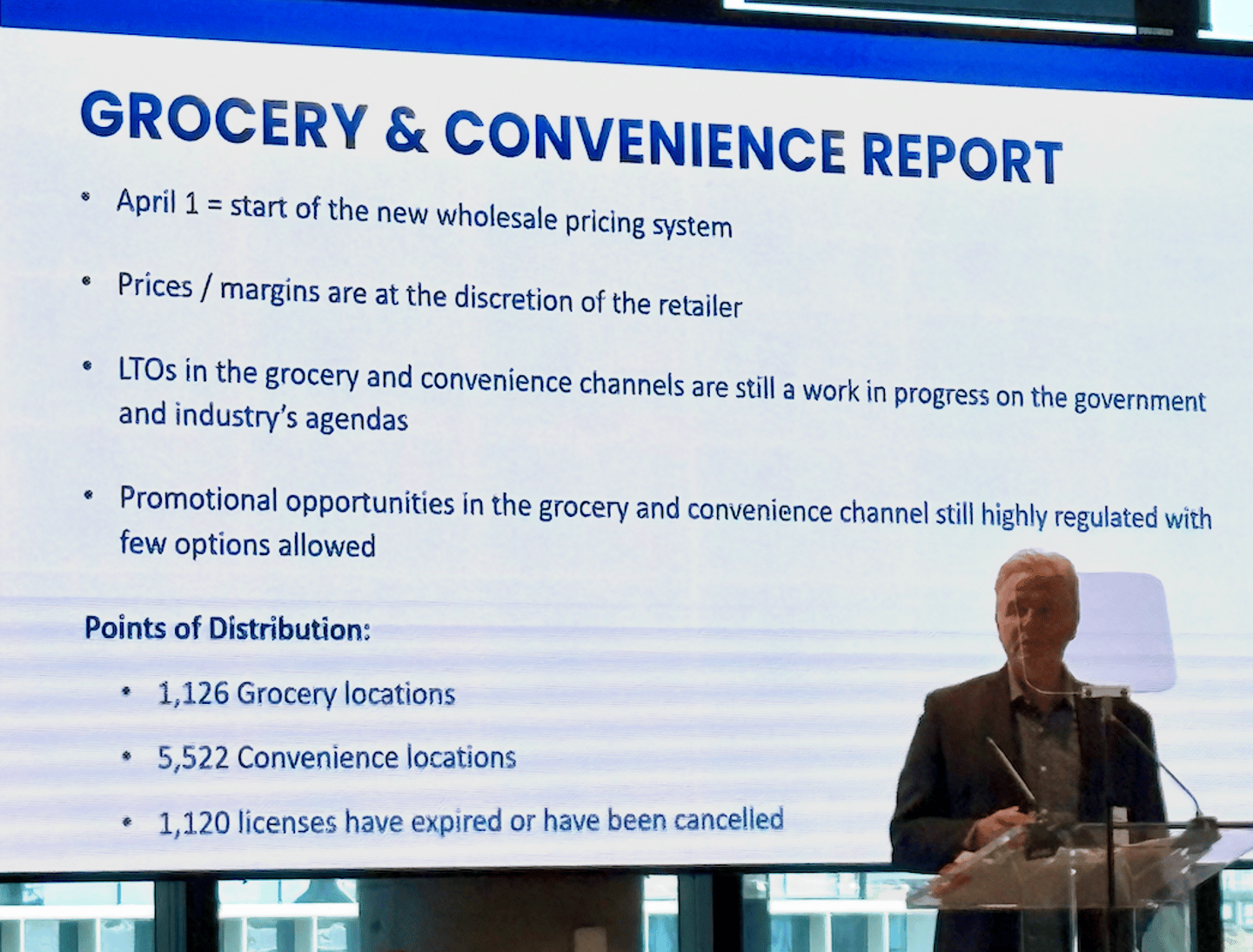
Overall, it’s been a remarkable year for beverage alcohol at grocery and convenience, Terry Sauriol, committee chair and board liaison, said during the Grocery and Convenience Committee presentation.
He highlighted massive sales growth in the convenience sector, alongside strict new regulations and wholesale pricing structures. “The directional signal is there is a dramatic shift going on in the market place as to where consumers are shopping and where they are getting beverage alcohol moving forward,” Sauriol said, noting there are now some 1,100 grocer and 5,500 convenience store licences in the province.
Key takeaways:
Exploding sales volumes: Convenience stores saw unprecedented growth across all major beverage alcohol categories during the 2026 fiscal year.
Total Sales: The convenience channel moved more than 150.6 million litres of alcohol, marking a staggering 206.4 % increase. The sector now commands a 24% share of the total market.
Ready-to-drink (RTD) and cider: This segment grew the fastest, with convenience sales skyrocketing by 256.4% to 38.1 million litres. Convenience stores now hold a 22.8%market share in RTDs, clawing business away from traditional LCBO retail outlets.
Beer: Convenience stores sold 106.5 million litres of beer, an increase of nearly 194%. The channel now captures nearly 30% of all beer sales in the province.
Wine: Though wine remains heavily dominated by the LCBO, convenience stores carved out a 169.2% increase in volume, reaching 5.9 million litres.
Updates for convenience retailers
Sauriol's presentation also addressed challenges and changes since the introduction of the the new system on April 1 and we pulled out several points of interest to the convenience channel.
New pricing: Final retail prices and margins are entirely to the discretion of individual retailers.
Promotions: While there is thirst for change, supplier-funded limited-time offers are still the sole purvey of the LCBO. For now, overall supplier-funded promotional opportunities in the convenience channel remain highly regulated, said Sauriol: “The only promo opportunities we have in grocery and convenience are consumer in-store tastings.”
Minimum wholesale pricing for wine: This is new. Following a provincial announcement on May 26, 2026, a separate minimum wholesale price (MWP) table has been established specifically for the grocery and convenience channels. The minimum price guidelines include HST and bottle deposits. Minimum wholesale pricing is the lowest price at which a retailer can buy the product and these new prices come into effect on June 22. “It is going to change the marketplace,” Sauriol noted, calling it “a really dramatic shift with very little time to adjust to it.”
Open listing system: Under the LCBO’s new open listing system introduced this month, suppliers can now have their products listed in the pricebooks/catalogues for convenience and grocery retailers. “You can get products listed in grocery and convenience catalogue and choose your supplying source,” Sauroil explained, adding suppliers can choose to bypass LCBO supply chains. However, for operators sourcing products outside of the traditional LCBO supply chain, inventory must move quickly. Under the new parameters, non-LCBO supplied products must meet a sales target of at least one case over four consecutive periods. If sales targets are missed, the LCBO will initiate a delisting plan, and delisted products cannot apply to re-list for at least 12 months. “In this new world, you must maintain these new numbers,” stressed Sauroil.
Delivery charges: Suppliers can now charge retailers for last-mile delivery. “Retailers will see what you are charging for that delivery so that is also a place for competition,” Sauroil told attendees, adding the onus falls on the supplier to collect that charge.
Looking ahead
Recognizing industry frustration, the LCBO is promising more transparency with new communication tools, including a recently launched dedicated page on its website that tracks known issues and provides status updates on resolution efforts.
“Our aim is to create a more open and transparent marketplace,” Nick Nanos, chief supply chain officer for LCBO, told attendees.
The LCBO has also established a cross-functional task force responsible for identifying, prioritizing and resolving implementation issues. The goal is to ensure problems are escalated quickly and addressed with greater urgency.
That said, the modernization journey remains far from complete and there will be growing pains for all stakeholders, including convenience retailers.
But as Ontario’s alcohol marketplace continues to expand and evolve, the LCBO is betting that a more digital, standardized and data-driven wholesale system will ultimately better serve suppliers, retailers and consumers alike.
LCBO’s Future State Modernization resources
Convenience retailers experiencing issues are encouraged to contact their account manager or email: [email protected]