
Emerging trend in retail: condominium and apartment convenience stores

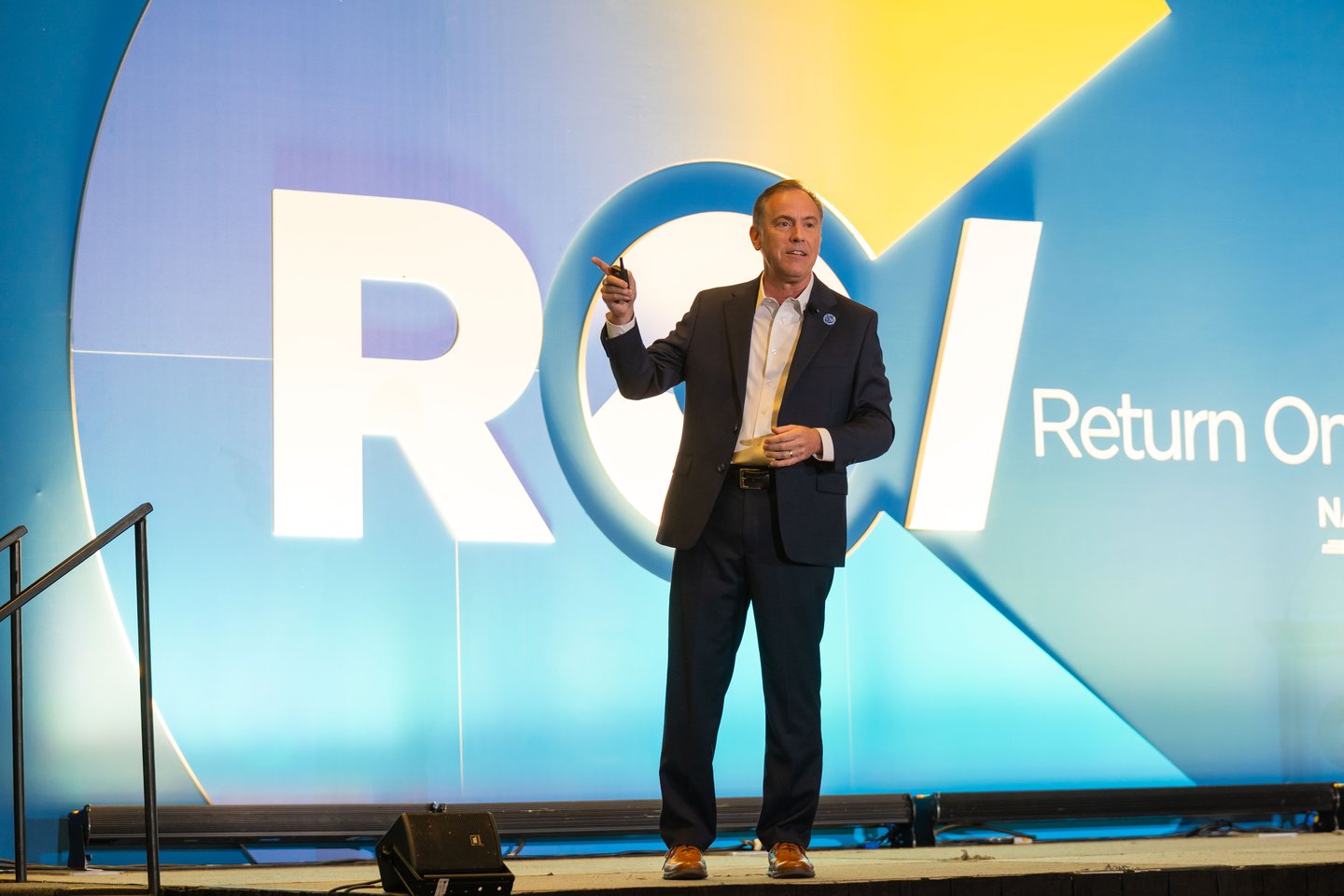
Convenience store operators have long relied on high-traffic intersections to capture pass-by trips. Steve McKinley, the chief executive officer of Urban Value Corner Store, suggests the industry needs to adjust its focus. Speaking about the rise of residential retail at NACS Show 2026, McKinley outlined how operators can embed themselves directly into the daily routines of residents where they live, work and play.
McKinley noted that residential retail extends beyond standard apartment complexes into several distinct housing verticals:
- Mixed-use developments featuring residential units above retail space and offices
- Off-campus student housing developments
- Built-to-rent single-family communities built around centralized amenity centers
- Master-planned communities, such as a site outside Fort Worth, Texas, featuring 1,100 single-family homes with plans to grow to 3,500 homes
The idea for Urban Value Corner Store originated when McKinley received a call from his son about an empty 1,300-square-foot commercial space underneath a 1,200-unit apartment community in Dallas.
“I picked up the phone and talked to developers and started talking to the developer. Hey, what are you going to do with empty space? And they told me, ‘Look, we don't know what's been empty for years. We haven't figured it out.’ And I started asking questions, and I found the pain point of most developers. How do you improve the living experience of residents once they get home? And that makes the difference for Urban Value Corner Stores.”
Recognizing a captive audience of residents living within a two-block radius, McKinley approached the property developer to offer a retail amenity model. The brand launched its first location in October 2019.
“First thing I say [to developers] is, let me show you how I'm going to improve the living experience of your residents. Let me show you how I can help you increase occupancy rates and retention rates. We know that for a fact, when we're there, occupancy rates go up, retention rates go up.”
Today, the company operates 14 locations, including nine staffed stores and five autonomous automated intelligence locations.
The scale of the residential opportunity
The market potential for residential retail is expanding rapidly alongside the growth of multi-family housing. McKinley cited data from the U.S. National Multifamily Housing Council and the National Apartment Association that shows 46 million people in the United States rent their homes, with 48% living in apartment buildings. Industry projections indicate an additional 4.3 million apartment units will be required by 2035 to meet current demand.
In Canada, Approximately one in three Canadians rent their primary residence. Historically, Statistics Canada data shows that Canadian condominiums break down across structural types roughly as follows:
- High-rise apartments (five or more storeys): roughly 31% of condo units
- Low-rise apartments (fewer than five storeys): approximately 36% of condo units
- Row houses and other attached styles: approximately 23% to 30% of condo units
“I spent a lot of time in that first store just listening to residents coming in and shopping,” said McKinley. One day, he heard a customer say, ‘the reason I moved to this community was because of Urban Value.’” McKinley noted that many recent builds offer amenities such as pools, gyms, dog parks or EV charging. “They have to do that to be competitive against their neighbour. But Urban Value becomes that differentiator.”
INS Market is an example of low-footprint, residential placement. The chain recently acquired space in a condo development in Barrie, Ontario. With more condominiums and apartment buildings built, more opportunities for convenience are present.
READ: Scaling new heights
Customizing store formats to fit community needs
Operating inside residential properties requires a complete departure from traditional convenience store playbooks. Rather than relying on rigid, standardized planograms, Urban Value Corner Store tailors every store footprint, product mix and operating format to the specific demographic and foot-traffic patterns of each property.
In Class A multi-family communities, property developers prefer clean, upscale aesthetics over heavy branding. A typical 1,200 to 1,400-square-foot staffed store carries roughly 1,000 SKUs. These stores feature nondescript coolers and omit standard conveniences like ATMs, lottery terminals or large tobacco displays, though top-selling tobacco products are stocked in discrete cabinets behind the counter. The product selection emphasizes quick-grab snacks, drinks, meal solutions, higher-protein items, basic groceries like marinara sauce, and locally sourced items from regional food entrepreneurs.
Having a store on location means that its presence becomes a part of a routine. Once a resident knows there is a convenience store on location, they do not have to look elsewhere for last-minute essentials or an emergency purchase.
To stay closely connected to residents, store managers collect weekly product requests through online forms on the company website and test items sourced from major distributors. Store teams also partner with property leasing staff by offering complimentary drinks and snacks to prospective tenants during apartment tours.
Staffed stores rely on a core service strategy termed ASAP:
- Acknowledge every resident who enters
- Speed of transaction, maintaining an average customer trip time under two minutes
- Available on the sales floor rather than standing behind the checkout counter
- Product knowledge for every customer interaction
Staffed stores vs. autonomous AI coolers
“So, what if your next convenience customer never goes by your store? They walk by it. They live by it. They work by it. They stroll by it. It becomes part of their daily routine,” explained McKinley. “You win the corner, you win the trip.”
To determine which retail model best suits a property, operators must evaluate community density, spatial footprint and resident demand.
Feature | Staffed store model | Autonomous AI cooler model |
Minimum density requirement | 1,000 beds or more | 200 to 400 residential units |
Footprint and assortment | 1,200 to 1,400 sq. ft. (approx. 1,000 SKUs) | Compact footprint, highly targeted product mix |
Core advantage | High personal touch, higher average basket size, beer and wine sales | 24/7 key-fob access, lower labor overhead for smaller sites |
Primary focus | Community engagement and localized customer service | Fast, frictionless access for high-frequency essential purchases |
Measuring success through residential impact
Standard retail key performance indicators like transaction counts, average basket size, shrinkage and in-stock percentages remain vital. However, residential retail performance is equally measured by community retention and positive online ratings.
“Residential needs are driven by routine, not by traffic. Staff stores and autonomous coolers solve the different community needs, and repeat business depends on relevance and reliability,” McKinley reminded the crowd.
By functioning as a value-added property amenity, residential retail stores help developers boost overall occupancy and tenant retention rates. Maintaining open communication with property managers ensures the store consistently enhances the broader residential experience.


