Kraft Heinz outlines productivity plans and brand innovation at investor meeting


Kraft Heinz chief executive officer Steve Cahillane and executive vice-president and global chief financial officer Andre Maciel detailed the company's long-term growth drivers and core brand updates during the September 9 investor meeting. The leadership team outlined strategic shifts focused on revitalizing legacy products to capture market share.
Strategic growth drivers and emerging markets
Cahillane highlighted the global expansion of the Heinz brand into various condiment categories, pointing to high potential in emerging markets such as Brazil. Heinz Zero achieved 80% incrementality in Brazil, demonstrating strong traction in the region.
As the former president and CEO of Coca-Cola refreshments, Cahillane observed that household penetration presents significant distribution opportunities for retail partners. “Coke's worldwide awareness is 94%. Heinz's 96%: Their household penetration is 50%: Ours is 20% and so there's a lot of room to drive distribution and household penetration on Heinz tomato ketchup.Cahillane stated that the company anticipates high single-digit to low double-digit growth in these emerging regions over the long term.
Brand renovation targets consumers who grew up with the brand
Kraft Heinz is prioritizing product renovation and new formats to maintain relevance with young adults. “There's certain nostalgia that exists with brands and I joke with people sometimes. Nostalgia might help you sell the T-shirt, but it won't get you into the pantry,” said Cahillane. “Capri Sun is a really interesting brand, but for many years once a child turned 11 or 12, they were out of the Capri Sun franchise because it's just not cool to have that pouch that you had when you're eight years old.”
The company transitioned Capri Sun to resealable bottles and introduced Capri Sun Hydrate to meet shifting consumer preferences that ties in to nostalgia, but captures new adult consumers who would have otherwise outgrown the brand.
Additional product innovations include protein-enriched Kraft Power Mac and Cheese along with lactose-free Philadelphia cream cheese. These updates aim to address changing dietary demands for more protein and protect core category positions.
Maciel noted that “As the business continues to grow through sauces, cream cheese, mac and cheese—those businesses have pretty much everything that sits in the ‘win big’ part of our portfolio. Those have much higher gross margins.”
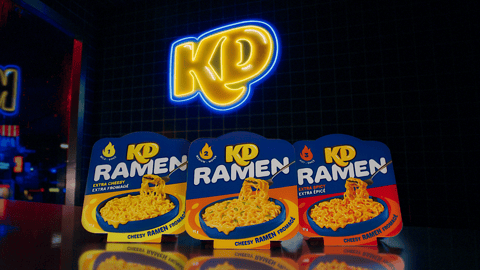
READ: Kraft Dinner expands its lineup with new KD Ramen and 7-Eleven Canada launch partnership
Financial outlook and cost management
Addressing financial performance, Maciel and Cahillane detailed plans to navigate inflationary pressures, projecting inflation rates between 4% and 5%. To offset these costs, Maciel stated that Kraft Heinz delivered over 4% productivity in cost of goods (COGS) sold over the past three years. "Gross margin is still higher than pre-pandemic levels, despite all the investments we have done in the business last year and this year. There is a path for that to continue to happen moving forward. Productivity has been the main the main driver for that. We have now for five years delivered north of 3.5% of COGS. In fact, the last three years, more than 4% of COGS."
The company is integrating $700 million in incremental spend into its base by 2026. Efficiency gains will be sought through shared services and artificial intelligence technology to balance increased headcount costs within selling, general and administrative expenses.
Capital allocation and debt reduction
Kraft Heinz maintains strong cash flow generation to support ongoing dividend payments and debt reduction efforts. Recent financial actions include paying down $2.9 billion in debt this year.
Furthermore, the company refinanced $1 billion in expensive debt. This restructuring is expected to yield $250 million in interest savings over a ten-year period.
Portfolio performance and category recovery
Management addressed operational challenges across specific business segments, noting paths toward overall recovery. Steve reported that the list of declining legacy brands is shrinking as consumption growth returns across international developed markets.
Key focus areas for operational improvement include addressing performance issues within Oscar Mayer, specifically regarding deli freshness and perceived processing levels. Kraft Heinz is also working to improve its frozen food category performance while driving volume-led market share growth on a global scale.