One year after Sunoco takeover Parkland restructuring continues with fresh Canadian job cuts

One year after Sunoco LP closed its US$9.1-billion takeover of Parkland Corp., fresh Canadian job cuts are sending tremors through the country's fuel and convenience retail sector as the energy giant deepens its post-acquisition restructuring.
While the Texas-based company has not issued a formal announcement regarding headcount reductions, a wave of social media posts from affected employees across Canada this week signals another significant round of departures across corporate, analytical and field-support roles.
READ: U.S.-based Sunoco signs deal to purchase Parkland Corp.
In an interview with Convenience Store News Canada, retail analyst Bruce Winder, president of Bruce Winder Retail, notes that executing restructuring in waves is a standard post-acquisition playbook to streamline operations and boost operating income.
“This is what companies do,” says Winder, adding he is not surprised by Sunoco’s strategy and timeline. “This is what I thought they’d do when they bought it. They're gonna invest in the Burnaby facility to make it more efficient to increase their margins by lowering costs: They've done that. They're going to reduce headcount to streamline operations, which will reduce their SG&A expense, which will increase their operating income. And then, the thing they haven't done yet—I don't think—is really rationalized the brands. But they've been pretty active about doing other things behind the curtain to try to increase efficiencies, streamline operations.”
READ: Parkland shareholders approve Sunoco takeover
Social media activity indicates that employees across multiple departments and regions are transitioning out of the organization following the merger. Posts on LinkedIn this week highlight the shift, with departing employees sharing reflections on their teams and expressing gratitude for their time at the company.
Among them is Jean-François Limoges, an account manager with Sunoco, who wrote he was among those affected by decisions made in the context of acquisition and restructuring.
In a November 2 post, Limoges thanked colleagues, managers, retailers and collaborators for five years with the organization, noting that while things had not ended as he would have liked, he understood that decisions sometimes had to be made in the context of an acquisition and restructuring.
Robert McMurray, an account manager in dealer relations at Sunoco, also posted that he was looking for a new role, inviting his network to share potential opportunities.
Other employees have reportedly announced departures in recent days, suggesting the latest changes may extend across several functions and regions of the Canadian business. The full scope of the reductions, including the number of positions and departments affected, remains unclear.
The developments raise renewed questions about the future structure of Parkland’s Canadian operations and the extent to which Sunoco intends to consolidate functions following the acquisition.

A significant acquisition and ambitious promises
Announced in May 2025 and completed on October 31 of that year, Sunoco’s acquisition brought one of Canada’s largest fuel distributors and convenience retailers under the ownership of the Texas-based energy company.
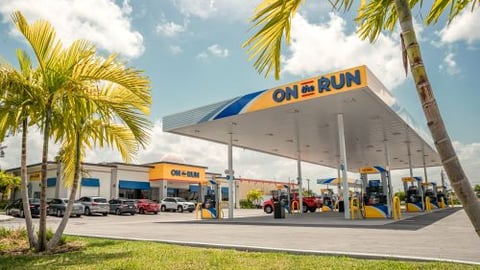
The transaction, valued at approximately US$9.1 billion including assumed debt, brought more than 3,600 retail and commercial fuel locations into Sunoco’s portfolio, significantly expanding its North American footprint. Parkland’s assets included Canadian fuel brands such as Ultramar, Pioneer, Fas Gas Plus., Esso and its On the Run convenience store brand, as well as its 55,000-barrel-per-day Burnaby refinery and extensive wholesale and commercial fuel operations.
The acquisition was presented as an opportunity to create a larger, more competitive North American fuel platform, with Sunoco projecting US$250 million in annual run-rate synergies by the third year following closing.
Importantly, the original transaction announcement also included specific commitments to Canada. Sunoco said it would maintain a Canadian headquarters in Calgary and significant employment levels in the country. It also committed to continued investment in the Burnaby refinery and Parkland’s Canadian transportation energy infrastructure.
The transaction also sparked debate surrounding the sale of a major Canadian business and critical energy infrastructure to a U.S.-based entity, raising concerns under the Investment Canada Act. Policy experts, including Matthew Mendelsohn, highlighted issues regarding economic sovereignty and national interest when key domestic assets move under foreign control.
Those commitments now provide an important backdrop against which to assess the latest workforce changes.
The first wave of restructuring
The latest departures are not the first indication of significant organizational change. Almost immediately after the October 2025 closing, Sunoco began reshaping Parkland’s corporate structure.
As CSNC reported, by mid-November, several senior executives and employees had confirmed they would not transition into the new organization.
READ: Sunoco moves swiftly after Parkland takeover with major staff changes
The initial restructuring prompted questions about the extent to which Sunoco would eliminate overlapping positions, centralize corporate functions and shift strategic decision-making to its U.S. operations.
Winder said at the time that the changes were consistent with the pursuit of cost synergies following a major acquisition. He also suggested the U.S. operation could increasingly take the lead on strategy and overall management, with the Canadian business becoming more focused on execution.
That possibility is particularly relevant as another round of departures emerges. Winder notes that further waves of layoffs could be in the works over upcoming quarters, as companies often manage the cadence of reductions to continuously demonstrate cost savings to shareholders over time.
A changing Canadian operation
The first year of ownership has involved more than simply bringing two organizations together. Sunoco has been tasked with integrating a substantial Canadian retail, wholesale and refining operation into a much larger North American business, while determining how best to manage its brands, infrastructure and relationships with independent dealers.
The latest employee announcements suggest the restructuring process may not be finished. Reports indicate the restructuring touches multiple operational areas—including account management, dealer relations and category management—and spans various geographic regions from Calgary to Quebec.
Whether the reductions are primarily related to overlapping corporate functions, a broader consolidation of regional management or a reorganization of dealer and retail support remains to be established.
For Canadian retailers and fuel dealers, the changes are worth watching. The people affected by restructuring are not necessarily confined to corporate head offices; account management, dealer relations and regional operations are important connections between a fuel supplier and the independent retailers it serves.
The question remains whether the latest changes represent the final stages of post-acquisition integration or signal a more fundamental shift in Sunoco’s Canadian operating model.
As the company moves into its second year of ownership, its ability to balance efficiencies and integration with its stated commitment to maintaining a significant Canadian presence will come under increasing scrutiny.
READ: Parkland-Sunoco deal could face tough scrutiny with fraught Canada-U.S. relations
The evolution of Canada's convenience and fuel retail landscape highlights a broader shift toward consolidation and strategic brand optimization across the industry, says Winder.
Major players like Alimentation Couche-Tard have successfully streamlined operations by unifying diverse acquisitions under powerful global banners such as Circle K, a blueprint Sunoco may well follow as it evaluates its own newly expanded brand portfolio. Meanwhile, market leaders continue to pursue aggressive growth beyond domestic borders, with Couche-Tard actively eyeing major new acquisition targets, including a potential multi-billion-dollar bid for U.S. operator Cumberland Farms.
READ: Couche-Tard's strategic dealmaking is once again on display
Head office commitments and political sensitivity
Winder says that Sunoco appears to be attempting to respect its agreement regarding the retention of a specified workforce in its Calgary office, suggesting the company has not broken that commitment despite the headcount reductions.
However, he emphasizes that workforce changes by foreign parent companies remain a highly sensitive topic politically in Canada, citing context such as developments with Stelco in Hamilton, Ont., and ongoing political issues with the U.S. administration.
Winder expects “some major political ramification” when word gets out about the recent Sunoco layoffs. “It’s going to put major pressure on the Carney government based on what's happening with Stelco… They definitely have made this commitment to maintain a head office in Calgary. As long as they're making that commitment, it's good, but anytime an American company buys a Canadian company and then there's layoffs, that's politically tough to digest in this climate right now.”
Strategic focus on M&M Food Market and prepared foods
Looking ahead to potential decisions surrounding consumer-facing assets like M&M Food Market, Winder points out that fuel and convenience retailers increasingly view prepared foods as a major growth opportunity. This strategy comes as traditional core categories, such as tobacco, continue to decline, prompting companies to seek new streams of growth.
This story is evolving. Questions have been directed to the company regarding the number of employees affected by the latest restructuring, the departments and locations involved, the status of its Canadian employment commitments and whether further organizational changes are anticipated.