Straight up problems: Retailers describe LCBO system transition that’s "on the rocks"

As LCBO approaches its 100th anniversary, the government-owned crown corporation launched a multi-year business transformation called Future State Modernization (FSM). As the alcoholic beverage industry grows in Canada, the framework needed to support it should modernize as well.
According to the LCBO, FSM was established to help the corporation work more consistently by standardizing its daily processes and improving how it manages inventory. FSM was established to “automatically create and optimize schedules, keep data accurate and secure,” with the promise that it would make websites and applications faster and easier. The new GMS initially rolled out on April 1, 2026 and began slowly with a week-long transition throughout the province.
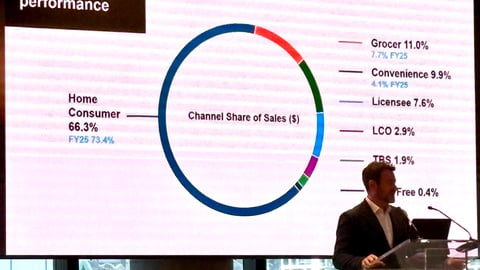
Two months after the initial launch, LCBO executives are asking suppliers, agents and retailers for patience as the organization works through challenges tied to one of the largest technology transformations in its history.
“I cannot understate the amount of change that has taken, particularly on the wholesale side, in the last three years,” said Aaron Campbell, who took over as head of the LCBO just four months ago with the retirement of George Soleas on January 31, 2026.
Campbell acknowledged it's been a “pretty intense” period for everyone involved in the transition at LCBO, but also for suppliers and wholesale customers, including convenience retailers: “We do understand that there are issues that persist. We are absolutely committed to supporting you through this process. “
Convenience store operators and retail program managers say the LCBO’s new alcohol ordering and claims system has created operational disruptions during a critical retail expansion period.
Thomas Sheehan, owner of Enniskillen General Store noticed problems with the online ordering system immediately from the platform’s launch, starting from his initial log-in.
“I think they misinterpreted my calls for help, and they started trying to merge the stores all into one user name, and that just created even more of a mess…it’s almost six weeks in, and we can't do returns right now. They're not accepting any claims of damage or anything; orders aren't even being completed online. I'm getting over billed for a bunch of stuff that I'm waiting for credit back on.”
Sheehan feels the main issues lie with communication, from GMS training to troubleshooting. “From what I'm hearing from some of my other colleagues and other store owners, is that they're not hearing anything from the LCBO. They'll get one email, and it's so detailed that it's kind of confusing.
“The advice I'd say to LCBO is, give us communication, even if it's every day, but keep it simple, like, ‘we're working on this particular issue today.’ I think people are getting frustrated, and they're not getting their orders right, or they're not able to order.”
Manish Thakker, owner of Vani’s Convenience says that the communication was clear for him, and he didn’t notice any difficulties in placing an order. He feels the training and information on the website was clear, but glitches in the interface present challenges.
“When you're checking out, that's where you find out that a particular product is not there, and then you have to remove it from the inventory. That is something that should have been dealt with from the beginning of the rollout,” says Thakker.
Many operators notice glitches such as difficulty accessing order histories, invoices, shipment claims and some experienced inventory discrepancies. Many retailers are unable to complete claims submissions due to technical issues they encounter, namely, identifying a restricted item.
Sheehan expresses frustration that neither communication nor training covered restrictions or how to resolve the problem. “We keep getting a red flag on ours that says, ‘restricted items,’ so when you go to delete an item—and we don't know which items are restricted—sometimes you have to delete the whole order to start fresh again.”
Sheehan’s advice is to start a help group within his chain to lend any advice: If one store encounters a solution, they share information through the group chat. When one store discovered which item was restricted, the clerk sent details to other chains through social media or chat groups.
“So, on their own, people are figuring out what is a restricted product. We don't know why, like maybe it's out of stock or something, but I think they need to clarify it.”
Thakker feels that the claims process is “a remarkable improvement compared to the previous version,” though he notes the interface does not offer correct selections for returns. “Right now the options are 'order error, license suspended, store closing, unforeseen circumstances.' None of these four options apply to a short shipment.”
He adds that the LCBO could be more mindful of how the new system should be designed to save time: “It should be one order, one invoice. Worst case, if they cannot do one order, one invoice, it should be one order for LCBO items and another for Beer Store items. Right now, it's just mind-boggling, the amount of invoices you get. For a small business owner it becomes a lot of paperwork.”
Operators are divided about how training on the new GMS was handled. Sheehan feels that the amount of information and access to help is inadequate, whereas Thakker feels “the LCBO did a good job” with training. “I did not have to use it, but I was getting emails about meetings to educate people, there were webinars, there were group meeting emails where if you're not comfortable in the webinars, you could go and check with someone. I believe there was enough support offered to the end users.”
Campbell acknowledged it's been a “pretty intense” period for everyone involved in the transition at LCBO, but also for suppliers and wholesale customers, including convenience retailers: “We do understand that there are issues that persist. We are absolutely committed to supporting you through this process. “
Recognizing industry frustration, the LCBO is promising more transparency with new communication tools, including a recently launched dedicated page on its website that tracks known issues and provides status updates on resolution efforts.
“Our aim is to create a more open and transparent marketplace,” Nick Nanos, chief supply chain officer for LCBO, told attendees at the Drinks Ontario conference.
The LCBO has also established a cross-functional task force responsible for identifying, prioritizing and resolving implementation issues with the goal to ensure problems are escalated quickly and addressed with greater urgency. The corporation also provides weekly public updates on any issues and the progress to resolve them, assuring convenience stores have the latest information and also meet with convenience industry associations to ensure they have the most up to date information.