Beyond the plug: Strategizing for EV charging stations

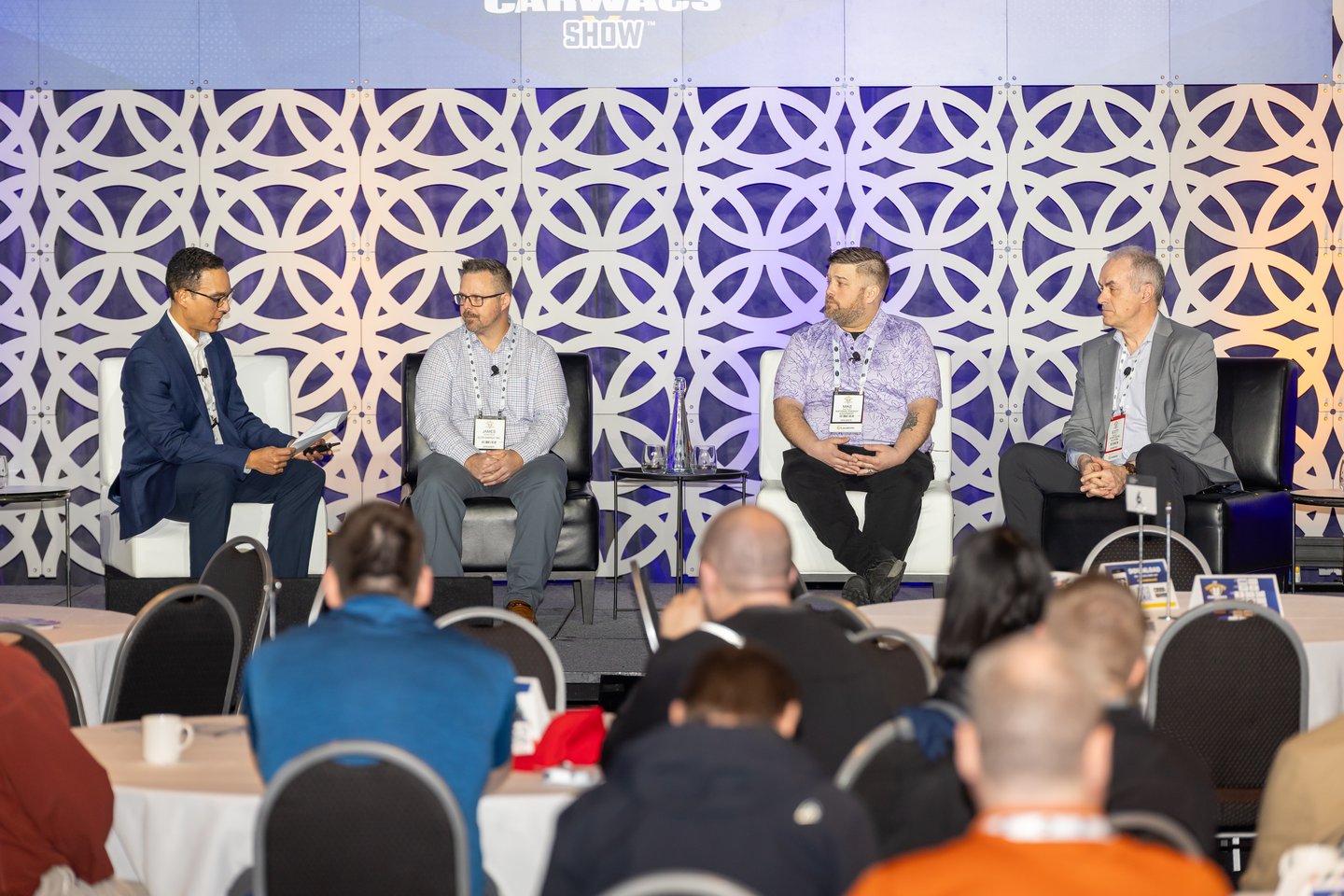
Convenience operators preparing for Canada's electric vehicle future are warned against simply "setting up charging stations.” An expert panel at the 2026 Convenience U CARWACS Show stressed that successful EV adoption requires a well-thought-out, holistic approach, focusing on market research, integrating loyalty programs, planning for electrical capacity and securing reliable vendors.
César Nivar, a leading expert in helping organizations strengthen their networks, elevate performance, and prepare for the future of energy and mobility, led the valuable discussion with James Jennings, master electrician/operator, Elite Energy; Mike MacKay, EV charging specialist with National Energy Equipment; and Scott Negley, senior director, product management, Wayne Fueling Systems and Dover Fueling Solutions.
The panel highlighted that success relies on infrastructure readiness, scalable solutions and leveraging the 15-to-20-minute customer "dwell time" to generate new ancillary revenue through advertising and in-store sales.
The discussion on March 11, 2026, at the Toronto Congress Centre, covered the challenges of infrastructure readiness, the importance of scalable solutions and the potential for additional revenue through advertising and customer engagement. The experts emphasized the importance of integrating loyalty programs, understanding market dynamics and planning for future electrical capacity, while highlighting the impact of federal incentives and the need for reliable vendors.
Forecast: EV sales predicted to boom
Nivar opened the panel with news of Canada's new auto strategy aiming for 75% EV sales by 2035 and 90% by 2040 while also introducing a major affordability initiative and expanding national charging infrastructure.
MacKay observed that retailers are watching for the transition, noting that most drivers have a preferred gas station. "When you switch to EV, there are not a lot of options out there. You're not necessarily going to stick with the loyalties that you had in retail petroleum." He emphasizes the importance of integrating loyalty programs and building out a full network, rather than putting one or two spots in to re-establish those ties as they transition. "A transition to that new technology could really shift where those loyalties lie," MacKay adds.
Negley cautioned against the “if you build it, they will come” mentality, saying that mandates and legislation are subject to change. “It’s going to be different, situation to situation, demographic to demographic. So many factors are out there about utilization rates and the number of EV registrations in your particular market.”
Preparing your business for the future
With federal incentives, Chinese imports and provincial adoption rates shifting the landscape, the panel was asked:
“What's one thing you believe is clear right now for operators trying to make smart, paced decisions?”
Negley states the importance of market research prior to adding EV chargers. “I think the thing that you have to be very prepared for is to understand what your potential available market is for customers, and know what your charges and your utility plans are going to be.” He adds that operators should ask if they will be allowed to charge for the power.
Most of the time, operators think it's going to be quick and easy, but there's quite a process as EV chargers draw a significant amount of power. Jennings cautions that most convenience stores do not have that available power. "There's quite a bit of lead time and communication that has to happen between the local utilities and engineering and planning. The best thing is to contact someone who is very familiar with that industry, and then they can help you along that process and get you the right people."
READ: Ottawa plans to add 8000 new electric vehicle charging ports in Canada
Smart decisions that lead to sales opportunities
MacKay adds that additional EV chargers can be a boon for convenience stores, stating that many EV urban-area owners may not have charging available in their homes, as Vancouver experienced in the early days of EV rollout.
"Most charging is going to be done at home. So now what you're doing is you're drawing additional new customers to your location. You're getting people that are travelling to your site and they're seeking EV charging stations. You will have your local fuel people, but you're also bringing in EV drivers that aren't from the usual area: it's a different customer base, and it can drive increased traffic to your convenience store, so make sure you're doing integration to drive them in while they're charging. Dwell time is 15 to 20 minutes while they're charging."
Regional and site-specific factors to consider
Jennings added if operators are building new stations, they have that ability to plan and to be able to put the infrastructure in at that time. “But if not, you're pushing to try to get a separate service so you're not coming off of your existing infrastructure. And the Ontario Energy Board is working with the local utilities to try to make that more readily available.”
What should retailers prioritize when selecting hardware to stay future-proof?
Negley said that a lot of new operators have come and gone, due to poor planning at the infrastructure stage. “Make sure that when you're talking to vendors, check their reliability, check their history. How have they been able to supply, and are they able to support the product? Are your equipment suppliers going to be able to offer the features that your customers have traditionally come to expect—such as payment type, technology, and a consistent site experience—that's always going to be an important consideration.”
Strategies for EV adoption
How can retailers integrate EV charging with existing customer experience?
MacKay emphasizes that early adoption gives convenience store and gas station operators a clear edge. He notes that investing in battery buffering and systems that support grid resilience can make sites more attractive to utilities. This also increases the chances of being prioritized for setup. "There are other ways to build revenue, other than just charging money for charging batteries."
He adds that making sure an operator should not just look at the specific transaction of energy to the vehicle, but look for marketing opportunities. “A lot of the chargers that we're offering now have great big advertising screens on them. When you build your loyalty programs into it, you can tie the same as the pay at the pump at the advertising screens that you're seeing at the gas station pumps. You can run all that advertising at the EV chargers while they're sitting there, hooking up their car, and then [clients] head into the store, grab some food and look for clean washrooms.”
What are the key actions for operators to make smart EV charging decisions?
Signs that operators should watch to know the timing is right to invest will be very regional and site specific, according to MacKay. He suggests looking at locations within the inner city, where commuters would search for chargers. Investors should also consider looking for regions with apartments and new condos that might not have infrastructure availability, but will be inhabited by people who want to buy EVs.
MacKay adds that investors should also consider tourists and destination locations. “Watch for EVs that are coming from out of town,” he suggests. “A lot of our EV infrastructure is needed because of tourism, not because of local [traffic.] You can't just look at the EVs that are purchased in that location.
What's the single smartest action to take this year to stay competitive and future-ready?
MacKay reminds operators that cleanliness and safety are huge considerations for customers. Some EV drivers might leave a station dissatisfied and look for another if there was no canopy on hot days, nor any garbage cans in sight. “There's a garbage can now that has a LiDAR on the top of it to detect when it's full. So even if it is in a location that isn't attended as much, you can still put garbage cans there and not have to have somebody there all the time watching it.”
Negley adds that mindfulness must be a part of the investment process, and to consider each visit to the station from the customer’s point of view. “You have chargers that are put at the edge of properties, way out, far from the store. They're on different networks, and so you would want to offer your EV customer the Taco Tuesday special that you're offering your gas customer? Probably. Wouldn’t you want to offer them the same sense of security and lighting and element protection that you offer your gas customers?”
MacKay adds that some sites already have vacuuming options nearby the charging stations, creating more revenue opportunities.
Investors should consider their region’s seasonal/weather impacts affecting usage and equipment (cold climates, snow removal) and local labour and construction costs, as well as expected timelines for upgrades.
The panel concluded that EV charging is a long-term investment requiring careful planning and market understanding. There are many opportunities for incremental scalability such as modular chargers and ancillary revenue potential like in-store offerings, advertising screens and amenities to capture dwell-time spending.
This article was originally published in the May/June 2026 issue of Convenience Store News Canada | Octane