Turning EV fast chargers into profit

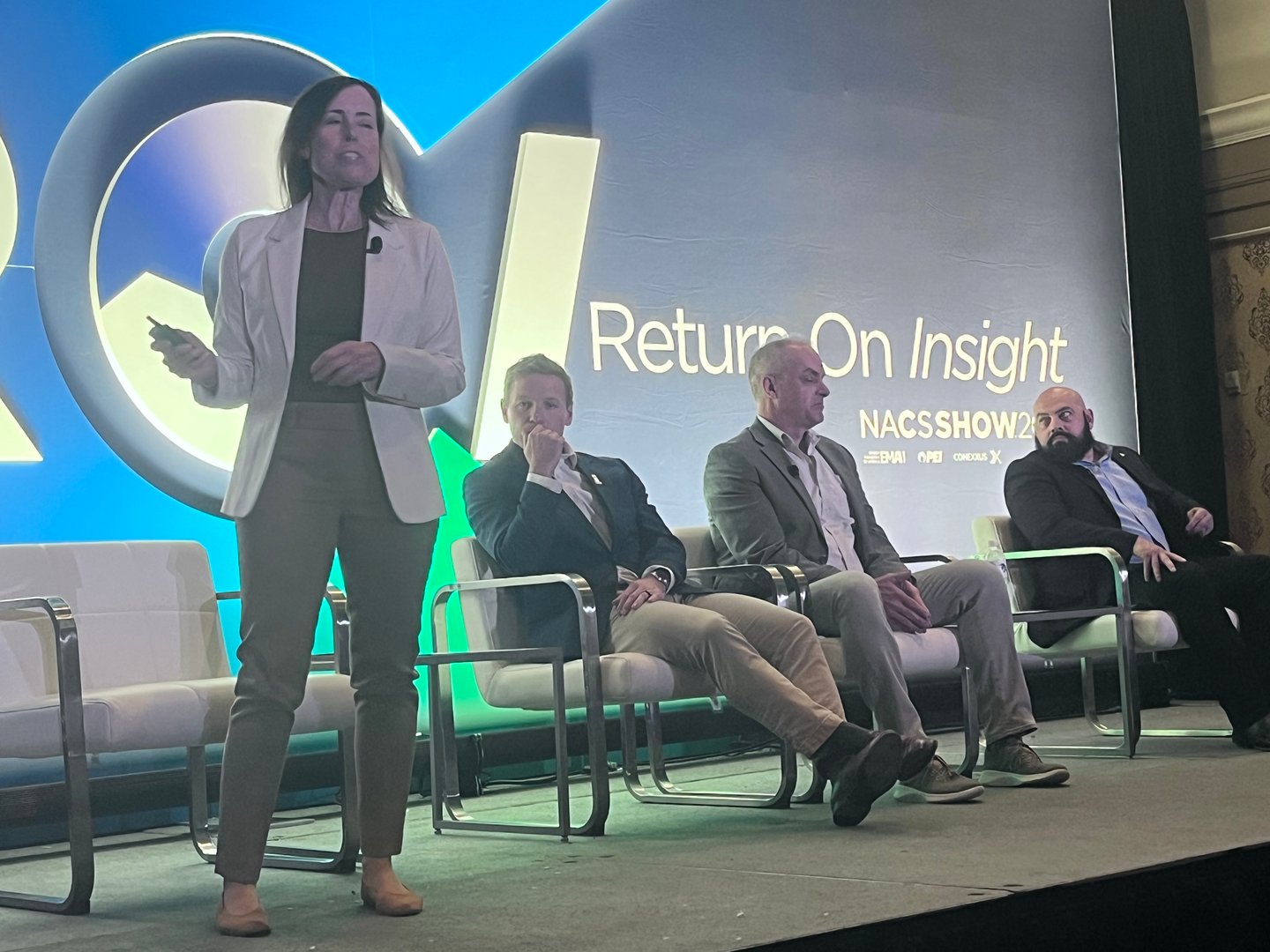
In the October 6 NACS panel titled, “Creating a Valuable EV Charging Experience,” retail experts analyzed the data highlighting how adding chargers to a forecourt is not a sales deterrent. The event was moderated by Gen Comptois, senior retail, energy and mobility executive and strategic adviser for the Transportation Energy Institute.
Why EV charging profit margins surprise gas station retailers
Gas station owners are used to thin margins on liquid fuel, which makes the financial potential of electric vehicle (EV) fast charging a welcome surprise. At a recent NACS conference panel, Electric Era chief executive officer and founder Quincy Lee shared that well-run EV charging sites can reach a 46.5% profit margin. That kind of return is possible right now because there are far more EV drivers on the road than there are active fast chargers. When station owners combine high charger usage with smart energy management, they can capture roughly 25 cents per kilowatt-hour sold.
"And once you actually have the foot traffic, the flywheel starts to spin. Then you get that driver in your ecosystem. You can capture more lifetime value. You can position promotions to them," explained Lee. "You can get them in the stores: You can increase your baskets size. That's the stuff that you all are amazing at and that really moves the needle economically."
The formula behind profitable EV fast charging
Making money on EV fast charging comes down to a straightforward equation shared by Lee during the panel. Station owners need to maximize the revenue coming in while strictly containing the utility costs going out. Because the EV charging market is not yet commoditized, operators who master both sides of this math can build a strong revenue stream. Even better, a study by the Transportation Energy Institute found that more than 78% of EV drivers leave their vehicles to buy items on-site or nearby during a 20-to-30-minute charge, meaning the charger also drives lucrative inside sales.
Cutting utility bills with battery buffering and load management
One of the biggest roadblocks for convenience stores and travel centres is the local power grid. A single EV fast-charging station can draw as much power as 1,000 homes on one city block, which can delay installations and trigger massive utility demand charges. To solve this problem, Lee recommends using on-site battery systems to buffer the grid, which drops that power requirement down to roughly 300 homes. Once the station is running, owners must treat electricity just like they treat fuel purchasing by using software to buy the cheapest power possible through load management, load shifting and demand charge management. By keeping utility input costs down to 10, 15 or 20 cents per kilowatt-hour and charging drivers around 45 cents, station owners protect their margins from unpredictable utility fees.
READ: NACS show 2026 discusses EV charging for convenience stores
Digital curb appeal
High profit margins mean nothing if drivers do not know your chargers exist. EV drivers find fuel very differently than gas customers, relying on digital tools rather than tall highway signs. To maximize station traffic, Lee advises owners to make sure their chargers appear on popular apps like PlugShare, Google Maps and Apple Maps and to monitor those listings daily to respond to driver feedback. “When you have that bedrock of reliability, the drivers will find you. They'll start to show up. They're going to start to pass your credit card, they're going to come back,” Lee emphasized. “They're going to leave a good review and then they're going to come back again and again and again, telling their friends about it. That review, that's super valuable because that brings more people in.”
Station owners should also ask their equipment suppliers if their network integrates directly into the built-in infotainment screens of major automakers like Ford, GM, Hyundai, Kia and Rivian, as drivers routinely navigate straight to the chargers displayed on their dashboards.
Reliability is the bedrock of EV-charging revenue
Before drivers will ever spend money at your charger or inside your store, your equipment has to work every single time. Unlike a traditional gas pump that relies on familiar valves and pumps, a fast charger is more like a giant smartphone moving 480 volts of power through complex electronics and software. panellists noted that half of EV drivers will not return to a site after a single failed charging session and more than a third will abandon that entire charging network altogether. Comptois pointed out:
“Let's empower [customers] if they face a problem at the charging point: They should call for support—similar to that red button at the pumps, but that's not something they're actually willing to do. They just say, ‘you know what, let's call it a day and I'll get going’, especially if they're not necessarily in need of an emergency charge.”
Field Advantage vice-president of e-mobility Jason Cortez stated that retailers must demand end-to-end accountability from their service partners, using proactive remote diagnostics and smart parts logistics to fix root causes before drivers ever pull up to a broken screen. “[Fuel] Drivers don't care about the fragmentation system,” said Cortez. “They don't care about anything. They pull up to a gas pump and they don't see the embargo weighing—they just see a gas pump and they just know it will be a predictable experience. In the charging world, it's a little bit different. [EV drivers] look at brands. They pay attention to brands and and CPOs.”
Move early while demand outpaces supply
For gas station operators, the current mismatch between rising EV adoption and limited charging infrastructure creates a rare window of opportunity. Scott Negley, senior director, dispenser product management for Dover Fueling Solutions added:
“If you think about an opportunity now to increase the amount of wallet share you have now with a new customer segment and then ask yourself ‘how can I take that customer segment and then what is my incremental gain?’ The retailer has advantages already in place. They have the infrastructure, they have the building, they have the point of sale, they have payment, they have the loyalty applications that are already there. How can I then take that existing base and then complement it by adding these other elements that are incremental to the business they're already seeing from their fuel customers and there's a significant opportunity.”
By pairing battery-backed hardware with smart energy software, strong digital visibility and reliable maintenance, retailers can turn their forecourts into high-margin charging hubs that bring new, loyal customers through the front door.