Innovating your coffee program without losing core customers

For Canadian convenience store and gas station operators, coffee is a daily traffic driver. Yet keeping up with shifting customer tastes while maintaining speed, consistency and margins across multiple locations is no small task.
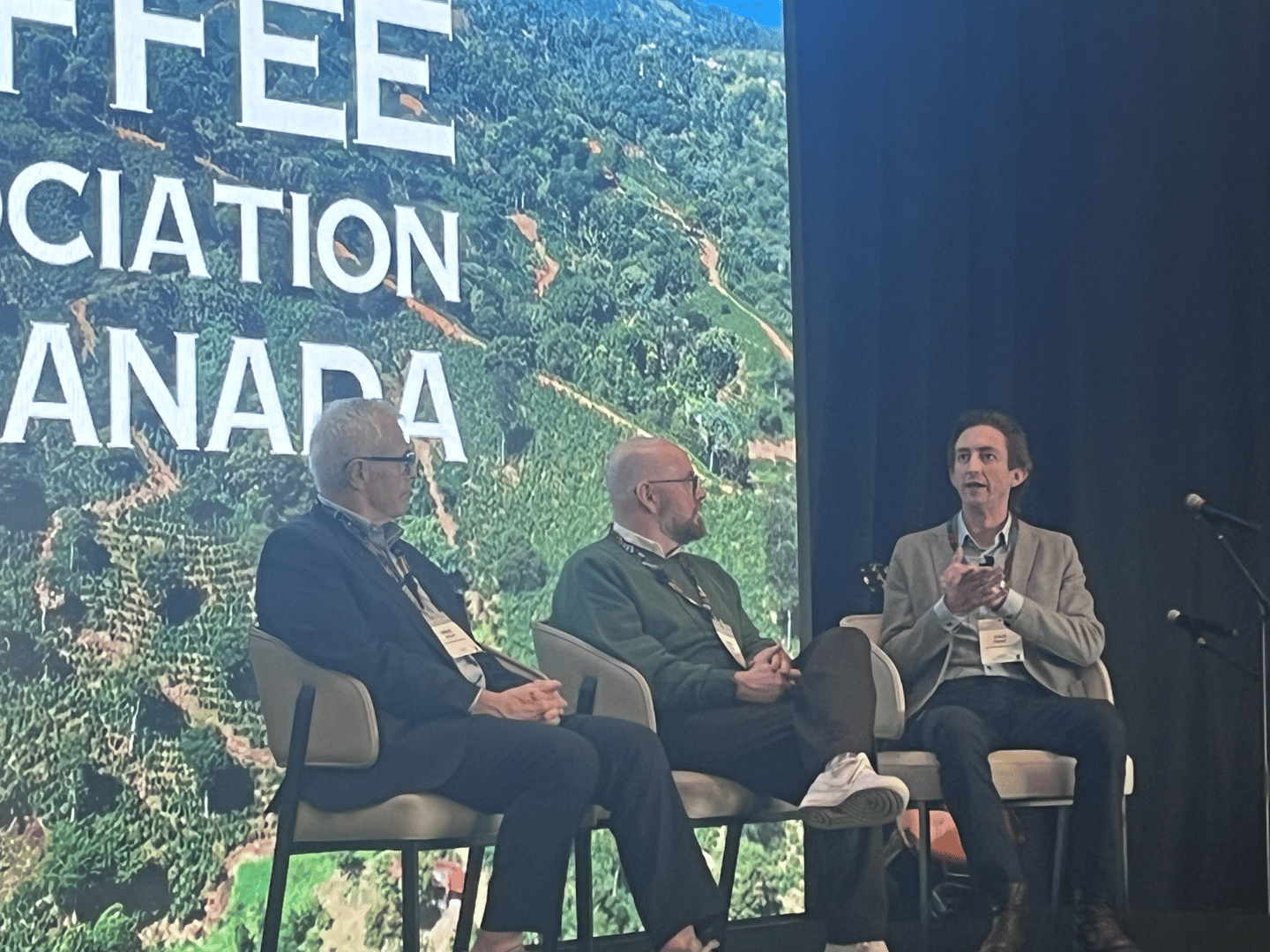
During the Coffee Association of Canada's industry panel on , coffee leaders explored how retailers can introduce fresh ideas without overcomplicating operations or alienating loyal customers. The panel featured Dan Pabst, manager of innovations and product development at Melitta North America; Josh Hockin, head of coffee and general manager at Eight Ounce Coffee and Greg Alford, country manager at Franke Coffee Systems. The panel was moderated by Stephen Gray the director for Monin Americas, Canada.
Balancing new coffee trends with everyday classics
When operators hear the word innovation, it is easy to assume they need to reinvent their entire beverage menu. However, Hockin pointed out that true innovation comes down to two simple ingredients: novelty and usefulness. A new drink or process has to catch a customer's eye, but it also has to solve a practical need.
At the same time, chasing every passing trend can hurt your bottom line. Pabst noted that retailers often confuse innovation with invention, adding costs that customers are not willing to pay for. Instead of copying competitors down the street, he advised operators to listen directly to their own shoppers.
Crucially, adding new items does not mean abandoning traditional drip coffee or classic espresso drinks. Alford observed one specific demographic remains a vital customer base for retail locations and continues to buy traditional beverages.
“Traditional coffees, classic coffees that are espresso-based coffees, lattés—they're still selling. The consumer above 50 is a really great consumer inside of all of our retail operations.”
Even younger, trend-driven consumers who order cold brews or specialty flavours in the afternoon will still grab a classic latté or brewed coffee at other times of the day. Retailers need to keep their classic anchors intact while leaving room for modern additions.
Personalization and the "Netflixification" of coffee
Today's shoppers expect more than a quick caffeine fix—they want a drink that feels personal and comes from a brand they trust. Social media has turned marketing into a two-way street, allowing customers to share their customized drinks and message brands directly.
“Customers are looking for engagement with brands, and I think it's never been easier for brands to communicate to customers as well as for customers to communicate back to the brands,” explained Pabst. “As an example, before advertising, there's a commercial on television and you had no real way to respond. But now, you might see an ad on Instagram, and you can immediately either share that with your friends and engage, or you can even respond directly back to the brand.”
Hockin’s approach to innovation is more pragmatic. He described “two dimensions” that he looks at. “I look at novelty and I look at utility. So it has to be something new or rediscovered,” said Hockin. “Who's really driving that? Is it small independent chains whose ideas are percolating up to the the national folks, or is it the national folks who are putting labs together to create focus tests and building those preferences from the ground up?
Pabst described this shift as the "Netflixification" of coffee. “Decades ago, consumers had limited choices, much like having only three television channels. Today, shoppers expect endless customization and look for brands that align with their personal values or support causes they care about.”
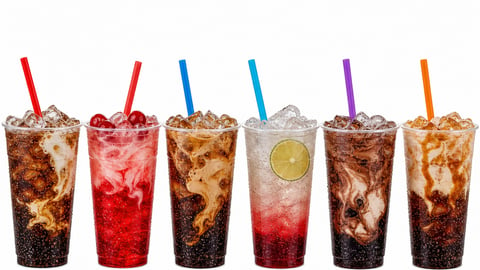
Cold coffee plays a major role in this trend, says Pabst. “I think one of the reasons for that is that cold coffee works extremely well as a base to add other ingredients, and that allows for personalization. It allows you to take this universal ingredient but then customize it to reflect your own individual identity and then you're able to share that on social media or other ways.”
Cause and heart as sales drivers
“Speaking on behalf of the millennial generation, people are looking for the brands that they support to reflect their own values in a lot of ways,” says Hockin. “I hear about that more and more. It's been like that ever since I started Eight Ounce Coffee 20 years ago.”
“Brand authenticity really matters to people in telling a story,” Pabst agreed. “Whatever cause you're interested in, you can probably find a coffee company that is working to benefit that cause, whether it's dogs, cats, farm animals, fire and police, there is coffee for just about every cause, and that connection to the customer and that personalization in it it even carries over [to sales.]”
READ: Three pillars to building community engagement: Tips for c-stores with more heart than means
Solving operational challenges with smart equipment
For convenience stores and forecourt retailers, the biggest hurdle to offering specialty drinks is execution. Unlike independent cafes staffed by trained baristas, multi-unit retail locations rely on busy store associates juggling registers, food service and forecourt duties.
As menus evolve, equipment flexibility has become a top priority for operators. Non-dairy milks and cold foams behave very differently than traditional dairy, creating technical hurdles for machines designed years ago. Flexible automation takes the guesswork out of texturing alternative milks and preparing cold foams. As Hockin noted, simplifying the drink-making process frees up staff to focus on hospitality and customer service rather than wrestling with complicated machinery.
Clients come in for an experience that they can rely on, and from a brand they can trust, adds Alford. If a clerk can use equipment efficiently, the returning customer pays off the price of any investment in equipment. “The retail operator is looking for a way to execute a new recipe, and they're looking for a way to do it consistently, and they're looking for looking for a way for the customer can be satisfied; that it was a great taste that matched the brand promise, and that the employee was successful on executing that every time and in every location. Those parts of the investment then end up lowering production costs.”
What is next for retail coffee menus?
Looking ahead, the panellists pointed to several emerging ideas that could soon make their way into mainstream retail:
Infused and co-fermented beans: Coffee producers are using new fermentation techniques to infuse flavours directly into green coffee beans. While these beans are currently expensive and sold in high-end specialty shops, Hockin said, “the technologies that the people are doing to change fermentation to infuse flavor into the green coffee, that technology will come to scale at some point, and it will impact the whole industry.”
Global and newcomer inspiration: Retailers looking for fresh menu ideas should pay attention to newcomer communities in Canada as well as high-growth coffee markets like China, where creative drink formats and service styles are thriving.
Smaller, faster product runs: Rather than locking into massive, slow-moving menu changes, larger brands are increasingly testing smaller production runs and rolling out updates more frequently.
Constraints can spark creativity
You do not need an unlimited budget to upgrade your coffee program. When asked what he would do with zero budget limits, Pabst argued that financial constraints actually fuel the best ideas. “There was a stage where we had to do value engineering and take some things out to bring a Melitta project within budget. And now, a year later, at least half—if not more—of those things that we changed can now be seen as improvements. And so, ifI had an unlimited budget, I wouldn't have modified things and actually improved it. So, the best art comes out of some kind of constraint.”
For convenience and gas retailers, the takeaway is clear. Know your brand story, invest in flexible equipment that empowers your staff and focus on practical improvements that your everyday customers actually value.